One quick thing: Elon Musk likely to meet PM Modi during US visit
In today’s newsletter:
- Sam Altman's U-turn on India
- Need India-specific pricing: Founders to Sam Altman
- Swiggy Q3 loss widens 39% to Rs 799 crore
Was this newsletter forwarded to you? You can sign up for Tech3 here
 Top 3 stories
Sam Altman's U-turn on India

Remember when Sam Altman in 2023 said competing with OpenAI on foundation models was "totally hopeless" for Indian startups?
- Well, he's changed his tune
Altman's India re-vision
On his second visit to India, Altman clarified that his words were “taken out of context” and now believes India can be a leader in the AI revolution.
- Altman said the statement was made during a specific time when the scaling of AI models seemed too expensive
Altman highlighted India's progress in AI, noting it's OpenAI's second-largest market with user numbers tripling in the past year.
Also read: There’s no law of physics that says AI has to be big and expensive: IBM’s Arvind Krishna
Meanwhile, IT Minister Ashwini Vaishnaw, who was in conversation with Altman, drew parallels with the country's Chandrayaan-2 mission, suggesting India can achieve similar cost-effectiveness in AI development.
Altman, however, still believes that training models can be expensive.
“Costs will continue to rise, but the returns from increasing intelligence will also be exponential,” Altman said.
Also read: AI isn’t ready to cure cancer yet, but can boost research efficiency, says OpenAI CEO Sam Altman
The DeepSeek effect
Google’s power play
While Altman continues his world tour, Google is also quietly playing in its chips when it comes to developing gen AI models.
This investment follows similar announcements by Microsoft, which plans to invest $80 billion in AI infrastructure in 2025, and Facebook's parent company, Meta, which plans to invest between $60 billion and $65 billion in capital expenditure this year to boost its AI efforts.
Need India-specific pricing: Founders to Sam Altman

OpenAI’s CEO, Sam Altman, received a clear message from India’s startup ecosystem during his second visit to the country:
- Lower costs and localised pricing to cater to the Indian market
Driving the news
During the closed-door meeting with Altman, Indian founders made it clear that OpenAI’s current pricing structure is too steep for the Indian market.
- In fact, its APIs are priced much higher than its new Chinese rival DeepSeek, founders said
The message from founders like Paytm’s Vijay Shekhar Sharma and Snapdeal’s Kunal Bahl was loud and clear: for OpenAI to succeed in India, a drastic reduction in pricing is needed.
India-specific pricing
One key takeaway from the discussions was a strong push for India-specific pricing tiers. Founders emphasised that tech giants like AWS and Google have already introduced localised pricing for India.
“The cost of servicing hundreds of millions of users needs to be more affordable. You could have India-specific tiers,” said a founder who was part of the meeting but wished to remain anonymous.
While Altman did not make any commitments, he hinted that both open-sourcing and reducing costs may be a possibility.
The application advantage
The consensus among Indian startup founders seems to be that Altman's visit signals a growing recognition of India's potential in the AI space.
Gaurav Munjal, co-founder and CEO of Unacademy, believes that India can dominate the application layer of AI.
"The application layer is something that I am very confident that we will win," he said.
Dig deeper
Swiggy Q3 loss widens 39% to Rs 799 crore
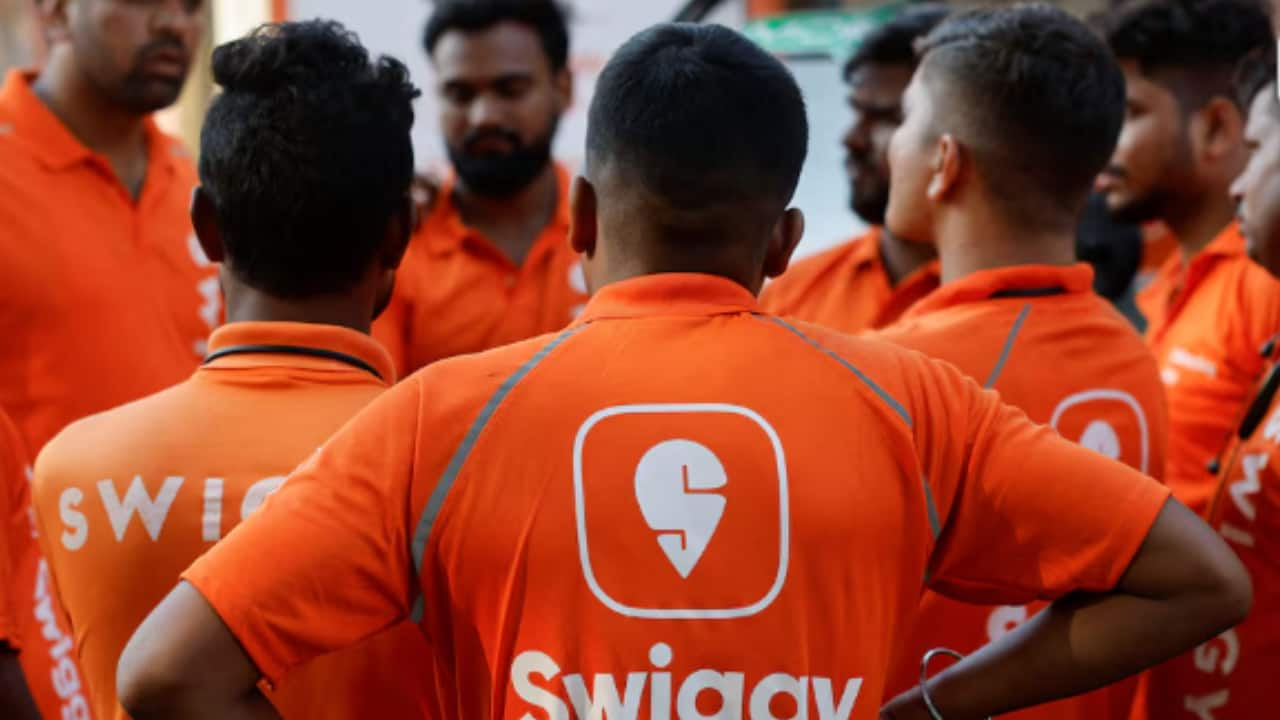
Food delivery companies appear to be facing tough times. First it was Zomato, and now Swiggy has also shown similar results.
Q3 report card
Swiggy reported that its Q3 losses widened 39% to Rs 799 crore from Rs 574 crore in the same quarter last year.
- The company’s revenue from operations however rose 31% to Rs 3,993 crore in Q3FY25 as against Rs 3,049 crore in Q3FY24
For both Swiggy and Zomato, while their food delivery businesses grew at a decent clip, the quick commerce arms weighed on the performance.
"(Quick commerce)...is witnessing heightened degree of competitive action, and investments are being made by incumbents as well as new players…We have been responsive and balanced in our strategy, and continue modulating our investments for sustainable GOV growth," said Sriharsha Majety, MD and Group CEO, Swiggy.
Quick commerce battle
The rivalry between Swiggy and Zomato is not limited to just food delivery. The two compete even in the quick-commerce space.
- And for now, Blinkit appears to be the clear winner
While Swiggy added 96 dark stores during the quarter, Blinkit was way ahead with a total of 216 dark stores being added in Q3.
- That translates to an average of 2.4 dark stores each day for Blinkit which outpaced Swiggy's 1.06 average dark store addition every day during the quarter
Even on the revenue front, Blinkit took the cake.
- Blinkit at Rs 1,399 crore in revenues was larger than Swiggy Instamart which clocked Rs 577 crore in revenues during Q3FY25
Swiggy plans to have 1,000 dark stores by the end of March 2025, up from 705 as of Q3 and Blinkit, which already had 1,007 stores, has advanced plans to double that count by a year as the two take on Zepto, Flipkart Minutes, Tata BigBasket and more in India’s $6 billion market.
A silver lining
Swiggy's 10-minute food delivery offering, Bolt, now accounts for 9% of total orders, up from 4% in the previous quarter indicating strong customer demand for the new offering.





 PREVIOUS
 QUICK HITS
 GLOBAL PICKS