-
How Tulsi Gabbard’s remarks revived debate on U.S. ‘regime change’ policy and Bangladesh’s 2024 crisis
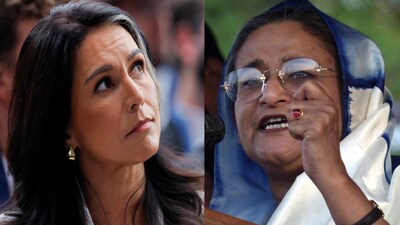
Tulsi Gabbard’s remarks praising President Donald Trump for ending America’s “regime change” strategy have reignited debate over U.S. foreign policy and alleged involvement in Bangladesh’s 2024 political upheaval.
-

'Hottest one in the room right now': Why Trump is all praises for Tulsi Gabbard
Gabbard has declassified documents she claims provide “irrefutable proof” that Obama and senior officials conspired to undermine Trump’s 2016 election victory.
-
Tulsi Gabbard thanks FBI after man arrested over threats to Trump and herself
Director of National Intelligence Tulsi Gabbard thanked law enforcement after the FBI arrested a 25-year-old Georgia man for making threats to her, President Trump, and the White House. Details remain unclear.
-
Gabbard backs paper ballots, claims voting machines vulnerable to hackers
Tulsi Gabbard revealed evidence of voting machine vulnerabilities during a Cabinet meeting, as President Trump ordered the DOJ to investigate ex-cyber chief Chris Krebs over his 2020 election role.
-
Amid tariff concerns, why Tulsi Gabbard's exposition of 'America first policy' should calm frayed nerves in Delhi
Addressing a session in Raisina Diagolue, Gabbard eloquently laid out the details of Trump's "America First" policy.
-
'Just like Trump, PM Modi ...': Tulsi Gabbard draws parallels between 'two great friends' at Raisina Dialogue
-
Rajnath Singh meets Tulsi Gabbard| India-U.S. strategic ties| Anti-India activities overseas | N18G
Defence Minister Rajnath Singh and U.S. Director of National Intelligence Tulsi Gabbard held talks in New Delhi, focusing on strengthening India-U.S. strategic ties, particularly in defence and information sharing. Gabbard's visit, part of a multi-nation tour, marked the first high-level visit by a senior official from the Trump administration. During her trip, she met National Security Advisor Ajit Doval and attended a global intelligence conclave hosted by India. The conclave, which included intelligence chiefs from the U.S., Canada, and the UK, concentrated on enhancing intelligence cooperation to combat terrorism, address emerging technological threats, and secure the Indo-Pacific region. Discussions also covered countering terror funding, money laundering, and issues related to extradition. India raised concerns about anti-India elements operating abroad, such as pro-Khalistan groups. Gabbard will also address the Raisina Dialogue, furthering the India-U.S. collaboration on global security challenges.
-
NSA Doval, Tulsi Gabbard hold bilateral talks; join global intelligence chiefs' meet
In their one-on-one meeting, Doval and Gabbard mainly discussed ways to strengthen intelligence sharing and working closely in sync with the India-US global strategic partnership, it is learnt.
-
US Director of National Intelligence Tulsi Gabbard to visit India
This will be Gabbard’s first trip to India after taking over as the eighth Senate-confirmed and first female combat veteran Director of National Intelligence (DNI) in the second Trump administration.
-
Musk’s workweek ultimatum triggers national security concerns in Washington: Report
Top officials, including FBI Director Kash Patel and Director of National Intelligence Tulsi Gabbard, have expressed concerns about the implications of Musk’s order.
-
Tulsi Gabbard orders firing of over 100 intelligence officers for explicit chats
Over 100 intelligence officers have been fired for engaging in explicit chats on an NSA platform, with US Director of National Intelligence Tulsi Gabbard framing it as part of the Trump administration’s broader effort to restore accountability and depoliticize intelligence agencies.
-
PM Modi meets Tulsi Gabbard in Washington DC, discusses aspects of India-U.S. relations
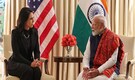
Prime Minister Narendra Modi met Tulsi Gabbard, the newly confirmed US Director of National Intelligence, in Washington DC. He congratulated her on her confirmation and discussed enhancing intelligence cooperation between India and the US, particularly in areas like counter-terrorism, cybersecurity, and emerging threats. Gabbard, a former Democratic Congresswoman from Hawaii, had been confirmed by the Senate after two months of deliberation, with a 52-48 vote. She was sworn in by Attorney General Pam Bondi in the Oval Office. In her remarks, Gabbard expressed her commitment to restoring trust in the intelligence community, which she criticized for its politicization and weaponization. PM Modi had arrived in Washington DC after attending the Artificial Intelligence Action Summit in France with French President Macron. The two leaders were set to meet again for bilateral talks at the White House. Modi reiterated the importance of India-US relations for global cooperation and security.
-
Tulsi Gabbard sworn in as U.S. Director of National Intelligence | N18G
Tulsi Gabbard, a former U.S. representative, was sworn in as the top U.S. spy on February 12, 2025, despite having little experience in intelligence work. Gabbard had served four terms in the House of Representatives but had never worked at a spy agency or been on an intelligence committee. She left the Democratic Party in 2022 to become an independent and supported Donald Trump, eventually joining the Republican Party in 2024. At her swearing-in ceremony, Trump praised her as a woman of "great common sense" and assured that she would work to protect American safety and civil liberties. Gabbard expressed her commitment to refocusing the intelligence community by empowering those who serve and ensuring the security and freedom of the American people. She will now lead the U.S. agency responsible for coordinating intelligence operations, a critical role in national security established after the September 11 attacks.
-
PM Modi meets Tulsi Gabbard, calls her 'strong votary' of India-US friendship
Modi also congratulated Hindu-American Gabbard on her confirmation as the nation’s top intelligence official. She was confirmed on Wednesday.
-
Gabbard Clears Senate Confirmation Vote On Nomination For Director Of National Intelligence | N18G
The U.S. Senate voted 52-46 on February 10 to advance Tulsi Gabbard's nomination for Director of National Intelligence (DNI), setting the stage for a confirmation vote later this week. The vote, which was largely along party lines, saw Republicans supporting Gabbard, while Democrats opposed her. Gabbard, a former Democrat and Army National Guard veteran, has faced criticism for her lack of intelligence experience and past controversial statements, including her defense of Syria's Bashar al-Assad and remarks perceived as sympathetic to Russia's invasion of Ukraine. Despite these concerns, Republican Senate Majority Leader John Thune praised Gabbard for agreeing to streamline the DNI office, aligning with the Trump administration's goal of reducing government size. The Senate Intelligence Committee recommended Gabbard’s nomination by a narrow 9-8 vote. Gabbard can afford to lose only three Republican votes if Democrats remain united in opposition for her confirmation.
-
Tulsi Gabbard passes Senate committee vote, paving way to DNI confirmation
A four-term congresswoman, 2020 presidential candidate, and New York Times bestselling author, Gabbard is a veteran with three deployments to war zones in the Middle East and Africa. She recently moved from being a Democrat to a Republican member.
-
Tulsi Gabbard Faces Bipartisan Criticism at DNI Confirmation Hearing
Tulsi Gabbard, President Donald Trump's nominee for Director of National Intelligence, faced bipartisan criticism during her confirmation hearing. Concerns were raised over her past comments sympathetic to Russia, support for Edward Snowden, and opposition to surveillance programs. Gabbard criticized U.S. intelligence failures, vowing to end politicization and protect whistleblowers. Despite her military background, critics questioned her lack of intelligence experience and feared further politicization under Trump’s second term. Her nomination, announced in November, shocked national security officials. The hearing coincided with Robert F. Kennedy Jr.’s controversial hearing as Trump’s health agency pick, amid accusations of anti-vaccine views.
-
Tulsi Gabbard Senate nomination: Donald Trump Jr says any Republican senator voting against her deserves a primary
Gabbard is expected to face a tougher road to confirmation due to criticism over her previous comments supportive of Russia and meetings with then Syrian President Bashar Assad in 2017.
-
Meet Tulsi Gabbard: Ex-Democrat tapped by Trump to lead US intelligence
The Director of National Intelligence position was created after 9/11 to improve coordination among U.S. intelligence agencies and has focused on critical issues like cybersecurity and counterespionage.
-
Tulsi Gabbard to serve as Director of National Intelligence, announces Trump
"As a former Candidate for the Democrat Presidential Nomination, she has broad support in both Parties - She is now a proud Republican!” Trump said in a statement.
-
US election 2024: Tulsi Gabbard, ex-Democrat, endorses Trump against former foe Harris
Appearing Monday with Trump in Detroit, Gabbard, a National Guard veteran who served two tours of duty in the Middle East before representing Hawaii in the U.S. House, said the GOP nominee “understands the grave responsibility that a president and commander in chief bears for every single one of our lives.”
-
Kamala Harris would be "incredibly dangerous" as commander-in-chief, claims Tulsi Gabbard
Tulsi Gabbard criticised Kamala Harris, calling her the new figurehead for the deep state and incredibly dangerous. Following Biden's decision not to seek re-election, Gabbard urged support for Donald Trump.
-
Tulsi Gabbard sues Hillary Clinton for defamation, seeks $50 mn over 'Russian asset' comment
The lawsuit, filed in the Southern District of New York on Wednesday, has also claimed that Hawaii Democrat Gabbard suffered an economic loss to be proven at trial.
-
US: Kamala Harris, Tulsi Gabbard spar at Democratic presidential debate
Harris accused Gabbard of criticising former US president Barack Obama during his administration, while Gabbard slammed her for "continuing to traffic in lies".
-
US presidential candidate Tulsi Gabbard junks claim she's skipping Howdy Modi to ‘reject Hindutva’
Gabbard retweeted a report filed by journalist Rana Ayyub, which claimed that her dropping out had to do with Hindu-American Congressman Ro Khanna’s request to reject Hindutva.