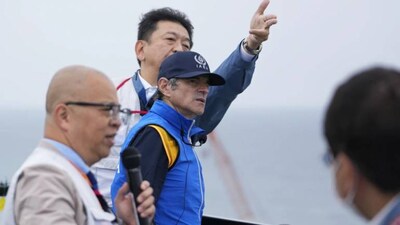
It also comes one day after Japan marked 13 years after the March 11 earthquake and tsunami struck, triggering the Fukushima disaster.
People inside and outside the country protested the wastewater release, with Japanese fishing groups fearing it will further damage the reputation of their seafood and groups in China and South Korea raising concerns, making it a political and diplomatic issue.
The utility, widely known as Tepco, said the levels of radioactivity around the plant had remained unchanged and it was still looking into what triggered the emission.
The first phase of work to bring the crippled Fukushima Daiichi nuclear power plant under control has been completed as scheduled, a Japanese minister said.
Japan has reportedly decided to raise the severity level of the crisis at its tsunami-crippled Fukushima Daiichi nuclear power plant to the maximum seven on an international scale from the current status of five.
The crisis at Japan's Fukushima Daiichi nuclear power plant is "grave and serious", Yukiya Amano, head of the UN's nuclear watchdog, said on Friday.
The Fukushima Daiichi nuclear power plant at the centre of Japan's crisis has six reactors. The plant is operated by Tokyo Electric Power Co (TEPCO). The following summarises what is happening at each unit, and the major risks:
The International Atomic Energy Agency (IAEA) has said that all units at the Fukushima Daini, Onagawa, and Tokai nuclear power plants are in a safe and stable condition. In fact, the IAEA remains concerned over the status of the Fukushima Daiichi nuclear power plant. CNBC-TV’18’s Sri Jegarajah reports the latest details from Tokyo.