




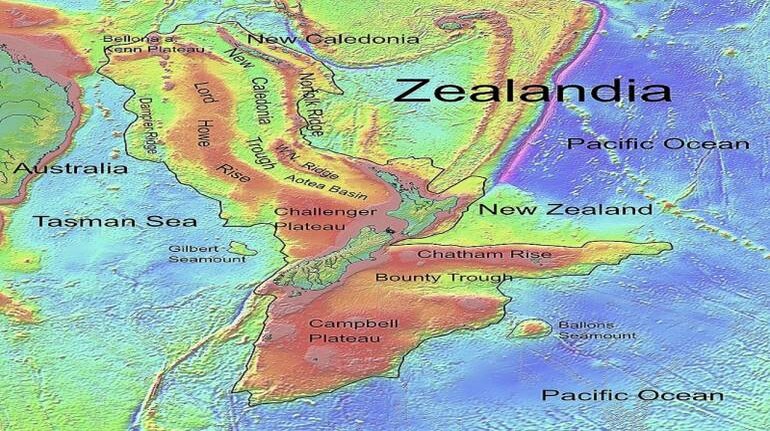
Recent scientific research has discovered that the submerged continent of Zealandia was much closer to land level than previously thought, providing pathways for animals and plants to cross continents 80 million years ago.
A two-month long scientific expedition by an international team has brought into light large amounts of fossils and evidence of large-scale tectonic movements said a report by The Guardian.
Professor Gerald Dickens of Rice University, who was part of the expedition has been quoted in the report, “the discovery of microscopic shells of organisms that lived in warm shallow seas, and spores and pollen from land plants, reveal that the geography and climate of Zealandia was dramatically different in the past.”
Zealandia which was declared earlier this year as the eighth continent by the Geological Society of America is a landmass in South Pacific that is predominantly submerged.
The continent that covers over 5 million square kilometres includes large tracts of areas extending from Lord Howe Island off the east coast of Australia to New Caledonia and New Zealand. It is believed that the continent, which was part of the Gondwana got separated about 80 million years back.
As part of the expedition, scientists drilled deep into the seabed at six selected sites leading to the discovery vast volumes of information, including those of the evolution and movement of flora and fauna in the South Pacific region.
It is expected that further research in the future will unearth more information regarding the continent.
Discover the latest Business News, Sensex, and Nifty updates. Obtain Personal Finance insights, tax queries, and expert opinions on Moneycontrol or download the Moneycontrol App to stay updated!
Find the best of Al News in one place, specially curated for you every weekend.
Stay on top of the latest tech trends and biggest startup news.




