Is anything not in flames right now?
I spent much of Wednesday scrolling through the apocalyptic photos coming out of the West Coast. Instagram shots of friends’ homes backlit by orange darkness, video of others driving across the Golden Gate Bridge under eerie orange skies. The images were surreal.
Meanwhile, in Washington, another unsettling fire burned.
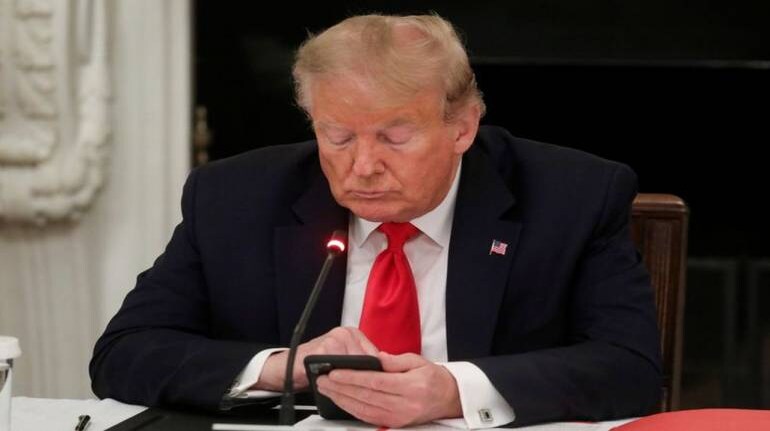
A bombshell report from a new book by Bob Woodward provided evidence backing up earlier reporting: that the president knowingly downplayed the “deadly stuff” of the coronavirus for months. Trump’s own words and Woodward’s reporting show that the president misled the public about the scale of the threat as he pressured governors to keep their states open and stoked protests against their restrictions.
After four years, it’s easy to be inured to the chaos coming from the White House. This week alone, the president described his military leaders as war profiteers and claimed, yet again, that “Anarchists, Agitators, Looters” were on the verge of invading the suburbs.
But the comments that Woodward reports, as Joe Biden and other Democrats have noted with outrage, stand out. More than 191,000 Americans have died of a virus the president admits he knew was deadly. While the exact estimates vary, multiple studies have found that taking protective measures earlier would have saved tens of thousands of lives.
In different times, Trump’s admission would have prompted an investigation — what did the president know, and when did he know it? — and maybe even calls for his resignation.
Now, no one expects any serious response from Washington. After failing to remove Trump last winter, Democrats are focused on electoral victories in November. Republicans generally save their critiques for anonymous media reports or to be monetized in bestselling books, as they attempt to rehabilitate their image after Trump turns out to be the kind of leader in private that his comments reveal in public.
In an interview on Fox News on Wednesday, Trump said he misled Americans because he didn’t want to “create panic” — a concern he doesn’t seem to have about his baseless warnings of suburban anarchy, or his years of speeches and ads depicting scenes of violence, disaster and economic carnage perpetrated by his Democratic enemies.
If anyone still believes the president and his allies are playing some kind of 3D political chess where every move is plotted, the publication of this book should finally put that idea to rest. Sure, no president can resist the lure of the legendary Woodward. But past administrations heavily managed their interactions with him, knowing his track record for unflattering portrayals. Certainly, they didn’t free associate in recorded late-night chat sessions.
Yet, even Woodward doesn’t escape this political moment unscathed.
The renowned journalist is a totem of the Washington establishment. He believes in the lofty ideals of the post-Watergate era that his most famous reporting helped usher into our politics. Like character. And leadership. And ethics.
That is neither this time nor this president. The debate surrounding whether Woodward should have disclosed Trump’s admissions earlier, given the pain of the virus and the erratic nature of the president he was covering, is valid.
But Woodward must grapple with larger questions about his worldview, as well.
As my Times colleague Jennifer Szalai wrote in her review of the book, the 77-year-old reporter is rooted in an “old-school establishment” that asks of the president “windy, high-minded questions like ‘What are your priorities?’” as they flatter those around him for information.
When everything is burning, perhaps the questions need to be more basic. Is it wrong to withhold information as hundreds of thousands of Americans die? And what responsibility for those deaths is borne by those who enable Trump’s behavior?
We don’t know how or when this fire will burn out. Or whether anything resembling Woodward’s Washington will be left in the ashes.
From Opinion: QAnon is coming and no one is at the gate
What is going on with QAnon, the false conspiracy theory that appears to be taking hold among some of Trump’s most devoted followers?
In a Times op-ed, researcher Annie Kelly analyzes how QAnon spreads and why it is finding an audience with so many women. Kelly reports that among the female adherents she interviewed at a QAnon rally, “many talked about how they had come out of a sense of maternal duty to protect the innocent.” That corresponds to a founding tenet of the conspiracy theory, that there’s a “cabal of Satan-worshipping pedophiles who are plotting against Trump while operating a global child sex-trafficking ring.”
“President Trump has flirted with the convoluted QAnon conspiracy theory for months,” writes Geoffrey Kabaservice in another Times op-ed. “Over 70 QAnon supporters have run for Congress as Republicans this year,” Kabaservice notes, and Trump and some in the House Republican Conference have embraced the theory’s adherents.
Times columnist Jamelle Bouie points out that one QAnon adherent, Marjorie Taylor Greene, “won 57% of the vote in the August runoff election for Georgia’s heavily Republican 14th Congressional District.” That means she’ll almost certainly win the general election.
Kabaservice argues that the threat posed to the Republican Party by QAnon followers is akin to the threat it faced in the late 1950s and ’60s from the John Birch Society. Influential party leaders need to forcefully eject QAnon and its followers from the party, as they had with the Birchers, he says, but “today there are no gatekeepers of similar stature on the political right.”
Kelly adds that “Our answer must be a balance of empathy for those who have been drawn in by QAnon’s seductive message, coupled with a firm rejection of its lies.”
— ADAM RUBENSTEINc.2020 The New York Times Company
Discover the latest Business News, Sensex, and Nifty updates. Obtain Personal Finance insights, tax queries, and expert opinions on Moneycontrol or download the Moneycontrol App to stay updated!
Find the best of Al News in one place, specially curated for you every weekend.
Stay on top of the latest tech trends and biggest startup news.