Union Communications minister Ashwini Vaishnaw is clearly a man in a hurry to bring about change in India’s booming but chaotic and stressed telecommunications sector. Addressing industry players at a digital infrastructure providers meet earlier this week, he warned the industry that while the government was keen on rolling out further reforms in the sector, the industry will also have to pull up its socks, particularly in improving the appalling quality of service experienced by India’s 1.17 billion mobile subscribers.
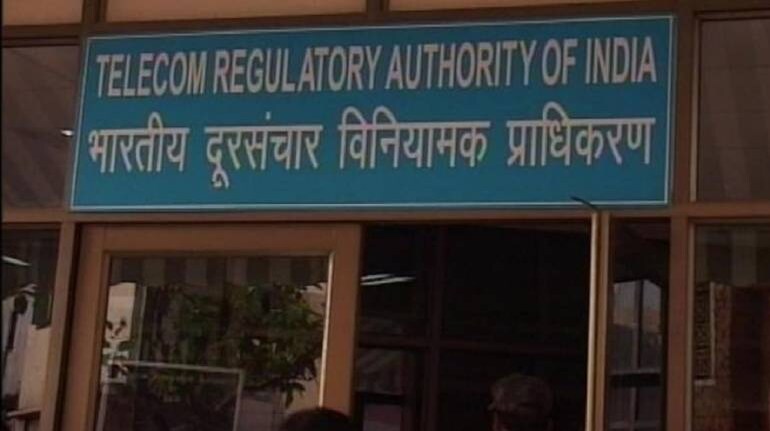
“It cannot be that just we keep doing, what you ask. You also have to do, what we ask,” the minister warned. He also revealed that he will asked the concerned department (the Department of Telecommunications in this case) to soon send a new consultation paper to the telecom regulator, the Telecommunications Regulatory Authority of India (TRAI) suggesting tightening quality of service standards for service providers “3X or 4X of what it is today.”
Strong words but I am certain that the handful of service providers left in the fray are hardly likely to be quaking at the knees at the prospect. That’s because TRAI’s track record is essentially a long laundry list of failures. Failures to regulate, failures to impose standards, failures to punish errant behaviour and above all, a failure to protect consumer interests.
Take the National Do Not Disturb registry — a service introduced by TRAI to protect consumers from unsolicited calls and spam commercial messages. Far from protecting consumers from spam, phishing and phone fraud, TRAI’s leaky security has ensured that the DND registry has actually become a readymade directory for spammers and fraudsters.
A couple of years ago, a Kochi-based cybersecurity start-up Technisanct found a database of over 93 million mobile phone numbers with the DND registry for sale on the dark web, for the measly price of $10! A survey by Local Circles earlier this year — across more than 37,000 respondents spread across 377 districts in the country — found that more than 67 percent of respondents received at least three spam calls every day. Add spam SMSs and the number of unwanted intrusions is likely to be double or treble that number. If TRAI had actually penalised pesky callers as per its policy (fines range from Rs 1,000 to Rs 10,000 per violation), the Finance Minister could have bridged the budget deficit with this revenue stream alone!
The DND is one of TRAI’s more visible and irksome failures but take almost any parameter of service quality — connectivity, call drops, quality of connection, data connectivity and speed — and the average consumer’s lived experience is profoundly different from the standards allegedly available on paper.
TRAI’s tale is repeated to a greater or lesser extent across virtually every sector which is supposedly under an independent regulator. Here’s a quick question: which do you think is the best regulated sector in India? By ‘best regulated’ I mean the sector where the consumers are best protected, enjoy a consistently high quality of service with minimal disruptions and, equally importantly, the players too enjoy the benefit of a stable and growth-oriented environment which does not stifle competition or innovation.
My vote will go to the banking sector. Think about it. The last bank failure we have had was the Punjab and Maharashtra Co-operative Bank in 2019. Even that was not a failure since the RBI managed to get the ailing bank merged with Unity Small Finance Bank and protect most of the small depositors’ money. True, there have been failures in the past and plenty of near-misses and oversights. But by and large, RBI, as the banking regulator, has managed to swing into action during a crisis and prevent any kind of large failure or systemic collapse like what happened in many countries after the global financial meltdown.
On the other hand, look at banking from the consumer point of view. There is plentiful choice, active competition and a very high basic standard of service across the system. More than 78 percent of Indians aged 15 or over now have a bank account. Under the Pradhan Mantri Jan Dhan Yojana for providing basic banking access to people at the bottom of the pyramid, 464 million accounts have been opened so far with outstanding balance of ₹1.73 lakh crore. As of June 2022, there were 159,000 branches operated by scheduled commercial banks. 99.4 per cent of identified villages in the country now have access to banking in some form within a 5 kilometre radius. And India is the world leader in digital payments. The Unified Payments Interface processed a staggering 6.5 billion transactions in August 2022, with a failure rate of less than 3 percent.
And why is the RBI more effective? Because it, more than most other sectoral regulators, actually uses the Constitutional autonomy granted to it, as well as its regulatory powers, reasonably effectively and in a fairly even-handed manner. Unlike most other sectoral regulators, it is not beholden to its parent ministry, has complete financial autonomy (in fact, it transfers a considerable sum from its surplus to the government every year) and crucially, has sufficient technical expertise within its fold to keep pace with the players it regulates.
Yes, it has been late to wake up to a crisis more often than not, but when it does, it ensures that a solution is found with minimal cost to the end consumer. Capital markets regulator SEBI, too, has been fairly effective as a regulator because it has considerable punitive powers and is not afraid to exercise them.
We have been “reforming” our economy for more than three decades now, but as anybody in business will tell you, red tape and political/bureaucratic control has not reduced significantly. It has just come back in a different form. Regulation is only as effective as its enforcement. And without adequate autonomy and accountability, regulators in India have often ended up being handmaidens of the system.
(Views are personal and do not represent the stand of this publication.)Discover the latest Business News, Sensex, and Nifty updates. Obtain Personal Finance insights, tax queries, and expert opinions on Moneycontrol or download the Moneycontrol App to stay updated!
Find the best of Al News in one place, specially curated for you every weekend.
Stay on top of the latest tech trends and biggest startup news.