M Rajendran
The Madras High Court order on Sterlite Industries has its own merits. It is also true that the decision is open to challenge before the Supreme Court. The company has indicated its decision to move the Supreme Court.
We are not short of precedents where legal disputes have been resolved without any disrespect to the courts. Such moves are necessary if India has to move up in the World Bank's ‘Ease of Doing Business’ ranking. In this light, the apex court’s efforts to form a committee to draft a mediation law is the way forward.
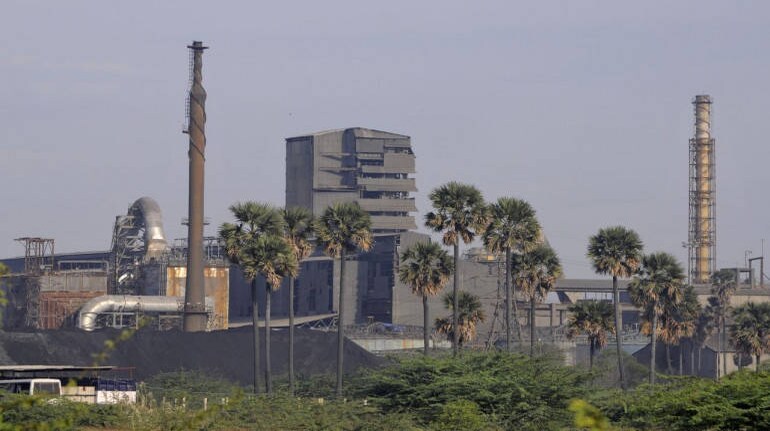
Politics over economics is the easiest way to create an issue and reap the gains. However, in the long run, its cascading effect will eventually engulf those creating it. Sterlite Industries set up this copper smelter in 1997 at Thoothukudi, in southern Tamil Nadu. Following violent protests in which saw 13 deaths and more than 100 injured, on May 28, 2018, it was shut by the state government.
The high court order could have an adverse impact on the economy, which is already under severe strain. Jobs are critical for the economy, and livelihood of more than 1,300 workers directly and over 20,000 workers indirectly associated with the plant at Thoothukudi, continue to be a significant question.
More than two years since its closure, the work in hand is enormous. Not just for the company, but also the people of Thoothukudi, Tamil Nadu and India.
During the 21 years, this project has contributed to the 40 percent of copper requirements of industries in India. Industries manufacturing copper motors, wiring, radiators, connectors, brakes and bearing use refined copper. India's thrust for electric cars has pushed this demand up by about 20 percent.
A glance at related statistics reveals the importance of Sterlite in pushing the economy. Domestic production of copper between three copper processing companies grew by about compounded annual growth rate (CAGR) of 10 percent between 2014 and 2018. After Sterlite closed, production fell by 46 percent in 2019. What makes this fall severe is the fact that India has only 2 percent of the world’s copper reserves, thereby relying heavily on importing.
The closure of such a crucial industry aggravates the issues that are already present — such as lack of jobs, which could lead to social unrest, and the stagnation of the economy, locally and have an effect nationally as well. The closure further puts stress on ancillary industries, lower their production, and could lead to job cuts. The domino effect would be felt on daily wagers and associated sectors, like transport and hotels. According to state government officials and industry experts it is estimated that the plant was generating GST and other revenues to the tune of about Rs 2,500 crore. For the past two years that revenue has been zero.
Judgments read out by the National Green Tribunal, the Supreme Court and the Madras High Court have their merits and must be respected, but, it must not be forgotten that economic growth requires activation of jobs, manufacturing, production, services and consumption.
Environmental concerns are important and cannot be wished away. Equally important are economic concerns. More than an either-or approach, the right way would be to establish a synergy between the two and treat both as equally important.
India played a prominent role in developing and adopting the UN Sustainable Development Goals (SDG). The country is committed to achieving these by 2030. The SDG India Index is an aggregate measure that will assess India and its states' progress towards the SDGs. Goal 8 of the SDG is about ensuring 'decent work and economic growth’.
The political system should be an enabler to protect the environment, so is its commitment to generate employment and develop industries. Any lopsided approach, which prioritises one over the other, will not help in the overall development of the state.
Industries should be allowed to develop and generate employment and participate in the economic, social, environmental, infrastructural growth of the region. In the case of the Sterlite Copper plant, the Supreme Court will set the future course of action.
M Rajendran is a senior business journalist. Views are personal.

Discover the latest Business News, Sensex, and Nifty updates. Obtain Personal Finance insights, tax queries, and expert opinions on Moneycontrol or download the Moneycontrol App to stay updated!
Find the best of Al News in one place, specially curated for you every weekend.
Stay on top of the latest tech trends and biggest startup news.