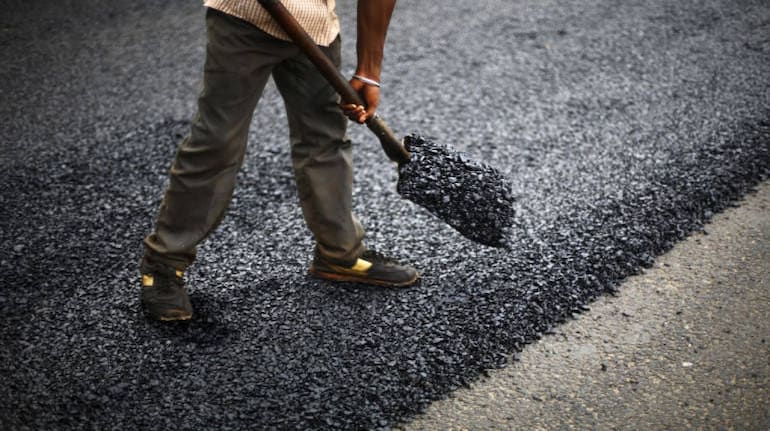
On December 8 the Supreme Court upheld the land acquisition process for the controversial Chennai-Salem expressway. In a relief to the Tamil Nadu government, which over the last few years has seen a series of project stymied by protests and litigation, the apex court reversed the order of the Madras High Court that had quashed the acquisition notification. The 277-km eight-lane greenfield expressway from Chennai to Salem is expected to significantly reduce travel time between the state capital and the industrial hubs in the western part of the state leading up to Coimbatore.
The key issue that the apex court ruled on was whether environmental clearance was required prior to issuing notification for land acquisition. The bench said that while environmental clearance must be acquired before the commencement of the actual work, it was not a prior requirement that a land acquisition notification be given. While the ruling was based on the court's interpretation of the National Highways Act, it also said that the notification process must start afresh in respect of some lands where revenue records stood mutated following their acquisition.
The judgment predictably kicked up a political uproar in Tamil Nadu with the Opposition vowing to keep up the agitation for the scrapping of the project. Ever since the death of former chief minister J Jayalalithaa in 2016, Tamil Nadu has witnessed a series of protests against several infrastructural and industrial projects. In the last four years, hydrocarbon extraction in the Cauvery basin, the Sterlite factory at Thoothukudi, the GAIL pipeline, the Neutrino Observatory project and the Uppur Thermal Power Project have run into rough weather because of protests and/or court cases and orders.
The Chennai-Salem Expressway was one more casualty as political parties protested land acquisition and felling of trees for constructing the expressway. Their argument is that there are already two highways to reach Salem from Chennai; a third one was not necessary. However, the state government is of the view that this is a necessity as it not only speeds up transportation along the industrial belt, but it will also help the defence corridor that is to be set up in the state.
Besides, the proposed expressway will help in better connecting the temple town of Thiruvannamalai. Close to 65 km of this expressway will connect Chennai with its suburban town Chengalpettu — this will offer a much-needed alternative to the extremely congested Grand Southern Trunk Road.
Those opposing the expressway point to the 1,900 hectares of land requirement (reduced from 2,700 hectares), which includes around 50 hectares of forest land, and also question the felling of thousands of trees. It is also highlighted that the compensation given to farmers, who will be losing their land in the process, as being too meagre. It is also alleged that the expressway is being built to help the mining lobby in Kanjamalai to transport iron ore to the port in Chennai.
Chief Minister Edappadi K Palaniswami has been aggressively pushing for investment in the state and has been quite successful over the last two years. The last two years have in a way made up for the loss of major investments in Tamil Nadu due to protests and delays in approvals for projects. In terms of attracting investment Tamil Nadu ranked second among states in India for the second quarter of 2020-21. Before the pandemic Palaniswami went to the United States, the United Kingdom and West Asia in a bid to attract investments.
Tamil Nadu’s recovering rate of GDP growth is also testimony to the restored confidence of industry and business. It is not that the State has turned a blind eye to environmental concerns. By supporting the shutdown of the Sterlite factory and by declaring the Cauvery belt a protected zone to save it from further hydrocarbon extraction, Palaniswami has tried to balance development and industrialisation, and at the same time protecting the environment.
The Supreme Court ruling will certainly come as a boost for the government’s efforts to push development in the region. The National Highway Authority of India (NHAI) is expected to start work once the environmental clearances are obtained. However, legal challenges can be expected here as well, and that could further delay the project.
The ruling AIADMK government will be hoping that this issue does not flare up in the next six months. With the assembly elections around the corner, dealing with organised protests against this expressway is one problem the ruling party can do without.
Discover the latest Business News, Sensex, and Nifty updates. Obtain Personal Finance insights, tax queries, and expert opinions on Moneycontrol or download the Moneycontrol App to stay updated!
Find the best of Al News in one place, specially curated for you every weekend.
Stay on top of the latest tech trends and biggest startup news.