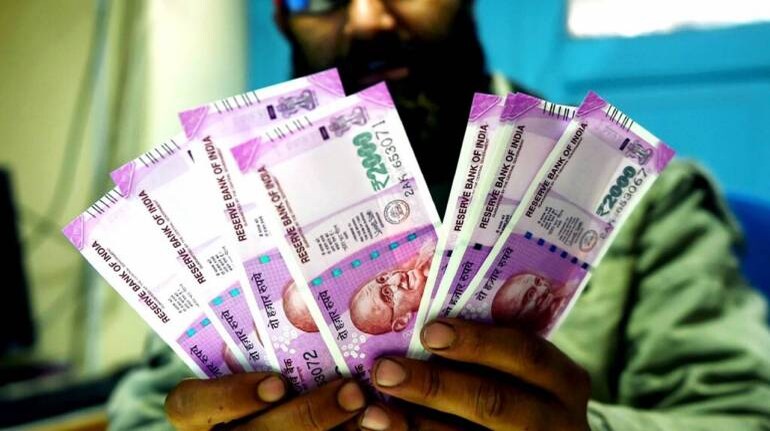
Late Friday May 19 evening, the Reserve Bank of India (RBI) announced that it was withdrawing the Rs 2,000 denomination banknotes from circulation though it would continue to be legal tender. The announcement quickly led to drawing parallels with the demonetisation of November 2016 when the central bank not just withdrew the Rs 500 and Rs 1,000 notes but also declared them as ‘not legal tender’. The Rs 2,000 note had been introduced within days of the demonetisation of the Rs 500 and Rs 1,000 notes - in a move to quickly remonetise the economy.
The central bank noted two reasons for withdrawing the Rs 2,000 notes. First, it was not commonly used for transactions and, second, most of the notes were past their shelf life. Indian currency notes have a shelf life of 4-5 years and the RBI’s Clean Note policy mandates timely removal of soiled notes and their replacement with new ones. As there was low interest in this denomination, withdrawing the notes was preferred to replacing the soiled notes.
The value of the Rs 2,000 notes in circulation at its peak on March 31, 2018 was Rs 6.73 lakh crore or 37.3 percent of the total currency. It declined to Rs 3.62 lakh crore, which is only 10.8 percent of the notes in circulation on March 31, 2023. However, there’s more to the RBI’s rationale for withdrawing these notes than meets the eye. It creates problems for all three stakeholders: the central bank, the commercial banks and most of all, the citizens.
Pain For The Public
The general public is likely to be angry with this constant chopping and changing of currency denominations. The public does not understand the definition of legal tender. For them, a currency note is a currency note which should be acceptable. Ad hoc decisions by the central bank create chaos and confusion. The public will suffer as waiting in queues to exchange/deposit notes in bank branches will not be a pleasant experience, especially in sultry summers. Though banks have been directed to make arrangements to minimise inconvenience for their customers, the RBI is clearly underestimating how tiresome the process can be for customers.
Banks and their branches will have to again face the brunt of this decision. The attention and energies of banks and their branches will shift towards handling the exchange and deposits of the currency. Though the volume of banknotes withdrawn is smaller compared to the 2016 demonetisation, it is still a major challenge in a large country. A better approach would have been to direct banks to silently withdraw the Rs 2,000 notes from circulation.
Frequent decisions on withdrawing currency notes might affect how people hold money and wealth. After all, money serves three functions for its holder: a medium of exchange, a store of value and a unit of account. As currency notes become less reliable as a store of value, people might prefer to keep their wealth (both accounted and unaccounted) as gold, real estate, etc. Such changes from monetised assets to lesser monetised assets create problems for an economy. Digital payments will continue to benefit from these decisions.
The RBI governor Shaktikanta Das is confident that the impact on the economy will be marginal. Yet, if a larger share of Rs 2,000 notes is exchanged at bank counters, the velocity of money might be impacted and that could be inflationary over the short term. On the other hand, if the larger share is deposited into accounts, it will strengthen the bank balance sheets. That will be a boon for banks as they are facing slow growth in deposits. The total deposits in the banking system is Rs 184.4 lakh crore currently. Thus, if all the Rs 2,000 notes with the public amount move towards bank deposits, it will increase bank deposits by around 2 percent.
Eroding Trust
Further, the withdrawal decision questions RBI’s policy on currency management once again. This is the third decision to withdraw currency notes of specific denominations in less than 10 years. The central bank claims that the latest decision is similar to the 2014 move, given that the notes will retain the legal tender status and can be exchanged over the next 4-5 months. However, it is also similar to the 2016 demonetisation as the Rs 2,000 notes can be exchanged with only lower denomination currencies. For the moment, there is no clarity on what will be the status of the Rs 2,000 note after September 30. The window to exchange or deposit the banned notes may get extended but it appears that it might not continue as legal tender after that.
The ad hoc manner of withdrawing banknotes erodes trust in both the central bank and the currency. The RBI used its Clean Note Policy as a backdrop to achieve a mini-demonetisation, and that’s a disastrous policy. The public may now start worrying about a possible withdrawal of the Rs 500 notes as well. Ideally, the central bank should have well-defined and time-bound guidelines on replacing soiled notes in a manner that is not disruptive for the citizens and businesses.
Let me end this article by remembering Robert Lucas, the prominent macroeconomist who passed away recently. One of his major contributions was rational expectations, which says individuals are rational and form their expectations based on available information and past experiences. While rational expectations have been criticised as people are mostly irrational, in the case of Rs 2,000 notes they have acted rationally. People had rightly expected that the Rs 2,000 note would be withdrawn and stayed away from it. If Prof Lucas does get to see these developments from his heavenly abode, he might smile and say: “Told ya”.
Amol Agrawal is faculty at Ahmedabad University. Views are personal and do not represent the stand of this publication.
Discover the latest Business News, Sensex, and Nifty updates. Obtain Personal Finance insights, tax queries, and expert opinions on Moneycontrol or download the Moneycontrol App to stay updated!
Find the best of Al News in one place, specially curated for you every weekend.
Stay on top of the latest tech trends and biggest startup news.