




Manas Chakravarty
The US Federal Open Market Committee's raising its policy rate by 25 basis points to 2.25-2.5 percent on December 19 was widely expected and had already been discounted by the markets. Why then did the US market fall on the news?
What spooked the market, leading to a fall of 1.5 percent in the S&P 500 stock index, was the Fed's assessment that there would probably be two more hikes in 2019. True, that's better than its earlier projection of 3 rate hikes in 2019. But the markets have lately been very worried about storm clouds gathering over global growth and some had hoped that the Fed would signal a pause. The eternal optimists had gone to the extent of suggesting that the programme of shrinking its balance sheet, dubbed quantitative easing, would be curtailed. Unfortunately for them, the Fed did none of that.
The Fed's median projection is now that the Fed Funds rate will be 2.9 percent at the end of 2019, instead of 3.1 percent in the September projection. US real GDP growth is expected to be 2.3 percent in 2019, down from 3 percent this year. In September, the Fed had guided for 2.5 percent US growth in 2019. The Fed's projection of the unemployment rate has been pushed up a little and its prognosis of the inflation rate has been pushed down slightly.
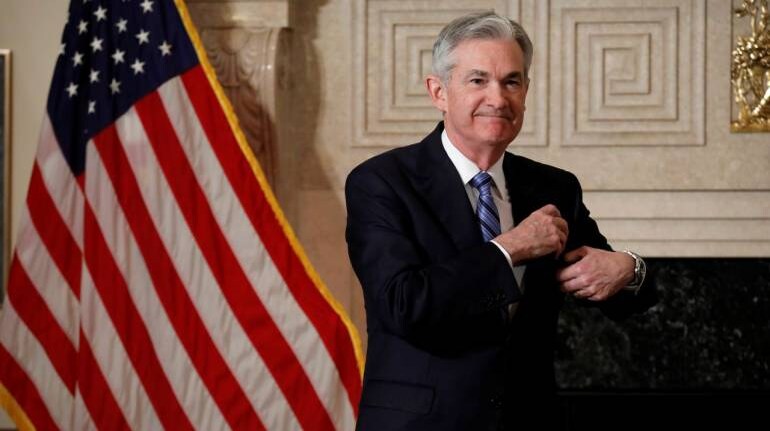
The US Fed's statement and Chairman Jerome Powell's press conference sent the message that:
Last but perhaps most importantly, he sent the message that President Trump's rants against the Fed raising rates have no effect on monetary policy decisions.
The Fed decision means that markets will continue to grapple with uncertainty about US monetary policy. Quantitative tightening will, however, continue to provide support to the US dollar, which could be negative for emerging markets.
What does this mean for the prospects ahead? The answer to that question has been given by Claudio Borio, Head of the Monetary and Economic Department at the Bank for International Standards. He said, 'It means that the market tensions we saw during this quarter were not an isolated event. As already noted on previous occasions, they represent just another stage in a journey that began several years ago. Faced with unprecedented initial conditions - extraordinarily low interest rates, bloated central bank balance sheets, and high global indebtedness, both private and public - monetary policy normalisation was bound to be challenging especially in light of trade tensions and political uncertainty. The recent bump is likely to be just one in a series.'

Discover the latest Business News, Sensex, and Nifty updates. Obtain Personal Finance insights, tax queries, and expert opinions on Moneycontrol or download the Moneycontrol App to stay updated!
Find the best of Al News in one place, specially curated for you every weekend.
Stay on top of the latest tech trends and biggest startup news.




