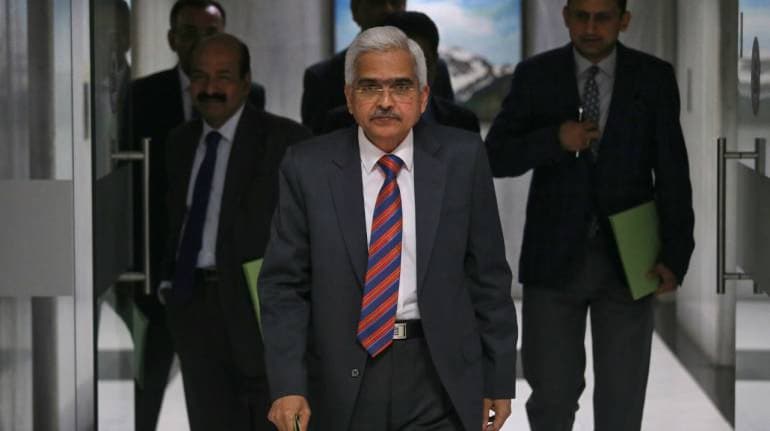
On December 7, the Reserve Bank of India (RBI) announced a 35 basis points hike in the repo rate, which is lower than its past four hikes since May. The rate hike has come on the back of a slight decline in CPI inflation, and mixed news on GDP growth.
While the World Bank has upgraded India’s FY23 growth forecast to 6.9 percent, the RBI has downgraded it to 6.8 percent. RBI Governor Shaktikanta Das left it to others to judge whether the policy stance was hawkish or dovish. Technically, the increase in the repo rate to 6.25 percent amounts to monetary tightening, but the reduced quantum of the hike means that the RBI is now more relaxed at the wheel as far as inflation is concerned than it was a couple of months back.
The past hikes are showing some results as seen by the CPI inflation coming down to a three-month low of 6.77 percent in October. Global oil and other commodity prices are also slowing down as recessionary trends become entrenched across advanced economies. Therefore, a sharper hike may not have been felt necessary.
Das made it clear that India’s monetary policy decisions are not based on what the United States Fed does. While this may be true in principle, in practice the Fed’s actions affect India’s domestic economy which warrants RBI action. For instance, the Fed’s policy rate hikes during this year helped the US dollar to become stronger. If the rupee had weakened any more than it did, there would have been a greater pass through to domestic inflation. It is, therefore, well within the RBI’s inflation mandate to decide on the repo rate with a watchful eye on the Fed’s stance.
Indeed, Fed Chairman Jerome Powell recently indicated that smaller hikes are likely in December. The RBI’s moderation of the pace of rate increase seems aligned with the Fed’s expected action, as the spill-over effects of the Fed tightening on the rupee and consequently inflation would be muted.
On the other hand, Das has said that inflation continues to be a challenge, and, therefore, the monetary policy action was necessary. Even if the current inflation stems from supply-side factors such as the lingering effects of COVID-19 and global supply chain disruptions, the RBI has made it clear that monetary tightening is necessary to anchor inflationary expectations so that second round effects of cost push factors don’t kick in.
Admittedly, India’s inflation is not entirely due to supply factors as domestic demand is resurgent, and is also a contributing factor. A host of indicators of urban and rural consumption suggest robust economic activity. Bank credit growth accelerated to 17.2 percent in September, and was broad based across customer segments and bank groups. Therefore, monetary tightening is understandable as there is still some ground to cover before inflation comes down to comfortable levels, and is closer to 4 percent, which many people forget is the actual target.
The only question now is whether this rate hike is the last one in the current cycle. While the RBI has projected the inflation rate to be 6.7 percent during the current financial year, it seems confident that the headline number will slip below 6 percent i.e. the upper end of its target range in the last quarter of FY23. However, it has assumed crude oil price (India basket) of $100 per barrel for these inflation forecasts. The last time the India basket was above $100 was in July, and since then has been on a falling trajectory to reach $78.58 as on December 6.
If this downward trend continues, which seems likely owing to a global recession, the headline inflation may turn out to be lower than the RBI’s forecasts. Second, food inflation is expected to moderate with a good Rabi harvest, providing relief on cost push factors. Finally, the RBI’s projection for GDP growth in Q3:FY23 and Q4:FY23 are 4.4 percent and 4.2 percent, which means that demand-pull inflation could be less prevalent than in the first half of the year.
In light of the above, the lower quantum of the hike seems like a prudent decision that balances the growth and inflation risks, making the monetary policy stance neither hawkish, nor dovish. In the words of a former RBI Governor, the RBI may have taken a wise or an ‘owlish’ stance.
Rudra Sensarma is Professor of Economics, Indian Institute of Management Kozhikode. Twitter: @RudraSensarma. Views are personal, and do not represent the stand of this publication.
Discover the latest Business News, Sensex, and Nifty updates. Obtain Personal Finance insights, tax queries, and expert opinions on Moneycontrol or download the Moneycontrol App to stay updated!
Find the best of Al News in one place, specially curated for you every weekend.
Stay on top of the latest tech trends and biggest startup news.