One of the most heartbreaking lines to read in a judgment (though there would be many contenders for this) can be found in paragraph 210 of the judgment convicting the killers of Mid-Day journalist Jyotirmoy Dey: “In so far as the accused no. 11 - Ms Jigna Vora, is concerned, …. there is no trustworthy evidence against her. In fact, the learned SPP (Special Public Prosecutor) did not address arguments against Ms Vora with much force.” She was acquitted of all charges.
In 2011, J Dey was murdered in broad daylight at the behest of gangster Chhota Rajan. As the media pressure grew, the Mumbai Police cunningly diverted attention by arresting fellow journalist Jigna Vora — then a single mother to a four-year old child, under the stringent Maharashtra Control of Organised Crime Act (MCOCA). They successfully opposed her bail for eight months, claiming that she had conspired with Rajan to kill Dey out of professional rivalry.
As we now know, it was merely subterfuge. However, till date, nobody has been held accountable for this vile, flagrant, and self-serving abuse of authority.
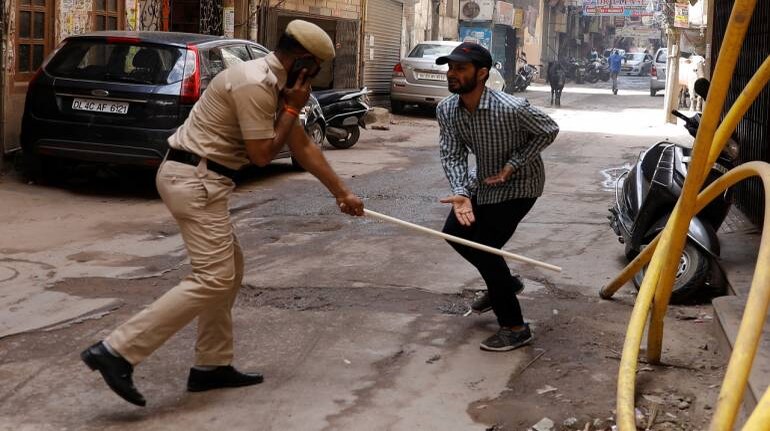
Over the last week, we have seen several instances of police abuses on citizens — most alarmingly, the assault and humiliation of a young doctor in Hyderabad who was on her way to a hospital, responding to an emergency call. According to news reports, the police compelled her to withdraw her complaint. Videos of delivery boys and vegetable vendors being indiscriminately beaten up, and migrant workers forced to hop-and-squat have emerged. Coming after accounts of egregious excesses in quelling protests against the Citizenship Amendment Act (CAA) at universities, and its alleged complicity in the recent Delhi riots, make this one of the most inglorious periods in the history of Indian Police.
However, are the police accountable at all? If they are, why do they seem to operate with such impunity? The answer is both political and legal.
Sections 197 and 132 of the Code of Criminal Procedure mandate that no prosecution shall be started against law enforcement officers without the previous sanction of the State, which is often withheld. Police are practically beholden to the politicians running the state government, in spite of specific directions by the Supreme Court to ensure their independence (Prakash Singh v Union of India, in 2006, but still not complied with by most states). Politicians are themselves often accused in multiple cases, and such protection for police is often a reward for carrying out the politicians’ bidding, thus perpetuating the cycle.
That said, the Supreme Court has held (PP Unnikrishnan v Puttiyottil Alikutty, for instance) that this protection is available only for actions in discharge of official duty, and that where the officer was acting outside his/her powers (such as assault of a prisoner, or illegal detention), such actions will not get the protection of Section 197. Violation of fundamental rights by itself negates the defence of ‘official duty’. However, for a citizen to even privately pursue a complaint against a police officer is fraught with obstacles.
Most importantly, the fact is that such a complaint will have to be investigated by a colleague of the accused officer. In Prakash Singh, the Supreme Court introduced a slew of directions, including the setting up of a Police Complaints Authority to hear complaints against officers of all ranks. Yet, a 2018 report by the Commonwealth Human Rights Initiative found that only six out of 28 states had provisions for independent investigators in these committees, as was mandated. Even these six states have not implemented the other directions of the apex court in full.
Uttar Pradesh had not complied with any of the directives (as of 2018). Readers will remember several instances in UP over just the last year where women complaining of sexual assault or rape were prevented from even filing a complaint, or otherwise harassed, by the very police officers who are statutorily charged with investigating the complaints. While not a panacea, states’ compliance with the directives might be a good place to start for meaningful reform.
Ironic as it must seem, it is the law-enforcement — the police, judges, even lawyers — that seem to enjoy most immunity against misconduct. A doctor, for all the reverence we show them, can get hauled up for medical negligence under the consumer protection law, apart from other liabilities. Those charged with enforcing the law, on the other hand, seem to have a free pass.
Abraham C Mathews is a Delhi-based advocate. Twitter: @ebbruz. Views are personal.
Discover the latest Business News, Sensex, and Nifty updates. Obtain Personal Finance insights, tax queries, and expert opinions on Moneycontrol or download the Moneycontrol App to stay updated!
Find the best of Al News in one place, specially curated for you every weekend.
Stay on top of the latest tech trends and biggest startup news.