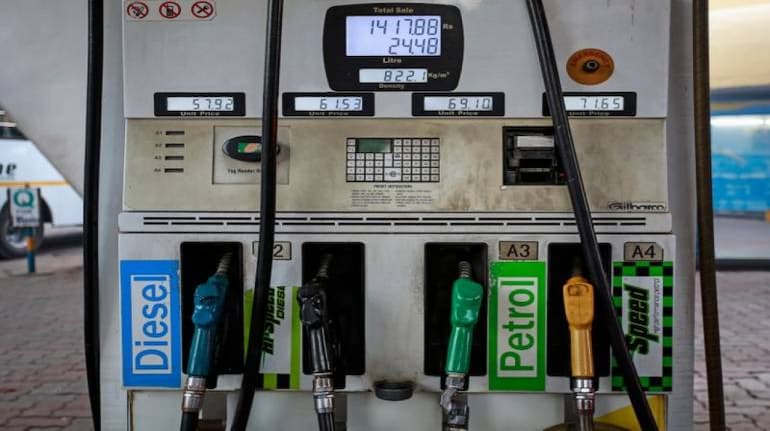
The almost daily rise in prices of petrol and diesel that we are seeing off late is a reminder of the time nearly 50 years ago when Indians of another era woke up to a similar spectre. The 1973 oil embargo by some Arab countries, followed by the launch of the Organization of Petroleum Exporting Countries (Opec), led to a huge surge in oil prices. India, as dependent on oil imports then as it is now, had to follow suit.
Prices of kerosene, the main fuel used by households, and cooking oil, rocketed, forcing the government to ration their supply and leading to long, interminable queues outside shops.
India’s Fifth Five Year Plan envisioned oil prices climbing to $4.75 a barrel by 1978. Instead, they were up to $8 a barrel by 1974. What’s more, with 90 percent of the crude oil imports marked for critical uses including in fertilisers, power generation, diesel oil for trains and tractors, and furnace fuel for big industries, there was little scope to curb consumption.
However, given the low base of private vehicle ownership, there was little impact on India’s car industry. The fuel-guzzling Ambassadors and Fiats kept trundling out of the factories and since prices of tickets in public transport were a political hot spot, the government ensured commuters remained immune to the rising fuel price graph.
Globally though, and in particular in the United States, that spike fundamentally changed the auto industry. Till 1972, all the non-US brands together had a low 13 percent market share in the US. The demand for more fuel-efficient vehicles saw a rush of Japanese and European cars into the world's biggest market, and today almost 50 percent of the cars in the US are made by companies such as Toyota, Honda, Nissan and Hyundai.
In an effort to reduce the weight of cars and boost their fuel economy, manufacturers started innovating furiously and many of these innovations define today's automobiles. Think turbocharging, the use of lightweight materials and front-wheel drive. All of these are a result of the innovations unleashed by that Opec move.
There were other more profound changes to the market, not all of which were very positive. Thus, along with triggering the quest for alternate fuels, it also paved the wave for the rise of the SUVs as Americans, not happy with the smaller cars being launched, went looking for more space. We can see that odious trend continuing till today with Indians evolving their own version of the low-cost SUV.
In most of these changes India has merely aped the West. This time however, with the runaway prices of fuel in the country bucking the trend of falling prices elsewhere, India has to have its own agenda of change.
There’s a view that letting fuel prices continue their upward march, is part of the government’s plan to nudge motorists to buy electric vehicles. Under normal circumstances rising prices of such a critical commodity particularly in a year when several key states are going to the polls would have certainly seen robust intervention. That there hasn't been any so far even in the face of trenchant criticism would seem to suggest this is a once-in-a-lifetime effort at behaviour change.
The aim in this case is to wean car owners off fossil-fuel-based vehicles and the tool seems to be soaring oil prices. In the past such a strong stick and carrot approach has worked. We saw that recently when the steep fines for not wearing masks did far more to drive Covid-19-appropriate behaviours than the appeals and messages on mass media.
Yet changing the vehicle mix in India may not be such an easy thing. In general, rising prices impact demand if consumers are able to find substitutes. In the absence of suitable substitutes, that impact is limited. It is evident that as yet India doesn't have enough EV models at various price points to give buyers enough options. Furthermore the charging infrastructure doesn't provide comfort to drivers.
The huge rise in car ownership in India along with galloping levels of pollution represent a failure of markets as well as of public policy planning. The solution lies in a policy initiative that reverses the earlier steps. The central government did announce significant spending on metro systems across the country in the recent budget. In addition, there’s also a boost for special freight corridors to push the use of the rail network. These are pieces of the tapestry that will ultimately build a mobility future based on cleaner fuels.
What's missing is a comprehensive plan that's clearly and candidly communicated to the people.
Discover the latest Business News, Sensex, and Nifty updates. Obtain Personal Finance insights, tax queries, and expert opinions on Moneycontrol or download the Moneycontrol App to stay updated!
Find the best of Al News in one place, specially curated for you every weekend.
Stay on top of the latest tech trends and biggest startup news.