

co-presented by
ASSOCIATE SPONSORS
co-presented by


ASSOCIATE SPONSORS







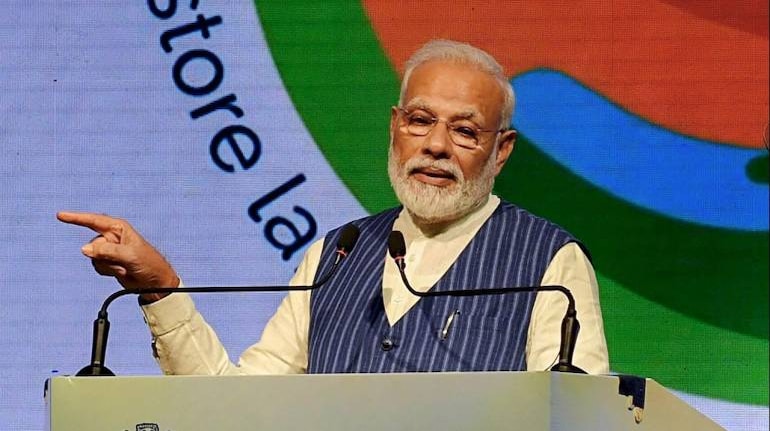
Prime Minister Narendra Modi’s visit to the US last week was a significant initiative in reaching out to the US President Donald Trump after months of negative headlines on the state of bilateral relations. During his visit, Modi managed to court Trump effectively so as to mellow down his criticism on trade even as he stood his ground on Kashmir. Trump himself was effusive in his praise of Modi and India at the ‘Howdy Modi’ event in Houston and Modi showcased the power of Indian Americans for the American political establishment.
Modi has been engaging Trump systematically and this was their fourth meeting in 2019. This has clearly borne fruit and Indo-US relations have been much more stable than America’s ties with some of its closest partners. Despite Trump’s reputation for being a transactionalist, his term has seen a burgeoning of Indo-US strategic partnership. This was underscored by Trump in the Houston rally. This has happened as America’s ties with China have deteriorated dramatically, giving India a renewed space to carve out a productive engagement with the US at a time when its own ties with China have been troublesome.
China’s support for Pakistan’s position on Kashmir at the United Nations Security Council (UNSC) has once again underscored the difficult trajectory of contemporary Sino-Indian relations. Last month, the UNSC held closed-door informal consultations in response to a letter written by Pakistan’s foreign minister Shah Mahmood Qureshi to the president of the UNSC on the situation in Jammu and Kashmir (J&K), which was supported by China. This was Pakistan’s desperate bid to internationalise the issue of Kashmir. Its efforts also saw Beijing working with Islamabad to rake up the status of Aksai Chin, a territory in Ladakh that China illegally occupies, arguing that New Delhi’s decision to abrogate Article 370 challenged China’s sovereign interests and violated bilateral agreements on maintaining peace and stability in the border area. Despite the isolation of China at the UNSC, the message to India was clear: Beijing would join forces with Pakistan to hurt Indian interests at every possible forum.
By backing Pakistan’s request for the UNSC to discuss India’s Kashmir move, China has signalled its priorities and made any normalisation of ties almost impossible. India’s deft diplomatic handling of the situation has ensured that China stands isolated at the UN. This repeated isolation notwithstanding, China remains unambiguously committed to sustaining its partnership with Pakistan.
China’s aggressive effort to “internationalise” the Kashmir issue will generate calls in India for standing up to it. India is not without options and has shown it’s not shy of using them. China can’t expect that its priorities on trade and 5G would be considered favourably by India if it continues to challenge the fundamentals of good neighbourly ties. If China is so aggressive on Kashmir, then nothing stops India from raking up issues like Hong Kong and Xinjiang. Beijing should be under no illusion that, just because the Chinese President would be visiting India this month, ostensibly to take the “Wuhan spirit" forward, India would hesitate in responding to its provocations. It should realise that there is no major constituency left in India today that has a favourable view of China. If China has a long-term strategy of containing India within South Asia, then India can just as easily adopt a strategy of challenging China’s core interests. And India is trying to do this by building solid partnerships with other major powers like the US. India is even engaging Russia in the hope that the budding alliance between Moscow and Beijing can be snapped.
Modi became the first Indian prime minister to visit the Russian Far East Region last month to give “a new direction, new energy and new speed” to relations between the two countries. Modi’s presence at the Eastern Economic Forum is important at various levels. Russia’s Far East is a huge land mass which is rich in resources but is sparsely populated and underdeveloped. With the centre of gravity of global economics shifting to Asia, Putin is keen on focusing on the Far East and develop it with the help of Asian powers. So far, Chinese dominance in the Russian Far East has been palpable, much to the discomfort of Moscow. And it is in this context Putin’s attempt to diversify assumes importance so as to lessen Russia’s growing dependence on China. Indian investors will also find much of value as they look at the Russian Far East and explore investment opportunities there.
The challenge in front of India and Russia is that they need to transform a 20th century partnership and make it fit for the 21st century. Global trends are evolving rapidly and major powers are re-defining their ties with each other to match their contemporary requirements. In light of these trends, New Delhi will also have to be diplomatically nimble as it seeks to engage major powers more substantively.
Harsh V Pant is director, Studies at Observer Research Foundation, New Delhi and professor of international relations, King’s College London. Views are personal.
Discover the latest Business News, Sensex, and Nifty updates. Obtain Personal Finance insights, tax queries, and expert opinions on Moneycontrol or download the Moneycontrol App to stay updated!
Find the best of Al News in one place, specially curated for you every weekend.
Stay on top of the latest tech trends and biggest startup news.