In recent months, there have been earnest calls to step up investments in public health delivery. As the SARS-Cov2 virus scorched its way across major cities, critically ill patients landed up at the doorstep of public hospitals. The private sector, owing to a variety of reasons, went into retreat. Public hospitals, already under-resourced, were overwhelmed.
Things have now eased but it seems entirely logical to assume that the only solution to prevent a repeat is to ramp up capacity in public healthcare. To be sure, a publicly funded healthcare system that follows best practices and delivers quality, free healthcare, is desirable – and ideal - for the country. As a Public Health Foundation of India study showed, healthcare costs pushed 55 million Indians into poverty in a single year (2011-12).
However, this will take concerted investment over several years needing capital investment, human resources such as doctors and nurses – already in short supply – and the nurturing of a culture of quality and service that is held to a standard. To achieve a turnaround, much will have to change including India’s public health investment which has languished at a little over one per cent of GDP for several years.
The private sector, meanwhile, is already a dominant provider. In 2015, the National Sample Survey Office (NSSO) survey of over 3.3 lakh households found that an average 75 per cent of the surveyed population in rural and urban areas visited private institutions for healthcare. A 2016 report by the law firm Nishith Desai Associates observed that hospitals and labs attracted foreign direct investment of USD 3 bn between April 2000 and June 2015.
It is no wonder then that leveraging the private sector to improve access to healthcare has been the big challenge before policy experts and the government, even before the pandemic. Over a decade ago, this paved the way for state-specific health financing schemes that paid for treating catastrophic illnesses of low income earners even if care was sought from private hospitals. Arogyasri in Andhra Pradesh and Jeevandayi in Maharashtra, are two such instances.
Then, in 2018, the most ambitious scheme yet, the Centre’s Ayushman Bharat Pradhan Mantri Jan Arogya Yojana (AB-PMJAY), was launched. (States were free to integrate their schemes with it and some did.) According to the Ministry of Health, of the 23,000 hospitals empanelled with AB-PMJAY, 45 per cent are private accounting for 52 per cent of overall treatment. AB-PMJAY provided free treatment to over 1.26 crore beneficiaries since its launch, it states.
However, at the best of times, these schemes have been plagued by issues of optimum pricing, inadequate private sector participation, patient complaints of being charged extra etc.
The pandemic has queered the pitch further. One, private hospitals have felt the financial impact of the pandemic and the lockdown. Among hospitals empanelled with AB-PMJAY alone, there was a sharp drop in activity with state-to-state variations during various phases of the lockdown. Smaller hospitals faced a steeper decline. For details, see the working paper by the National Health Authority on the impact of Covid-19 on AB-PMJAY, here.
“Surveys and discussions conducted across the country have indicated that providers are facing financial and service delivery challenges from factors such as low utilization, delayed payments, inadequate and expensive supply of PPE along with disruptions to the commodity supply chain,” the paper’s authors wrote. “Beneficiaries continue to face physical barriers to access facilities even post‐lockdown as well as information asymmetry and fear of contracting the virus at hospitals,” they added.
It is therefore vital that governments at the state and central levels revisit healthcare financing schemes and their operations. For instance, an in-depth, state-wise study of hospitals serving AB-PMJAY might help to identify key problems in specific geographies or segments (such as less than 50-bedded hospitals) that require customised solutions. Even before the pandemic, private providers complained of relatively low, inflexible package rates and delays in reimbursement. The current situation makes it necessary to revisit rates and also consider some form of financial assistance to those in financially dire straits.
Two, going beyond the schemes, there is a need to address the operating environment of the private sector in healthcare. When Covid19 was raging, allegedly inflated bills charged to customers from some well-known hospitals were shared widely on social media. Complaints of price gouging in healthcare consumables such as masks and personal protective equipment piled up. At least ten state governments decided to cap rates of Covid-19 treatment in private hospitals in response to public furore and court petitions on overcharging. This led to an outcry from providers. For instance, the Indian Medical Association in Maharashtra challenged the cap in court claiming it would threaten the survival of smaller hospitals.
As consumers grow more aware and demanding, these kinds of flashpoints will appear well after we have won our battle against Covid-19.
It is time, therefore, for the Centre and state governments to move beyond the half-hearted regulation of private hospitals which have engendered some of their most pernicious ills – inconsistent quality, poor hygiene and infection control, overpricing and medical negligence. For instance, the Clinical Establishments (Registrations and Regulation Act) 2010, which prescribes minimum standards of facilities and services, has yet to be adopted by all states and implementation is weak.
Unlike vehicles that have to meet certain specified standards to stay on the roads, quality accreditation by hospitals is voluntary and viewed as a luxury that only large hospitals can afford. This situation needs to be urgently addressed by working closely with the private sector to do more advocacy and stewardship in this area. Complaints of profiteering need to be addressed swiftly.
The private sector, for its part, must understand that the consumer is growing more aware and demanding. The private provider that engages in malpractices runs the risk of eventual exposure and public censure, even ire, amplified by social media. A public scandal then triggers strong reactions from the government in response to public pressure.
Given this, it stands to benefit more from stability in the regulatory environment whether on quality or pricing. Similarly, an investment in quality will open up newer markets and allow better pricing. For instance, since June 2019, the National Health Authority - which supervises the AB-PMJAY - and the Quality Council of India have jointly begun digital quality accreditation programmes. This 3-tier initiative offers a specific financial benefit linked to each tier of accreditation for empanelled hospitals. As of February 2020, 50 such hospitals had been certified at various tiers, according to the Press Information Bureau. With the pandemic, this initiative too will need a renewed push with a specific focus on bringing hitherto unaccredited hospitals into its fold.
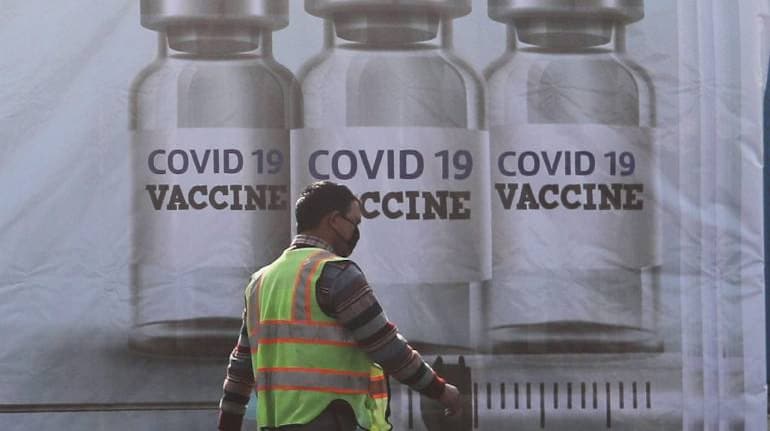
The leveraging of private assets for public good is not going to be limited to healthcare delivery. For instance, India’s universal immunisation programme has always been about successfully procuring and delivering high-quality vaccines from the private sector. A Covid-19 vaccine, owing to its scale, calls for a far wider and deeper engagement with the private sector not just in manufacturing but also logistics and vaccine administration.
The pandemic has made one thing clear: India’s healthcare problems are vast and need multi-faceted solutions that go beyond the public vs private debate. While it is absolutely necessary to rebuild and revitalize public health over time, the pandemic underscores why we need to utilize private investment more and better for a healthier India, starting yesterday.
Discover the latest Business News, Sensex, and Nifty updates. Obtain Personal Finance insights, tax queries, and expert opinions on Moneycontrol or download the Moneycontrol App to stay updated!
Find the best of Al News in one place, specially curated for you every weekend.
Stay on top of the latest tech trends and biggest startup news.