



Sherly Antony
The COVID-19 pandemic is notching up higher case numbers by the day, with the world-wide death toll crossing 74,000 on April 6. The latest reports from the Indian Council of Medical Research (ICMR) show that of the 101,068 samples screened, 4,135 have been confirmed positive. The national death toll is 114.
This drastic rise certainly has seen widespread repercussions both globally and nationally on social, economic and political settings. The World Health Organization (WHO) since the start of this threat has advocated ‘testing, testing and testing’ as the dictum to identify, isolate, treat and prevent COVID-19. Though numerous countries, including India, have stepped up their detection systems and rapid response facilities, owing to the resource limitations, including lack of new kits, release and reach of kits and other logistic difficulties, haven’t been able to take it up in pace as expected.
The United States Food and Drug Administration (US FDA)and Europe’s CE-IVD have taken up proactive measures in releasing kits for detecting the SARS CoV-2 virus by giving them emergency use authorisation. In India too, four major ICMR institutes — the National Institute of Virology (NIV) and the National AIDS Research Institute (NARI) in Pune, the National Institute of Pathology in New Delhi, and the National Institute for Cholera and Enteric diseases (NICED) in Kolkata — have taken steps for validation of non-US FDA/CE-IVD approved kits. The various top research agencies globally and big private funders, have launched funding schemes for research of diagnostic kits.
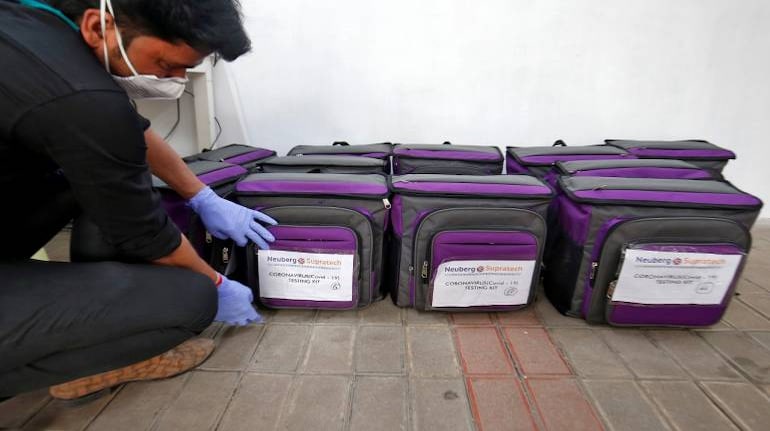
At present, a COVID suspect needs to go to the designated hospital for sample collection. However, the rising load may prompt the institution of mobile, walk-in sample collection units which allow large number of sample collection, reduction of wastage of PPEs, crowding at triage points, etc.
The ideal specimen with maximum viral recovery is a nasopharyngeal swab. Nevertheless, due to the technical problems in collection of nasopharyngeal swab, the ICMR approves even collection of one nasal swab and a throat swab from same patient to be tested simultaneously. Other specimens which may be tested include sputum, Bronchoalveolar lavage (BAL), ET aspirates, blood and rarely urine and stool.
The diagnostic platforms available now mainly include molecular tests to detect the viral genetic material, which requires a state-of-the-art extended BSL-2 laboratory facility. The next are point-of-care tests (POCs), mainly immunoassays targeting viral antibodies IgM and IgG, and special adapted molecular platform based tests (cartridge-based nucleic acid amplification modules). Finally, the non-disease specific tests such as thermal scanning and CT scans to detect the clinical signs of COVID-19.
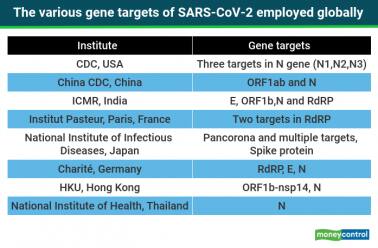
The major advantage of these nucleic acid amplification techniques (NAATs) is its high sensitivity and specificity. They become positive in the early phase of the illness, which prompts early detection, treatment and infection control. The downside is the requirement of laboratory facility, ensuring cold chain and appropriate transportation of sample to these designated laboratories, and the criteria or case definition as to who fits in for this testing.
Owing to this various POC platforms have come out with tests to allow mobile laboratories. This could play a big role in community surveillance too.
The recent approval of numerous antibody testing kits will aid in community surveillance at an epidemiological level and to know thepost-infection recovery status . However, these immunoassays are also associated with misconceptions too. Yes it is easier to perform, but when one is targeting antibodies, a minimum time of one week post-infection is needed — so the number of cases missed in the initial period may make all the difference to infection control measures. Another is a false sense of security that the test is negative, so one need not worry.
This has to be strictly dealt with by the testing guidelines available nationally that immunoassays should be followed up with NAATs. If not, this will result in rampant testing reminiscent of Tuberculosis Antibody testing, which is now banned in India for diagnostic purposes.
Dr Sherly Antony is Assistant Professor, Department of Microbiology, and Scientist at Pushpagiri Institute of Medical Sciences & Research Centre, Kerala, and a post-doctoral fellow, Department of Science and Technology, Government of India. Views are personal.

Discover the latest Business News, Sensex, and Nifty updates. Obtain Personal Finance insights, tax queries, and expert opinions on Moneycontrol or download the Moneycontrol App to stay updated!
Find the best of Al News in one place, specially curated for you every weekend.
Stay on top of the latest tech trends and biggest startup news.