How big is the stock market’s America bubble?
US has grown to nearly two-thirds of global equity market value, but some analysts see danger in ‘huge bet on AI’

North vs South: The growing tensions over delimitation
The delimitation debate underscores the challenge of balancing fair representation with demographic realities. Any decision will have far-reaching political and social consequences
Shifting Sands: What Trump’s policy moves mean for India-US ties
US President Donald Trump’s recent moves, including financial support to Pakistan for the F-16 programme, show that India cannot depend on any power and must further strengthen its strategic autonomy. Trump’s moves on Russia and China are also impacting India’s business and foreign policy
Is gold’s gravity-defying act reason enough to alter its long term allocation?
While debating the strength of the rally may not yield any sure answers, the question on whether to raise allocations to gold requires careful consideration
A long road to normalcy for SpiceJet
The company is attempting a revival after getting a fund infusion from qualified institutional placement
Private sector non-financial firms’ share of capex tumbles in 2023-24
The uncertainties unleashed by Donald Trump’s unabashed mercantilism will likely weigh on private sector investment
TN’s anti-Hindi volcano erupts again. Will it get DMK votes this time?
Pushing back against Hindi is a cornerstone of Dravidian politics and played an important role in DMK's first major election victory in 1960s. While the issue may still resonate with a section of voters, there's a lot in the social and economic structure of the state that has changed over the last few decades. Therefore, the jury's out on whether the DMK can offset anti-incumbency through the Hindi issue in the 2026 assembly election
Manufacturing's share in economy in 2024-25 at same level as 18 years ago
The share of industry in GVA has come down from 33.04 percent back in 2009-10 to an estimated 30.58 percent in 2024-25. There does seem to be something in all the talk about premature deindustrialisation
Batten down the hatches, Uncle Sam wants a deal
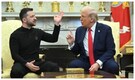
The televised blowup between Trump and Zelensky encapsulates the essence of America’s foreign policy today. Backed by the largest and most expensive military force, the security blanket provided by the leader of ‘free world’ comes at a cost. The recipients of the security blanket can’t negotiate the deal, they just have to accept it. Watch out, Japan and South Korea
India’s GDP growth accelerates to 6.2 percent in Q3 FY25, poised for stronger Q4
India’s GDP grew 6.2% YoY in Q3 FY25, with growth expected to accelerate further in Q4. Strong private consumption and policy support are driving momentum despite global uncertainties
September-December GDP growth rate offers relief, but falls short of expectation
Statistics ministry expects GDP to expand by 7.6% in the January-March quarter which appears unlikely despite episodic consumption boost. It’s now reasonable to expect another 25-50 basis point reduction in repo rate by RBI
The Reading List: February 28, 2025
Our research and opinion teams have curated a selection of articles and social media gems from the world of economy, business and finance for your weekend read.
Vault matters: New leadership at RBI is rearranging priorities
As much as it’s true to say that give the Governor six months for him to be one of RBI in approach, the reverse is also equally true. There is a reason why it matters who helms the central bank. The question, however, is whether Governor Malhotra’s regulatory changes are a bit premature
Bail has to be the rule if clearing judicial backlog matters
The apex court has tilted in favour of privileging fundamental rights over statutory laws if the prosecution takes an inordinate time to finish investigation. In a related area, there are more than four million pending criminal cases which began over a decade ago. Many languish in jail as undertrials. Is there a way to clear the backlog without being more liberal about bail?
Unilever’s CEO change may do good for HUL’s shareholders
Unilever board’s bid to accelerate the pace of change by appointing a new CEO is likely to have a knock-on effect in one of its key markets—India
The Bangladeshi politician who built a shadowy global property empire
FT investigation: Saifuzzaman Chowdhury and his family bought 482 properties overseas costing $295 million. The new government wants some of that money back
Rashtra Sevika Samiti's growth and vision for social transformation
RSSFACTS: The Rashtra Sevika Samiti, founded in 1936, focuses on empowering women through social service, leadership, and nation-building. With over 4,000 branches and 1,800 projects, it collaborates with the RSS to promote self-realisation, family values, social harmony, and civic responsibility
Republican budget takes US on path to trillions in new deficits
As Congress ponders a gigantic new budget resolution, supporters of fiscal moderation have gone suspiciously quiet
When being the China alternative isn’t enough
Cordial relations with Beijing and long-standing US ties may no longer be sufficient for supply chains to survive
Building India’s AI edge through smart infrastructure
Building a robust infrastructure for AI should be a priority for India
India needs to sort out the economics of IMEC before China shuts the door
China is doing its best to maintain its supremacy on the seas
Indian Pharma needs to step up its game, to combat risks from trade wars
The next leg of sustainable growth in the sector, especially in the new world order of protectionism, will need to come from innovation
Agrochemical exporters face new risk to earnings from Trump’s reciprocal tariffs
Inventory destocking and price erosion adversely impacted global agrochemical industry growth in 2024.
Chart of the Day: Two numbers behind RBI’s move to lower risk weights on bank loans to NBFCs, MFIs
Microfinance entities have seen their loan book shrink in the third quarter of FY25
British PM Starmer meets Trump | Ukraine issue discussed | U.S.-U.K. talks | N18G
British Prime Minister Keir Starmer visited Washington, D.C., on February 26, 2025, where he emphasized that the most important relationship for the UK is with the United States. During his visit, he met with business leaders at the British ambassador’s residence, hosted by Peter Mandelson. Starmer expressed a desire to forge a new partnership with the U.S., sharing the belief that their best days lie ahead. Starmer’s visit also included a meeting with President Donald Trump. Prior to his trip, he called on Washington to provide a security "backstop" for European peacekeepers in Ukraine. He argued that this would ensure lasting peace in Ukraine rather than a temporary ceasefire. Furthermore, Starmer stated that Britain would contribute to any peacekeeping efforts in the region. Overall, the visit highlighted the importance of strengthening the UK-U.S. relationship and advancing international cooperation on global security issues.