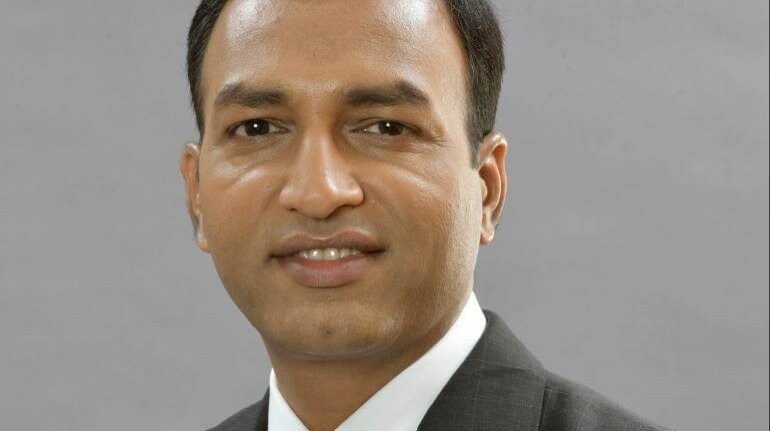
The biggest risk for global investors in the second half of 2020 comes from a second/third wave of coronavirus attack. If this happens then it could jeopardise the recovery process and all assumptions of economic recovery could go awry, Rusmik Oza, Executive Vice President, Head of Fundamental Research at Kotak Securities, said in an interview with Moneycontrol’s Kshitij Anand.
Edited excerpts:
Q) What will be the biggest risk for investors in the second half of 2020?A) The biggest risk for global investors in the second half of 2020 comes from a second/third wave of coronavirus attack. If this happens then it could jeopardise the recovery process and all assumptions of economic recovery could go awry.
Secondly, the US election is also a big event to watch in the second half as the outcome could have an impact on global markets, especially considering the strained relations between the US & China.
Lately, lofty valuations are also a big risk for global equities as the two-year forward PE of the US markets and MSCI World Index is higher than the previous peak of the last 15 years.
Q) What is your call on the IT sector? This has been one of the better-performing sectors amid the lockdown. Where do you see value in the sector?A) Two months back we were building in single-digit earnings de-growth for the frontline IT companies in FY21. However, post Q1 results we are now building in 3-4% earnings growth for the frontline companies (excluding TCS) in FY21.
The positive swing in earnings of frontline companies in the last two months has been ~10 percent whereas stock prices have moved up by ~27 percent at the same time.
This shows that most of the earnings revision is captured in the stock prices. In our coverage universe, we see a single-digit upside in stocks like Infosys, L&T Infotech, and Tech Mahindra.
In most other cases our price targets are lower than the current prices. There isn’t much potential in the mid-cap IT stocks; however, some of them could do catch up to the rally seen in large-caps.
Q) RIL 43rd AGM had a lot of surprises for the D-Street. How do you see the company in the next 3-5 years?A) By placing a ~33 percent stake in the Jio Platform, RIL has secured Rs.1.52 trillion. RIL has now strategic partnerships with the world’s leading IT giants like Facebook, Microsoft & Google.
It is now looking at inducting strategic and financial investors in Reliance Retail in the next few quarters. Reliance is creating a nice ecosystem around the Jio Platform which will create future value be growth prospects for the company.
In the media space also RIL is bundling a lot of offers under JioFiber. Hence, In the next 3-to-5 years, RIL could be seen as the next generation company and a proxy play to FANG kind of stocks seen in the US.
Q) One evident trend that we have seen is the new race of investors who joined D-Street despite sharp volatility. Do you think this new breed of investors/traders are more matured in making investment decisions?A) The rising participation of the new set of investors that too millennials are a cause of concern. Many of this new breed of investors are a novice and may not have seen the past bull and bear cycles.
New investors entering the market is good as it increases the breadth of the market but entering at peak valuations could backfire and leave a bad test for a long time.
Luckily the mid and small-cap space has remained at beaten-down levels for more than two years which reduces the risk of any heavy losses.
However, higher interest and participation in penny stocks having poor fundamentals and not so great past track record could hit new investors badly. App-based trading platforms provide easy convenience to the young generation.
Add to this the concept of near-zero brokerage which acts as a carrot. As a trend app-based trading has picked up globally and is seeing the fasted client activation.
Q) What is your call on Agricultural space? It is one sector which has remained unfazed from the COVID? What are the top stocks which one can look at?A) This year monsoon has been progressing very well. The area is sown under Kharif crop till 17th July is 21 percent higher than the area covered during the corresponding period of last year.
Also, strong support from the government to the rural population is helping the rural economy to recover faster than the urban area.
In the last three months, most agriculture-related sectors like agrochemicals, tractors, FMCG have run up sharply. We see hardly any upside in agrochemical stocks.
We see some value and upside left in tractor manufacturers like M&M and Escorts. Most FMCG stocks having higher rural exposure have done well and are trading at extremely rich valuations.
Q) Growth is likely to take a hit this is given, but how can equity investors turn the falling GDP scenario into a benefit? Which sectors are likely to see a rebound once the tide reverses?A) Within the GDP composition agriculture growth will be resilient in FY21. The service sector and manufacturing could get impacted in FY21 but revive in FY22.
Based on March quarter results and management commentaries we can infer that many companies servicing global clients and selling daily essentials are faring well.
For example, Telecom, IT, Speciality chemicals, agrochemicals, FMCG, Insurance, and Pharmaceuticals are few sectors that are doing well even in these bad times and are likely to see earnings growth in FY21 (when others could see huge profit erosion).
The recent up move in the stock prices of these sectors has been very swift capturing the upside potential likely to come in the next one to two years. Valuations of these sectors have reached the upper end leaving very little scope for further re-rating.
Investors can focus on stocks from these sectors in any near term correction. Apart from these sectors, investors can also look at a few beaten-down sectors from a two years perspective. These are banks, oil & gas, and capital goods.
Q) What is your outlook on the auto and financials -- the two themes which have seen the worst of COVID impact? Can they turn out to be the dark horse of 2020?A) From the two mentioned sectors we find more comfort in financials. In the case of financials, stocks are valued on Price-to-Book Value. Many of the bigger financial companies are raising fresh capital which will help them to shore up their book values.
Also, unlike the hardcore manufacturing sector where earnings de-growth increases the PE multiples, in case of financials, there is de-rating in the Price/Book Value parameter.
Many good quality financial stocks are trading at attractive valuations based on Price/Book value basis. The grey area in case of financials is the unknown risk of potential NPAs coming on account of the moratorium.
Sound financial companies are already doing advanced provisioning to meet the unforeseen NPAs that would come after the moratorium window closes.
Overall, we are still negative on auto stocks because of the risk of lower discretionary spending in the future. Also, diesel and petrol prices have risen too sharply in the recent past that would impact demand for new vehicles.
Due to the steep erosion in earnings, the valuations of most auto companies still look at elevated levels. There will also be a meaningful impact on the RoEs of most auto companies as compared to their past averages. In any near term correction, investors can look at a few auto stocks like Bajaj Auto, M&M, and Escorts.
Disclaimer: The views and investment tips expressed by experts on Moneycontrol.com are their own and not those of the website or its management. Moneycontrol.com advises users to check with certified experts before taking any investment decisions.

Discover the latest Business News, Sensex, and Nifty updates. Obtain Personal Finance insights, tax queries, and expert opinions on Moneycontrol or download the Moneycontrol App to stay updated!
Find the best of Al News in one place, specially curated for you every weekend.
Stay on top of the latest tech trends and biggest startup news.