





April 2023 seems far removed from August 2021, when the Taliban came to power for a second time in Afghanistan.
The naysayers had written off India with dire forebodings – the Islamic crescent was at India’s frontiers; expect ISI-backed Taliban terrorists to wage a full-scale battle in Kashmir; it would be curtains for India’s development initiative in a country torn apart by war and civil strife, and Pakistan’s star would rise as a double-edged weapon to be unleashed against its old rival.
How quickly geopolitics changes. From being an outcast in Afghanistan, India, which was kept out of the Doha-based tripartite talks between the US, Pakistan and Taliban in 2020, has bounced back.
In February, the government allocated Rs 200 crore in aid to Afghanistan in its Union Budget for 2023.
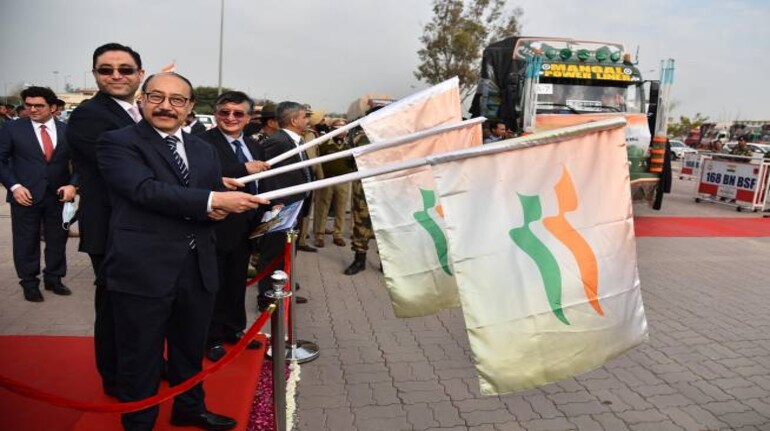
Last month, India announced a new, additional supply of 20,000 metric tonnes of wheat to Afghanistan at the first meeting of the India-Central Asia Joint Working Group. The group consists of India and Kazakhstan, Kyrgyzstan, Tajikistan, Turkmenistan and Uzbekistan.
In October 2021, India proposed to send 50,000 MT of wheat by road via Pakistan. However, India was able to send only 40,000 MT of wheat in time allowed by Pakistan, which did not extend the period.
Not unilateralIndia used to send supplies to Afghanistan through Iran’s Chabahar port.
None of this was unilateral. The request for assistance came from the new regime in Kabul. In December 2022, Taliban’s Minister for Urban Development, Hamdullah Nomani, held talks with members of an Indian technical team in Kabul where he called for renewal of Indian projects, invited investment in New Kabul Town, raised visa issues and urged more scholarships.
In August last year, Abdul Qahar Balkhi, the Taliban’s foreign ministry spokesman, wrote on Twitter: “The Islamic Emirate of Afghanistan welcomes India’s step to upgrade its diplomatic representation in Kabul. Besides ensuring security, we will pay close attention to the immunity of the diplomats and cooperate well in endeavors.”
Interestingly, New Delhi has yet to officially recognise the regime in Kabul.
Ashok Sajjanhar, former Indian ambassador to Kazakhstan, Sweden and Latvia, said India has adopted a step-by-step approach.
“In August 2021, we had closed our four consulates. But the Taliban has been requesting India to come back, while New Delhi was being guided by Taliban’s past history like attacks on Indian stakeholders. Now we have sent out some people there, mostly technical staff, basically to oversee the allocation of our aid, like some 20,000 tonnes of wheat that was routed through Chabahar. We are also engaging with the Afghans on medicines and vaccines,” he told Moneycontrol.
After the US military withdrew in August 2021 and the Afghanistan government fell, the Taliban’s return had thrown India’s diplomatic position into uncertainty. The power-sharing arrangement of the new regime that took over was seen as beneficial to Islamabad, without whose active support it was unlikely that Taliban leaders could have negotiated the Doha Agreement, signed with the US.
Pakistan crisisIndia’s small steps towards establishing a working relationship with the Taliban-ruled Afghanistan administration is in contrast to the position New Delhi took during the Taliban’s previous stint in power from 1996 to 2001, when it did not maintain a diplomatic mission in the country.
A combination of geopolitical and strategic concerns has triggered this development. The Taliban has changed tack as Pakistan grapples with a political crisis after Imran Khan was removed from the prime minister’s office in April, and hostilities between the countries have increased.
As in the past, the Taliban rejected the legitimacy of the Durand Line, the 2,670-km international land border between Afghanistan and Pakistan. It also targeted Pakistanis working on the construction of a border fence. The Taliban’s protection of the Tehrik-e-Taliban Pakistan (TTP), also known as the Pakistan Taliban, is adding to tensions. It is an umbrella organisation of armed militant groups.
On November 28, the TTP ended its five-month ceasefire with the Pakistan government – brokered by the Afghanistan Taliban – and announced that its fighters would resume attacks.
The internal upheaval in Pakistan and the diminished impact of the US and Russia in the region have prompted India to play its diplomatic card with care, using its soft power to its advantage.
According to the Ministry of External Affairs, Taliban’s chief of political office, Sher Mohammad Abbas Stanekzai, a former cadet of the Indian Military Academy in Dehradun, had requested a meeting with the Indian ambassador to Qatar, Deepak Mittal, in Doha in August 2021.
In May 2022, National Security Advisor Ajit Doval said India’s Afghanistan strategy would be determined by its unique history of cooperation with the Afghan people.
“The Afghans trust just once force in the world, that is India. They distrust the Pakistanis, who were celebrating the arrival of the Taliban in August 2021. They have little faith in the US,” former Indian ambassador Deepak Vohra told Moneycontrol. “Why should the Taliban fight in Kashmir? They have no problem with India. Naturally now, Afghanistan is asking India to continue its projects in their country. The Afghans have never recognised the Durand Line and have turned down Pakistan’s attempts to form an Islamic front.”
Before the Taliban takeover, India had become Afghanistan’s biggest regional donor over the past two decades, having committed about $3 billion toward humanitarian assistance, infrastructure development, and capacity building of various state institutions. Both the Afghans and the international community have acknowledged India’s developmental role, and what’s important, want more of it.
Sajjanhar, however, issued a word of caution.
“Frankly, India cannot afford to let its guard down. The Jaish and the Lashkar are still around; while the ceasefire with Pakistan is holding, Islamabad probably knows that it would not pay to up the ante just yet with India, given the background of Balakot and Pulwama. Also, we haven’t seen much of the likes of Masood Azhar and Hafeez Saeed, who can be activated easily by the Pakistan deep state or its army when it is needed,” he said.
It is a piece of sound advice.
Discover the latest Business News, Sensex, and Nifty updates. Obtain Personal Finance insights, tax queries, and expert opinions on Moneycontrol or download the Moneycontrol App to stay updated!
Find the best of Al News in one place, specially curated for you every weekend.
Stay on top of the latest tech trends and biggest startup news.




