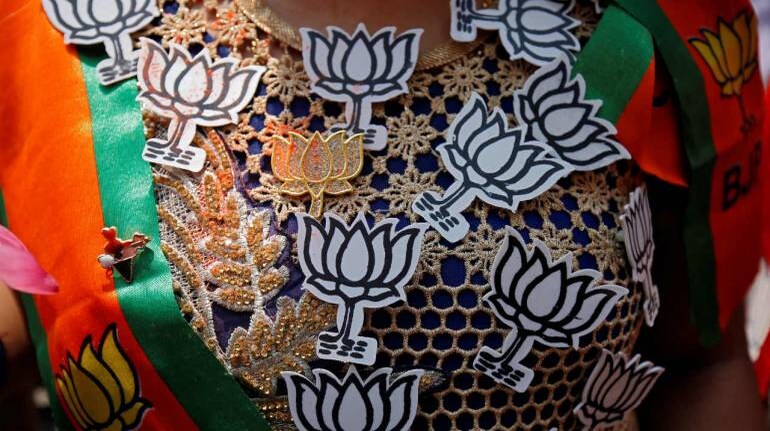
The BJP-led National Democratic Alliance government has increased its electoral presence from just eight states in 2014 to 20 under four years of Modi government to come out as perhaps the strongest political party.
Before the electoral defeat in Karnataka where the BJP won over a 100 seats, the party ventured into an uncharted territory, winning elections in Left bastion Tripura and forming governments in Meghalaya and Nagaland along with its allies.
Here's the journey of the BJP in the past 48 months under the leadership of Prime Minister Narendra Modi:
The 'Modi Tsunami'
The saffron party and its allies have been on a roll since the Narendra Modi-led National Democratic Alliance (NDA) came to power in May 2014. As a result, the political map of India is now splashed with saffron.
Prior to the win in the 2014 Lok Sabha election, the BJP was already in power in just five states — Gujarat, Rajasthan, Madhya Pradesh, Chhattisgarh and Nagaland.
The year 2014 heralded a change for the BJP. The party came to power in the Centre with its largest mandate, in what many described as a "Modi Tsunami". The saffron party won 282 seats, while its allies won 54 seats, taking the NDA's tally to 336.
Effects of the 'Modi Tsunami' continued to be felt as a "Modi Wave" in the state elections that followed.
BJP's ally, the Sikkim Democratic Front (SDF), retained the state of Sikkim in an election that was held simultaneously with the Lok Sabha polls. Another BJP ally (now former), the Telugu Desam Party (TDP), also formed bifurcated Andhra Pradesh's first government.
The Modi juggernaut
Five months after the general election in 2014, the BJP won 122 seats in the 288-member Maharashtra Assembly. They formed the government in Maharashtra following a post-poll alliance with NDA ally Shiv Sena. The party also came to power in the northern state of Haryana after winning 47 seats in a 90-member assembly.
BJP, along with its allies, secured a majority in the Jharkhand Assembly election shortly after.
The party was the second-best performer in the state of Jammu and Kashmir, behind Mehbooba Mufti-led People's Democratic Party (PDP). A post-poll alliance with the PDP helped BJP come to power in the state.
By the end of the year, BJP had extended its reach to 11 states across the country.
In 2015, BJP's growth story witnessed two major hiccups when they faced crushing defeats in Delhi and Bihar, in spite of extensive campaigning by the prime minister.
While BJP ended a 15-year Congress rule in Assam in 2016, the party failed to make a mark in the other three major state elections — West Bengal, Kerala and Tamil Nadu. However, BJP supporters were quick to point out that the saffron party did not have adequate reach in those states.
In September 2016, Arunachal Pradesh's 47 Members of Legislature (MLAs) from the ruling Congress defected to BJP. The lawmakers were able to prove majority on the floor of the house, helping BJP form a government in the hill state.
In 2017, BJP bagged Uttarakhand and won a large mandate in the state of Uttar Pradesh. The party lost in Punjab after two terms of rule along with ally Shiromani Akali Dal (SAD).
In Goa and Manipur, the BJP won lesser seats than main rival Congress. But, the party was quick to stitch together an alliance with regional parties and Independents to form a government in both states.
The Coup in Bihar
In July 2017, Nitish Kumar, Chief Minister of Bihar, resigned from his post and broke his party's 'Grand Alliance' with Lalu Prasad Yadav's Rashtriya Janata Dal (RJD) and Congress.
Nitish was sworn in as the new Chief Minister less than 24 hours after he resigned, but this time with the support of the BJP. The following day, Nitish and his new government, formed with the BJP, won the crucial trust vote in the Bihar State Assembly, with 131 legislators voting in favour and 108 voting against.
In December 2017, the BJP sprang to power in Himachal Pradesh, riding on a wave of anti-incumbency. Jai Ram Thakur was sworn in as the state’s chief minister days after the election as their CM candidate, Prem Kumar Dhumal, suffered a shock defeat.
After months of bitter campaigning, the saffron party managed to retain PM Modi and party president Amit Shah’s home state of Gujarat with a close margin. Congress made serious gains in the state, especially in the rural areas, in what was interpreted by many as sounding of the bugle for state elections to be held in 2018.
Wins in Himachal Pradesh and Gujarat extended BJP’s winning run to 19 states in the country.
The close win in Gujarat was followed by a convincing triumph in Tripura in March this year. The saffron party also formed governments in Meghalaya and Nagaland, along with its allies.
While the BJP won just two out of 60 Assembly seats in Meghalaya, the party was quick to negotiate an alliance with the National People’s Party (NPP) — who bagged 19 seats — to keep out Congress — who had won 21 seats.
The biggest surprise, however, came from Tripura where the BJP breached the Left bastion convincingly. BJP’s tally rose from zero Assembly seats in 2013 to 36 in 2018, out of 60. The CPI (M), led by Manik Sarkar, ended up with just 16 seats.
In Nagaland, the party secured 12 seats and dumped its partner Nagaland People’s Front (NPF) to join hands with the Nationalist Democratic Progressive Party (NDPP).
The road ahead
Having lost in Karnataka, the BJP will now have to counter anti-incumbency in states such as Madhya Pradesh, Rajasthan and Chhattisgarh later in the year along with the north-eastern state of Mizoram, where it will be hoping to make a mark.
Discover the latest Business News, Sensex, and Nifty updates. Obtain Personal Finance insights, tax queries, and expert opinions on Moneycontrol or download the Moneycontrol App to stay updated!
Find the best of Al News in one place, specially curated for you every weekend.
Stay on top of the latest tech trends and biggest startup news.