Assam Chief Minister Himanta Biswa Sarma on Sunday said that the district headquarters of Dibrugarh will be developed as the second capital of the state within the next three years. From 2027, one session of Assam assembly will take place in Dibrugarh every year, he announced.
“Dibrugarh will be the second capital of Assam in the next three years. We will construct a Raj Bhavan in Tezpur and develop it as the cultural capital of Assam. Silchar will have a secretariat and chief secretary’s office, thereby bridging the gap between Barak Valley and Guwahati,” Sarma said after unfurling the tricolour on the occasion of Republic Day.
The move will make Assam the fourth state in India to have dual-capital arrangement. Let’s explore the other states with two capitals, the reasons behind this arrangement, and the implications of this unique administrative structure.
Jammu and Kashmir
Because of its climatic condition and political importance, Jammu and Kashmir has always operated under a dual-capital system. Srinagar serves as the summer capital due to its cooler weather, while Jammu, with a milder winter climate, serves as the capital during colder months.
This practice ensures administrative efficiency and reflects the cultural significance of both regions. The dual-capital system also symbolises the state’s integration of two distinct cultural and geographical regions — the Kashmir Valley and the Jammu region.
Even after the reorganisation of Jammu and Kashmir into two union territories in 2019, the dual-capital system persists for the union territory of Jammu and Kashmir. It highlights the historical and administrative importance of maintaining this arrangement for governance and accessibility in diverse terrains.
Himachal Pradesh
Himachal Pradesh’s dual-capital system is rooted in both climatic considerations and regional development. Shimla, the former summer capital of British India, serves as the summer capital of the hill state, given its historical significance and established infrastructure. On the other hand, Dharamshala, which is located in the Kangra district, was designated as the winter capital in 2017.
The decision to make Dharamshala the winter capital was driven by the need to promote development in the Kangra region, which is one of the most populous areas of the state. Additionally, Dharamshala is internationally recognised as the home of the Dalai Lama and the Tibetan government-in-exile, enhancing its cultural and diplomatic significance.
Uttarakhand
Uttarakhand, located in the Himalayan region, adopted a dual-capital system in 2020 when Gairsain was declared the summer capital. Dehradun, as the primary capital, hosts most administrative offices and serves as the hub of governance. The decision to designate Gairsain as the summer capital was made to honour the aspirations of the hill regions and to promote development in remote areas of the state.
Gairsain, situated in the Chamoli district, holds cultural and symbolic importance for the people of Uttarakhand. It represents the state’s commitment to addressing regional imbalances and ensuring inclusive growth. The establishment of Gairsain as a summer capital also acknowledges the historical demand of the hill population for a capital closer to the heart of the state’s hilly terrain.
Maharashtra
Mumbai is the financial capital of India and serves as Maharashtra’s primary capital. Nagpur, however, holds political and historical significance as the second capital. This arrangement primarily stems from the Nagpur Pact of 1953, which was signed during the reorganisation of states in India. Under this agreement, the Vidarbha region was merged into Maharashtra with the assurance that Nagpur would serve as the state’s second capital.
Nagpur hosts the winter session of the Maharashtra state legislature, ensuring political representation for the Vidarbha region. This arrangement reflects a commitment to addressing regional disparities and fostering equitable development. Nagpur’s strategic location in central India also contributes to its administrative importance.
The cases of Karnataka and Telangana
The longstanding proposal and demand to make Belagavi the second capital of Karnataka was renewed last November by Uttar Karnataka Vikas Vedike (UKVV) leader and advocate BD Hiremath.
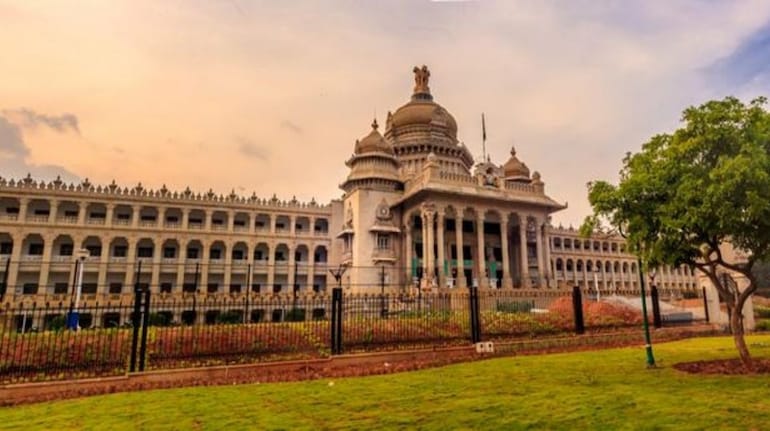
In 2012, the state government had inaugurated the Suvarna Vidhan Soudha, a second administrative building, to support this proposal. However, modalities for creating a second capital are yet to be worked out. As of now, Bengaluru continues to serve as the capital of Karnataka.
Meanwhile, Telangana minister Ponguleti Srinivas Reddy said last November that Warangal will be developed as the second capital of the state. The city has been touted as the ideal pick to be state’s second capital, given tremendous development there in the last two decades and its proximity to Hyderabad.
Advantages of having two capitals
• Dual capitals often reflect an effort to ensure balanced development and representation for different regions within a state. By designating capitals in geographically distinct areas, governments can address the needs of diverse populations more effectively.
• Seasonal shifts in capital locations can make governance more accessible in geographically diverse states. For instance, in states like Jammu and Kashmir, Uttarakhand and Himachal Pradesh, the dual-capital system accommodates the challenges posed by extreme weather conditions.
• Multiple capitals acknowledge the cultural and historical importance of distinct regions. This recognition fosters a sense of pride and identity among the local population.
Challenges of having dual-capital arrangement
• Maintaining two capitals requires significant financial investment in infrastructure, transportation, and administrative logistics. This can strain the state budget, especially in states with limited resources.
• Shifting the government machinery between capitals can be time-consuming and inefficient. The relocation of offices, personnel, and resources creates additional administrative burdens.
• The division of administrative functions between two capitals can create confusion and inconvenience for citizens seeking government services.
Discover the latest Business News, Sensex, and Nifty updates. Obtain Personal Finance insights, tax queries, and expert opinions on Moneycontrol or download the Moneycontrol App to stay updated!
Find the best of Al News in one place, specially curated for you every weekend.
Stay on top of the latest tech trends and biggest startup news.