-
My Account









Trending Topics:
- Amit Shah
- Telangana Murder
- Anurag Thakur
- Rahul Gandhi
- Rahul Gandhi
Cyclone Amphan | A look at how cyclones are formed and how devastating they can be
As Cyclone Amphan intensifies into a super cyclone, check out how a cyclone is formed and what are the different levels it takes to become a super cyclone




1/6

The cyclonic storm ‘Amphan’ pronounced as UM-PUN has intensified into a ‘super cyclone’ and is expected to hit the West Bengal and Bangladesh coasts as a very severe cyclone with a wind speed up to 185 km per hour on May 20. The extent of damage depends on wind strength at the time of landfall. Here’s a look at how a cyclone is formed, what are the different levels and how devastating cyclones can be. (Image: News18 Creative)
2/6
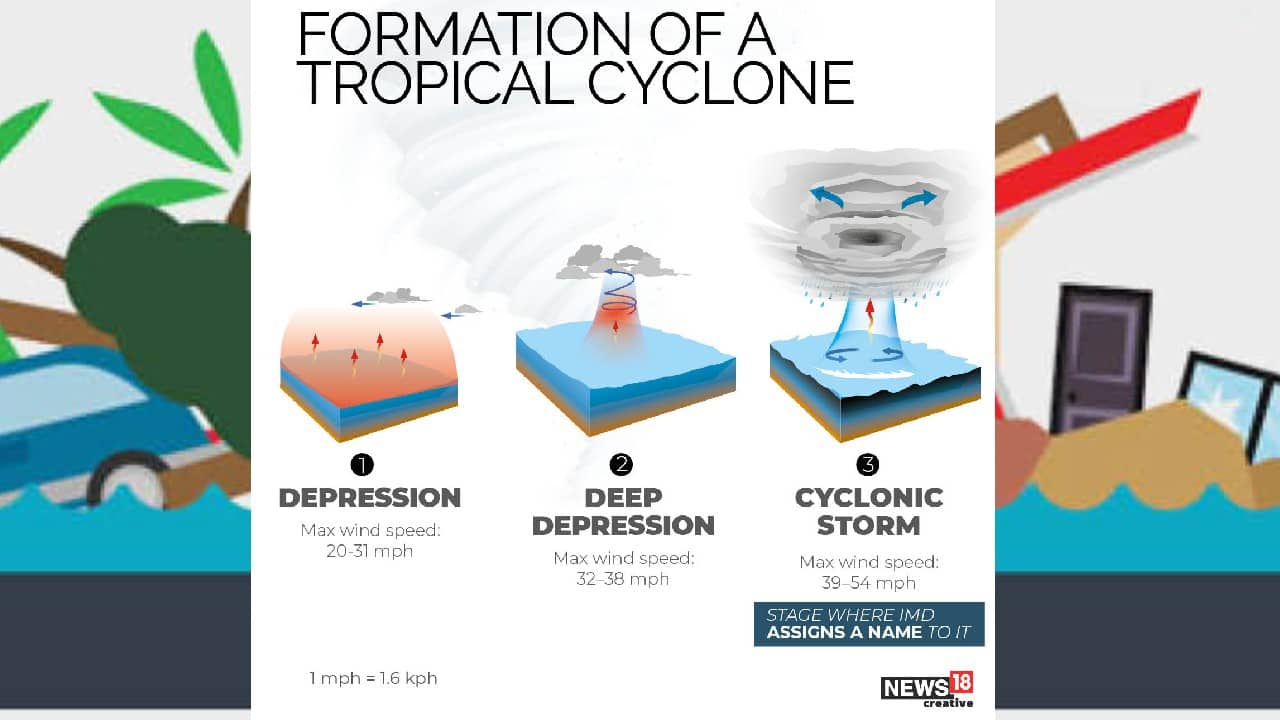
Formation of a tropical cyclone. (Image: News18 Creative)
3/6
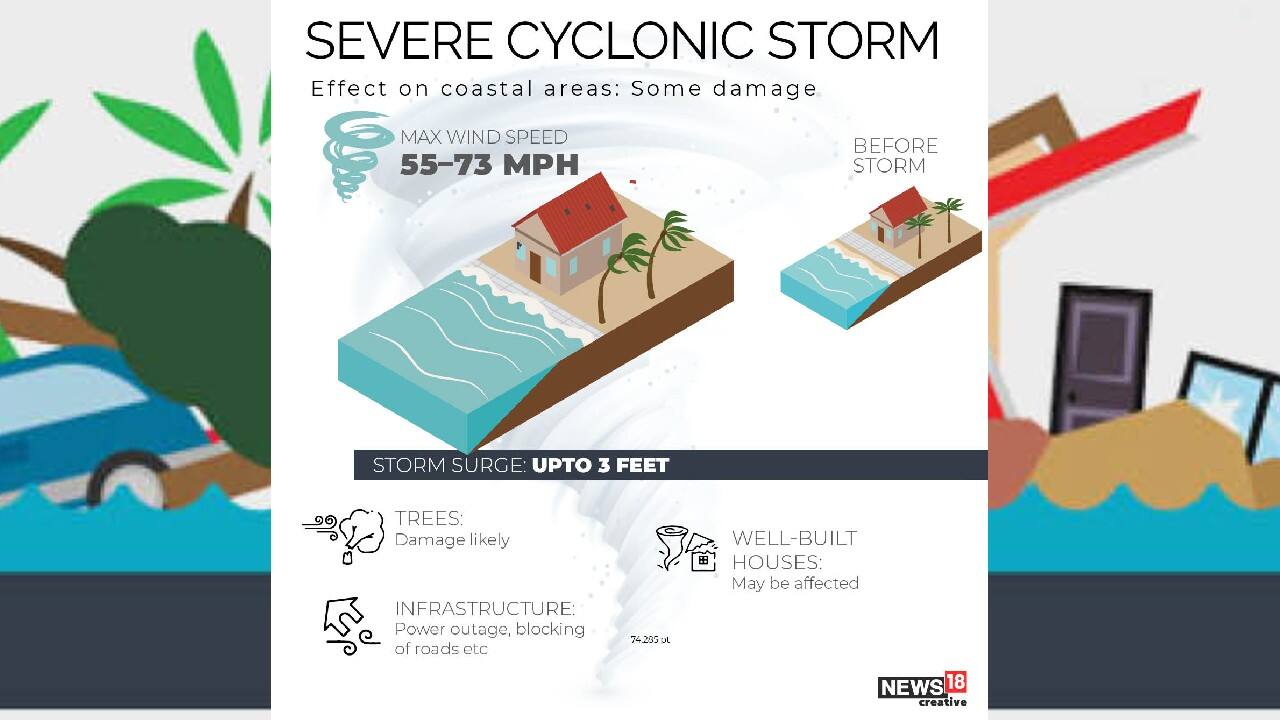
Severe cyclonic storm. (Image: News18 Creative)
4/6
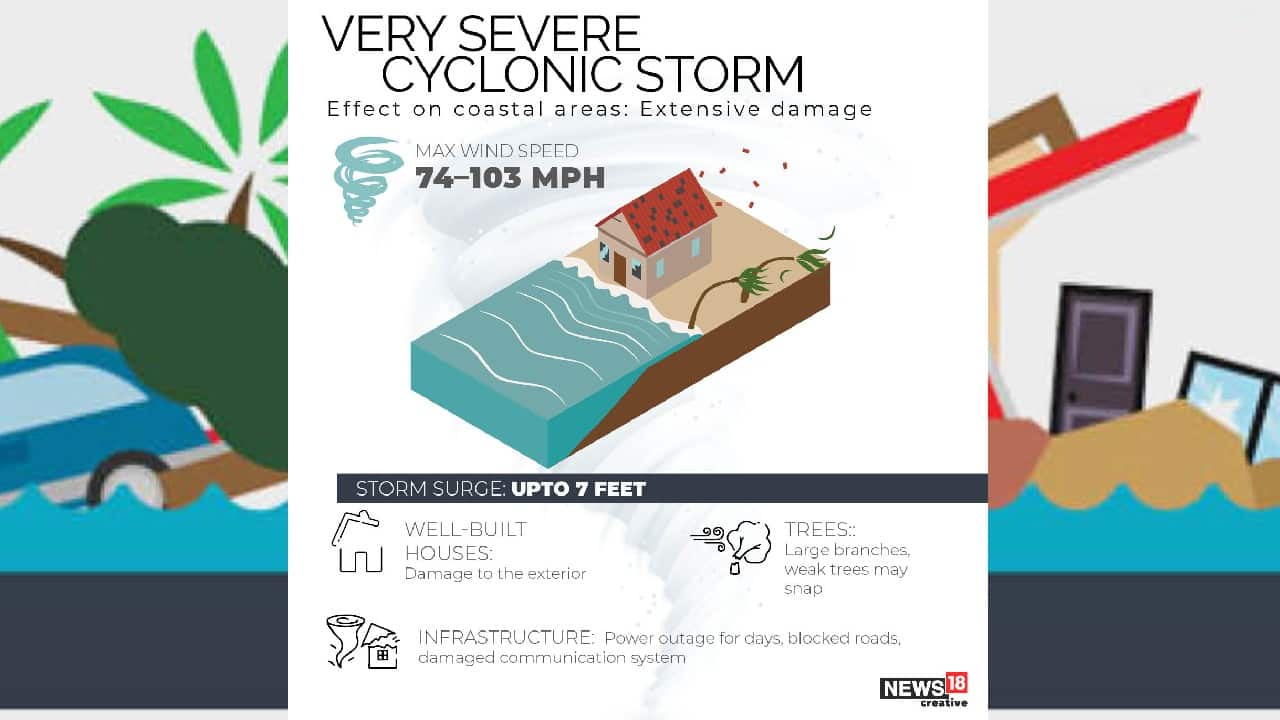
Very severe cyclonic storm. (Image: News18 Creative)
5/6
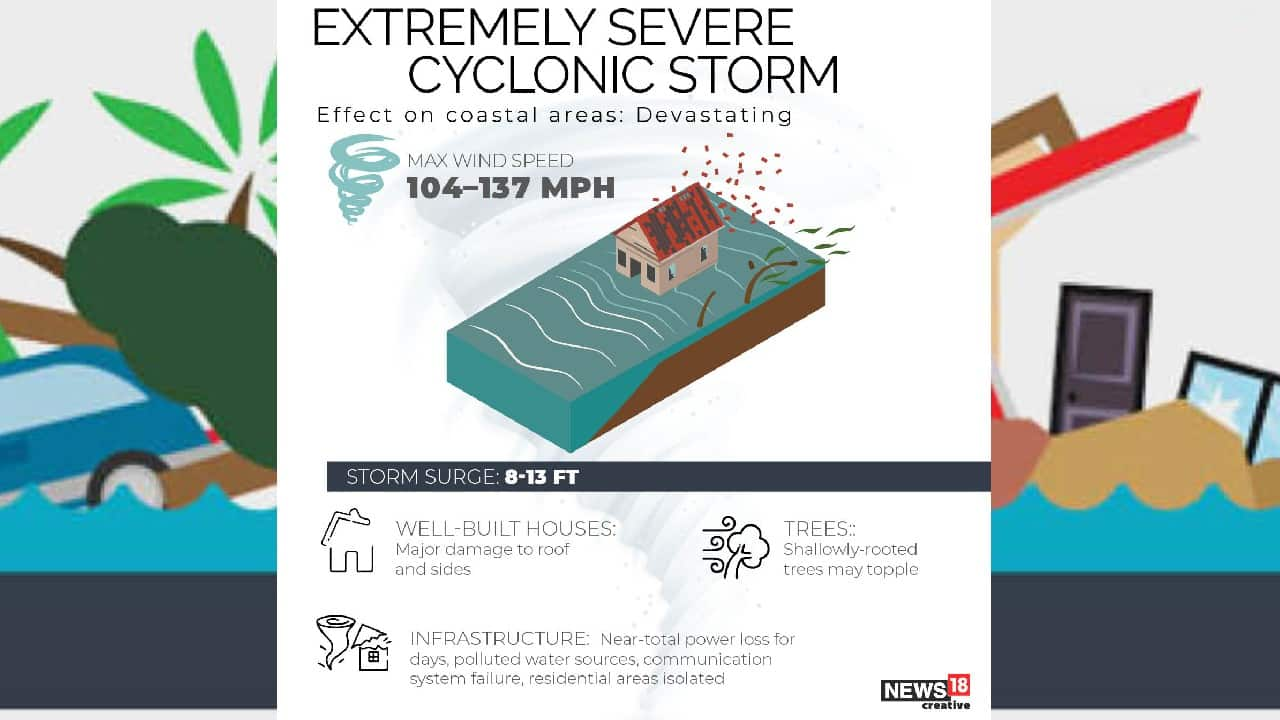
Extremely severe cyclonic storm. (Image: News18 Creative)
6/6
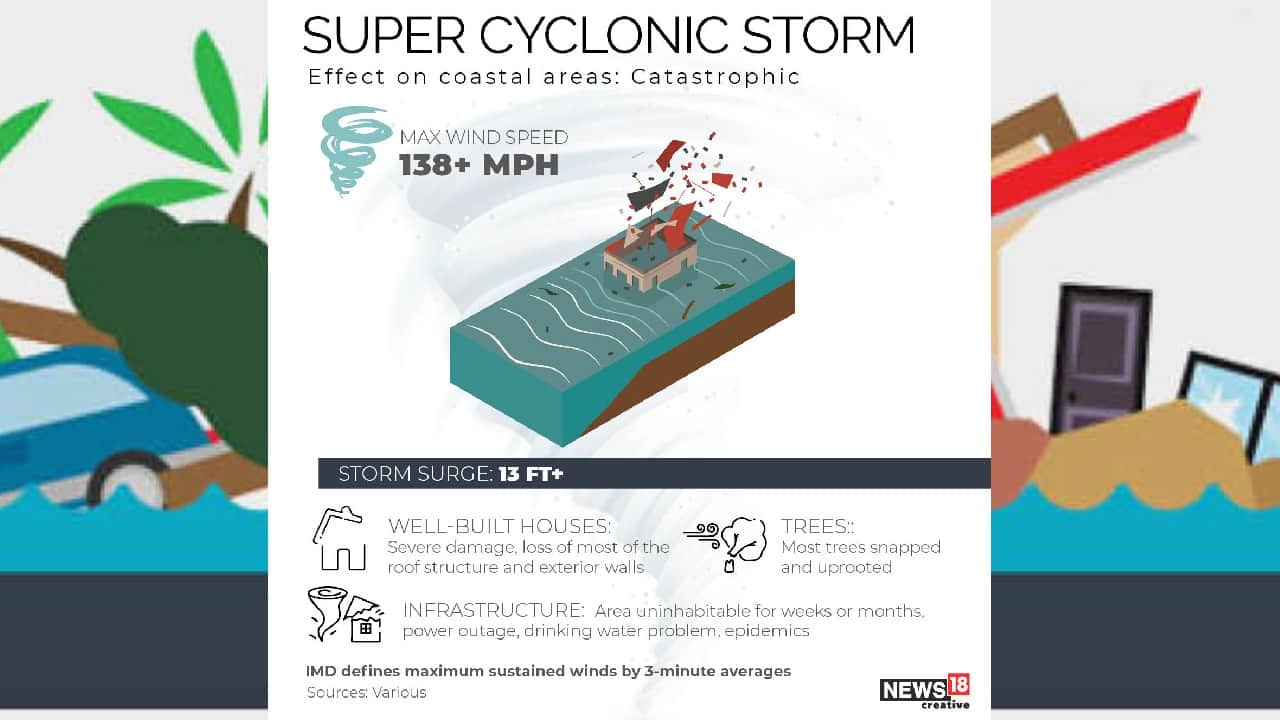
Super cyclonic storm. (Image: News18 Creative)
Discover the latest Business News, Budget 2025 News, Sensex, and Nifty updates. Obtain Personal Finance insights, tax queries, and expert opinions on Moneycontrol or download the Moneycontrol App to stay updated!



