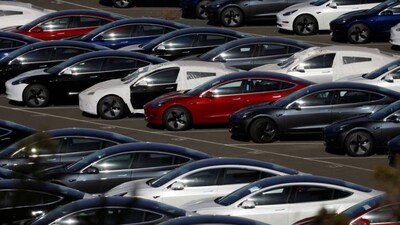
The Green Pivot: Booming EV sales are good for car companies but not so much for the climate
The laudable desire to save the planet from fossil fuel emissions as seen in the customer rush to buy EVs doesn't extend to using clean, convenient, and reasonably priced, public transport systems

The Green Pivot: Carbon reduction alone isn’t enough. India needs to step up on carbon removal too
Experts have repeatedly warned that carbon removal efforts need to keep pace with emissions reduction initiatives, since carbon capture needs to supplement and not replace carbon emissions reductions
Dense fog envelopes Punjab, Haryana, affects normal life
Officials said police personnel have been deployed at busy marketplaces and on key roads in the two states to ensure safe New Year celebrations.
Year Ender 2023: 10 climate events that made headlines in India in 2023
2023 review: From soaring temperatures to intensifying wildfires, the consequences of climate change became increasingly visible and prompted global climate action.
No plan to offer viability gap funding for pumped storage projects: RK Singh
PSPs require a high capital expenditure, but in the long run, they are cost and space-effective since they have a much longer life than battery energy storage systems (BESS) and do not require mining of critical minerals, which currently is mostly imported in India.
Yamuna pollution: Why water production is drying up around NCR?
Early this October, addressing concerns about Yamuna's rejuvenation, the National Green Tribunal (NGT) instructed the CPCB to verify the accuracy of the information presented in reports from states and authorities.
The Sahara Desert used to be a green savannah – new research explains why
Every 21,000 years, the earth 'wobbles' on its axis, making summers warmer and monsoons stronger in the northern hemisphere. Scientists have found evidence that every 21,000 years for the last 8 million years, this wobble has caused 'greening' in the Sahara Desert.
Air pollution: Delhi environment minister directs effective implementation of Stage-3 GRAP curbs
New Delhi, Dec 23 Delhi Environment Minister Gopal Rai on Saturday asked all departments concerned to reactivate their teams for effective implement..
CAQM bans construction work in Delhi-NCR, builders worry about project delay
Real estate developers said the ban will cause a delay in delivery of projects, and impact homebuyers. They said that a one-month ban on construction, delays a project by at least two to three months.
Twin chargers that can rev up EV journey
Facilitating Tesla’s entry and extending current incentives to the industry can provide a big push to electric mobility in India
Future with AI: Artificial intelligence will be a weapon in the fight against climate change
Many climate scientists feel artificial intelligence can play a key role in the battle against climate change. Others warn it is not a magic pill and has its limitations.
NGT imposes cost of Rs 25,000 on environment ministry, slams CPCB for diverting funds
The tribunal noted the reply, which stated that the CPCB was funding the urban local bodies of the National Capital Region (NCR) for the construction or repair of roads and for mechanical road sweepers under Environment Protection Charge funds.
The Green Pivot: Loss and Damage Fund needs a direction
Creation of the Fund is a step forward in dealing with climate change problems but there is uncertainty around the nature of usage, amount needed and the frequency of contribution
Oh, climate action can wait for another year
The trajectory of the COP28 negotiations from “phase out” to “transition away” highlighted how word crafting and linguistic acrobatics took priority over science and human impact. What needs to be seen now is whether any concrete action on fossil fuels will follow
Democracy and climate politics are set to collide next year
After the legalistic niceties of environmental diplomacy, the dirtier business of political maneuvering is going to consume the world’s democracies over the next 12 months. In 2024, climate will be on the ballot in a way we’ve rarely seen
Tiger attacks: 9 people killed in 3 months across 2 national parks
Experts say that if tigers continue venturing into nearby villages and lose their inherent fear of humans, it could spell disaster. To prevent this, strategies around minimising man-animal conflict need a rethink.
COP28: Climate finance must follow Dubai deal on moving away from fossil fuels, say experts
The financial offering from rich states to poor is far too small since developing and poor nations have little to no capacity to invest in clean energy or adaptation in the near term, experts said
8 biggest takeaways for India from COP28 climate summit
From the PM Narendra Modi launching the Green Credits Initiative to the Global River Cities Alliance, India’s active participation and leadership in initiatives solidified its position as a key player on the global climate stage.
COP28 deal is missing one big thing: Money
Neglecting the money was a common feature of all of COP28’s modest victories. The ballyhooed deal to launch a loss-and-damage fund to repay developing nations for the harm global heating is already causing attracted just $792 million in pledges, a comically tiny amount that wouldn’t cover the cost of one run-of-the-mill Florida hurricane
COP28 plays with words to clinch consensus
Face-saving phrase averts disaster at Dubai summit, but may not be enough to save the Earth from a climate catastrophe
COP28 Agreement: Climate campaigners must focus on carbon removal, not fossil fuels
The biggest fossil fuel producers, which include the US, wouldn’t have had a market but for takers of their products in the very same rich countries whose climate campaigners shout the loudest against fossil fuels. Everyone needs fossil fuels at this time. A more sensible solution is carbon dioxide removal but it isn't a priority yet
COP28 ends: A look at key decisions from the world’s biggest climate summit
Transitioning away from fossil fuels, accelerating efforts towards the phase-down of unabated coal power, setting up of the loss and damage fund, tripling renewable energy by 2030 and pledges by major oil and gas firms to curb methane emissions are some of biggest takeaways from COP28
Copout at COP28: Why a consensus in phasing out 'dirty' fuels is so difficult
While no country disagrees with the danger of climate change, the problem is how one achieves the goal given the very different concerns, interests, and stages of economic development
Thermax bags Rs 500 crore order; to ramp up R&D spends to highest-ever
Thermax aims to develop gasification plants with carbon capture capabilities to process coal ranging from 100 to 500 TPD.
At least $2.1 billion in new funds pledged at COP28, as foundations focus on health and agriculture
Along with multiple other philanthropic funders, Sequoia announced a $450 million commitment to target the reduction of methane and other pollutants over three years.