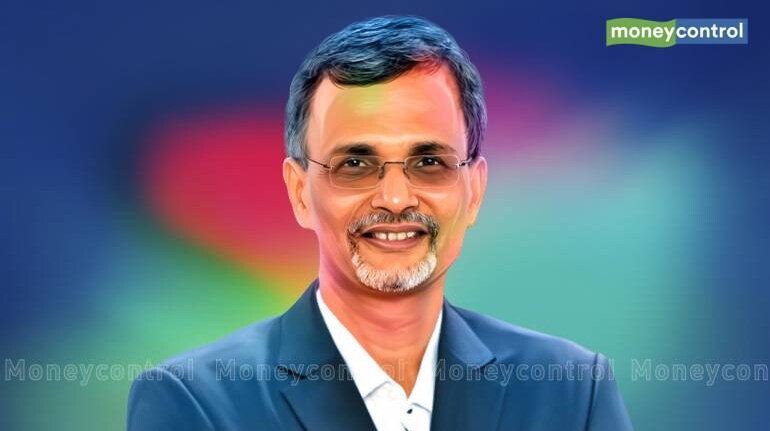
Developed countries are unlikely to enhance their funding for the world's transition to environment-friendly energy usage, Chief Economic Adviser (CEA) V Anantha Nageswaran said while speaking at the UK-India Economic Collaboration Programme in New Delhi on June 6.
The advanced economies face the task of "first convincing" their own population to switch to greener sources of energy, before enforcing the mandates against climate change on the developing world, he said.
"Unrealistic to expect funding from developed countries on climate change," CNBC TV18 quoted Nageswaran as saying.
The CEA's remarks comes amid the the prevalent global economic scenario, which has stressed most parts of the world due to the soaring inflation and supply chain constraints caused by the Russia-Ukraine war.
Despite the challenges, "India is quite serious about meeting its commitments under COP26," Nageswaran said.
At the 26th United Nations Climate Change conference, also referred to as COP26, held in November last year, Prime Minister Narendra Modi had drawn global attention with his pledge to cut India's total projected carbon emission by 1 billion tonnes by 2030.
The other major commitments made by India include the reduction of carbon intensity of the nation's economy to less than 45 percent by the end of the decade, and achieving net-zero carbon emissions by 2070.
'May have to offer higher fiscal subsidy'
According to the CEA, the government may be compelled to offer higher reliefs and subsidies to encourage the population to adopt alternative sources of energy, which are less environmentally taxing but may add a higher burden on their pockets.
"There is a disconnect between what policymakers want and reality of households," CNBC TV18 reported him as saying.
"(Govt) May have to offer higher fiscal subsidy to convince people to go green," he added.
India, with a population of 1.3 billion, is considered to play a key role in determining the success of global measures enacted to restrict global warming.
The country has achieved its goal of having 40 percent of its installed power generation from non-fossil fuel-based sources nine years before the deadline, Prime Minister Narendra Modi said on June 5.
Also Read | India has achieved target of ethanol blending in petrol five months before deadline: PM Modi
Nageswaran, while stressing on India's commitment to achieve the COP26 goals, said the world must act with caution while adopting renewable energy en-masse.
"Renewable energy technologies are also highly metal intensive," he underlined, adding that it "must be ensured that transition to green energy doesn't become counter-productive".
Discover the latest Business News, Sensex, and Nifty updates. Obtain Personal Finance insights, tax queries, and expert opinions on Moneycontrol or download the Moneycontrol App to stay updated!
Find the best of Al News in one place, specially curated for you every weekend.
Stay on top of the latest tech trends and biggest startup news.