




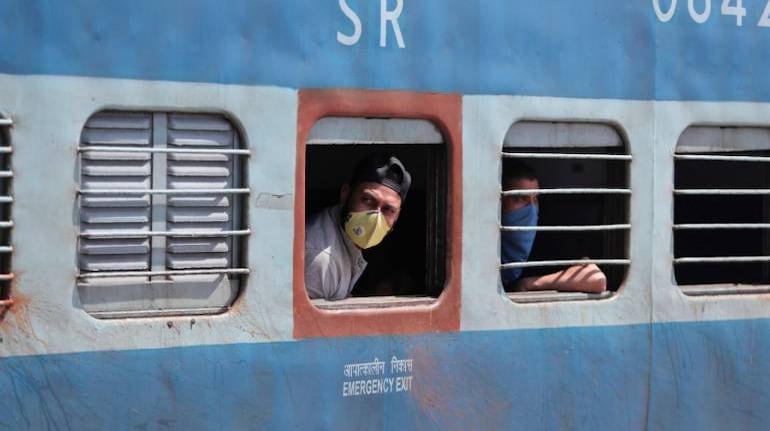
The Railways spent Rs 2,142 crore on running Shramik Special trains for ferrying stranded migrant workers home during the coronavirus lockdown, but earned a revenue of just Rs 429 crore, official data shows.
According to data available with PTI, the highest amount of money -- Rs 102 crore - was paid by the Gujarat government as fares for ferrying more than 15 lakh migrant workers back to their native states in 1,027 trains.
It was followed by Maharashtra, which paid Rs 85 crore to ferry 12 lakh workers back in 844 trains. Tamil Nadu paid Rs 34 crore to the Railways for transporting around four lakh migrant workers to their home states in 271 trains.
States like Uttar Pradesh, Bihar and West Bengal, which are generally considered source states for migrant workers, paid Rs 21 crore, Rs 8 crore, and Rs 64 lakh respectively to ferry migrants out, the data shows.
The data, received through an RTI application filed by activist Ajay Bose, shows that the Railways earned Rs 428 crore till June 29, by when most of the 4,615 trains had been run.
Additionally, it earned around Rs 1 crore by running 13 trains in July.
Another set of data, received from the Railways on its expenditure, shows that it spent Rs 3,400 per passenger the Shramik Special trains, which amounts to Rs 2,142 crore for around 63 lakh migrant workers ferried in total.
A senior railway official said the national transporter only managed to recover 15 percent of the cost of operations from states and the rest 85 per cent was borne by the ministry.
“The average fare per person on Shramik Special trains is Rs 600. However, we have spent Rs 3,400 per passenger, amounting to a total of Rs 2,142 crore. And by carrying 63 lakh migrant workers home since May 1, we generated a revenue of Rs 429 crore,” the official confirmed.
However, this effort of the Railways should not be seen from the prism of profit and loss, he said.
¨What the Railways did during the pandemic was part of a united effort to contribute in the fight against the pandemic. It should not be seen in terms of profit and loss,” said the official.
On Thursday, the Railways said it had met all the demand of states by then for Shramik Special trains, with the last service being operated on July 9.
The Railways started Shramik Specials on May 1 to transport stranded migrant workers to their native states after thousands tried to reach home on foot due to the lockdown transport restrictions.
On July 9, the last two trains departed from the Chennai Central station -- one to Jodhpur with 1,449 passengers, and the other to Howrah with 1,620 passengers, officials said.
The Railways said it operated 4,109 Shramik trains in May, which came down to 493 in June, and 13 in July.
Most of these trains originated from Gujarat, followed by Maharashtra and were destined to Uttar Pradesh and Bihar, officials said.
Discover the latest Business News, Sensex, and Nifty updates. Obtain Personal Finance insights, tax queries, and expert opinions on Moneycontrol or download the Moneycontrol App to stay updated!
Find the best of Al News in one place, specially curated for you every weekend.
Stay on top of the latest tech trends and biggest startup news.




