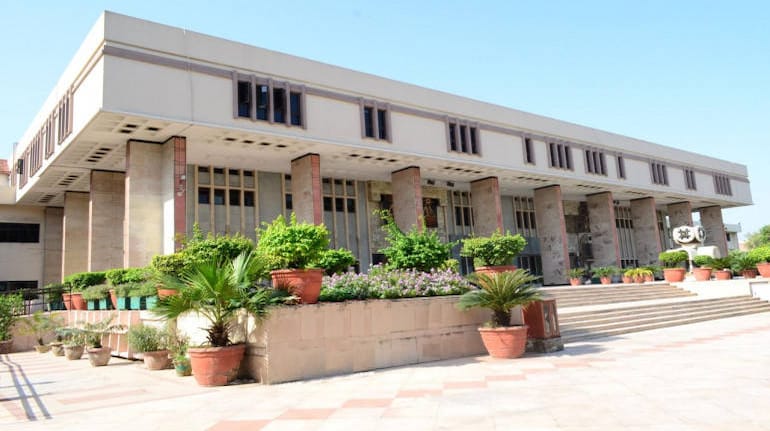
The Delhi High Court decided on August 15 to restrict its functioning as well as that of the district courts only to urgent matters till August 31 in view of the COVID-19 pandemic. The Administrative and General Supervision Committee of the high court, headed by Chief Justice D N Patel, also directed that subject to complete availability of public transport and the situation in Delhi remaining stable, a plan be evolved for a gradual opening of physical courts from September 1 onwards.
"To begin with, on experimental basis, around one-fourth of the courts can resume physical functioning on a rotational basis while the rest can continue taking up matters through video-conferencing.
"A comprehensive plan on the above lines will be prepared by the undersigned (Registrar General) and placed before the 'Committee for Preparation of Graded Action Plan' and thereafter, before the Full Court for consideration," an office order issued by Registrar General Manoj Jain said.
Earlier, the high court had restricted its functioning and that of the district courts till August 14.
The office order issued on Saturday further said the courts of registrars and joint registrars have been directed not to pass any adverse order in non-urgent or routine matters, where the advocate or litigant concerned is unable to join the proceedings through video-conferencing, till the time the physical functioning of the courts resumes.
It also said all the cases listed in the high court from August 17 to August 31 except those before the registrars and joint registrars have been adjourned to the corresponding dates between October 9 and October 23.
"The courts of Registrars and Joint Registrars of this court shall take up matters listed before them through video-conferencing.
"However, evidence shall be recorded only in ex-parte and uncontested matters, where the same is required to be tendered by way of an affidavit," the office order said.
Similar directions, as in the case of the high court, were passed with regard to a restricted functioning of the subordinate courts till August 31 and their gradual reopening from September 1 onwards.
The high court had, on March 25, restricted its functioning as well as that of the district courts till April 14. It was subsequently extended to May 3, May 17, May 23, May 31, June 14, June 29, July 15, July 31 and August 14.
Follow our full coverage of the coronavirus pandemic here.
Discover the latest Business News, Sensex, and Nifty updates. Obtain Personal Finance insights, tax queries, and expert opinions on Moneycontrol or download the Moneycontrol App to stay updated!
Find the best of Al News in one place, specially curated for you every weekend.
Stay on top of the latest tech trends and biggest startup news.