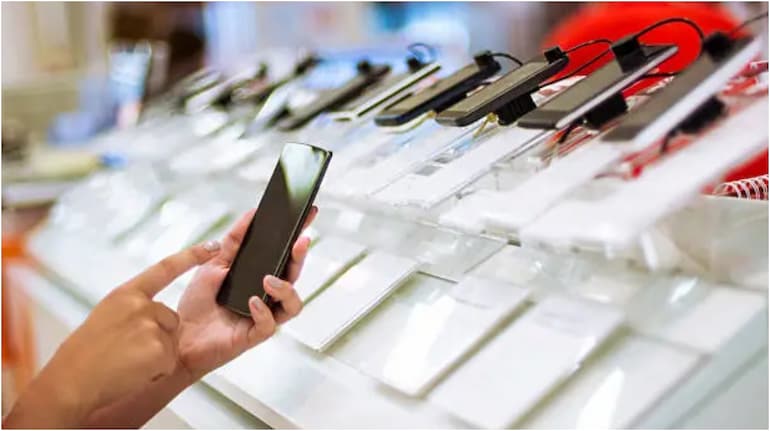
India and Vietnam are emerging as clear beneficiaries of the Trump administration’s recent tariff recalibration on consumer electronics, experts say, as Washington lifts reciprocal tariffs on items such as smartphones, laptops, and tablets — while leaving intact steep duties on goods made in China.
China still faces a 20% tariff on iPhones, laptops, tablets, and smartwatches. Only the reciprocal duties have been removed for Chinese goods
By contrast, India enjoys zero tariffs on all smartphones, including iPhones, laptops, and tablets exported to the U.S. Similarly, Vietnam faces no tariffs on Samsung smartphones and other major electronics shipped to American consumers.
This gives India and Vietnam a 20% pricing edge over Chinese-made products in the U.S. market, as per analysis from the India Cellular and Electronics Association (ICEA).
ICEA represents Apple, Foxconn, Xiaomi, Dixon, and Lava.
However, audio products such as headphones and AirPods remain outside the scope of the exemptions. These will still face over 100% tariffs when exported from China, while India and Vietnam will see a lighter 10% tariff.
Pankaj Mohindroo, Chairman of the India Cellular and Electronics Association (ICEA), welcomed the development and said, “Respite from reciprocal tariffs for smartphones and others. Now, there will be no extraordinary disruption. Time to set up capacities… long-term trend against China will remain robust. But the incredible shock of the last few weeks is in itself a tectonic even,t and the realignments are bound to happen without too much blood split in our category.”
The Trump administration has exempted smartphones, computers, and other key electronics from its newly imposed reciprocal tariffs, offering significant - if possibly short-lived - relief to global tech giants like Apple Inc. and Nvidia Corp.
Details released late Friday by U.S. Customs and Border Protection reveal that the exclusions will shield these products from both the administration’s steep 125% tariff on Chinese goods and the 10% baseline tariff on imports from most other countries.
The exemption list covers popular consumer electronics not typically manufactured in the U.S., including smartphones, laptops, hard drives, computer processors, and memory chips—narrowing the reach of the broader tariff framework.
With China still under tariff pressure and India and Vietnam offering zero-tariff routes to US markets, global electronics majors may now find themselves accelerating diversification plans—with fewer reasons to look back, analysts said.
Prabhu Ram, Head - Industry Intelligence Group, CMR said the U.S. tariff exclusions bring crucial relief to global tech majors—especially Apple, which found itself in the eye of the storm—as well as the broader semiconductor and hardware industries.
“This pragmatic adjustment, whether lasting or short-lived, helps ease tensions within the complex global electronics supply chain. Nonetheless, the overall trajectory of U.S.-China trade relations remains uncertain,” Ram said.

Discover the latest Business News, Sensex, and Nifty updates. Obtain Personal Finance insights, tax queries, and expert opinions on Moneycontrol or download the Moneycontrol App to stay updated!
Find the best of Al News in one place, specially curated for you every weekend.
Stay on top of the latest tech trends and biggest startup news.