




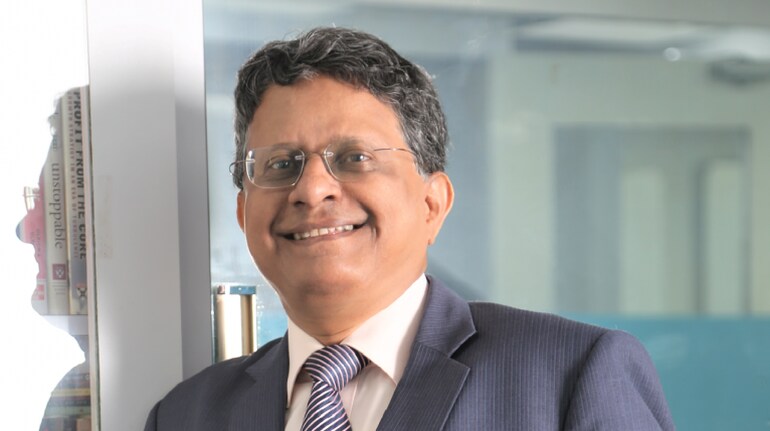
The Founder and CEO of Increate Value Advisors LLP, Milind Sarwate, is not at all sanguine about the novel coronavirus, or COVID-19, pandemic. He believes "we are not really fearful, the way we should be."
The former Group CFO of Marico is now an independent director on several boards of diverse companies including Mahindra & Mahindra (M&M), Mindtree, Glenmark Pharmaceuticals and Metropolis Healthcare. In a candid interaction, he shares his thoughts on the severity of the crisis and the way ahead for finance heads. Edited excerpts:
Q: The lockdown is being compared to Abhimanyu's Chakravyuh…easy to get into, but difficult to get out of? Is that a correct assessment or do your years of experience suggest that we might be becoming too fearful? Are we overplaying the fears?A: The answer is yes, the lockdown will be difficult to get out of. The COVID-19 crisis has unsettled the underpinnings of our economic structure. Although many have managed to present a picture of continuity through work from home (WFH), we all know that WFH is only a Plan B. If it were Plan A, we would have all been working from home all this while. The transition back to Plan A will be tentative and uneasy. All economic activity will not start all at once. Dislocations will rule. So, it would be a limp back to normalcy.
It might take several weeks, if not months for the unsettled structures to get back into some kind of routine. Meanwhile, the chakravyuha effect will continue to be felt. People, at an individual level, were really not prepared for this. The jolt has been sudden. The news from the US and Europe is scary. So, there is indeed fear in the air. Some of it is misplaced, but a lot of it is justified.
The business community is very fearful because of the lockdown and the uncertainty regarding the long term. It has decimated in some cases, years of hard work. The relief announced by the government is well intended, but it will take time for that to reach the target beneficiaries. The fear will go away only when the business ambience improves.
Other parts of the society, I am afraid, are not yet fearful where they should be. There are many who are treating the lockdown break as a holiday, and in that sense ignoring the dictum ‘never waste a good crisis’. Especially in cities, the middle class is not following the social distancing as seriously as it should be taken. Nor do I see many who are socially conscious.
Social media is full of political positioning and typical corona humour -- effectively displaying a disdain of those who are suffering. If the lockdown persists for too long, without any real relief to the economically under-privileged, we will see a rise in unrest, crime and instability. There does not seem to be enough awareness of these threats. So, I would say we are not really fearful, the way we should be.
Q: From most media coverage at present, it seems Vietnam and other neighbours of China or even Mexico might benefit from the reconfiguration of the supply chains out of China? India is still not being talked of as high on the list of countries for substituting China. Do you agree? A: It is highly unfortunate. I see some obvious reasons for that. International media does not carry much news on India, and when it does, there seems to be a hastily generated consensus that India will suffer greatly in the COVID pandemic, given its huge population and weak health infrastructure.
Also, there is an easy comparison with the suffering in Europe and the USA, leading to a conclusion that it is only a question of time before India sees scores of body bags. I do not find that fair, but only time will tell whether it is illogical.
I believe that if India comes out relatively unscathed through the COVID crisis, it will be an attractive counter destination to China. Fundamentally, India scores over China in the areas where China is currently being bashed -- a high-handed, authoritative government, an opaque data system and an unenviable track record at generating new genres of viruses. The world seems to be concluding that China does have a significant trust deficit.
Global macros are favourable in a way -- crude is low, commodities are relatively benign, and rupee has already fallen versus the dollar making exports more competitive for India. An imponderable would be how fast the Indian economy reshapes itself. It will need the rebounds from China, but it must be in a position to take them up in terms of infrastructure.
Q: Many countries have shown anger and resentment against China. Is there anger among India Inc against China for the way it has dealt with the coronavirus? Is the anger or resentment high enough to seek alternates? What is the thinking currently around investments in China? A: Businesses cannot be run on angry reactions. Individuals may get angry, but businesses typically assess the opportunities and challenges and decide on economic interests. It is that thinking centred on economic interest that is driving companies to seek alternatives to China, especially with regard to supplies from China.
Economic interests are wary of opacity and uncertainty. Therefore, value chains that depended on China are being considered for alternative configurations. Investments in China may sound attractive on paper, but it seems highly unlikely that Indian companies will look at that until their own businesses in India are back on track.
Separately, the COVID-19 crisis is spurring deglobalisation, because of the realisation that companies with compact, domestic value chains have been less affected.
Q: In the current situation, are all payables equal? Are there some payments that CFOs must make quickly to preserve the future? A: All payables are not equal. CFOs need to apply their mind carefully. Statutory obligations must be paid first. After that come the contractual obligations, non-discharge of which could attract penalties or trigger defaults with worse consequences than the non-payment.
After that comes prioritisation. For that there would be some touchstones. The first one is the impact the non-payment would have on the critical parts of the value chain. For example, in a company making essential products, the core raw materials need to be paid for, else the value chain will crumble.
The second one is the criticality of resources that the company would need after the lockdown is lifted. This will include other key suppliers, associates, employees, advisors etc. These need to be paid -- maybe not fully, but then everyone knows that cash flow has been constrained, hence rationing is acceptable to people, but it needs to be communicated proactively and gracefully.
The third touchstone is one of compassion and relationships. That is difficult to codify, but a good CFO knows how to handle these.
Q: As a former group CFO and now chair of the audit committee in many companies what is the advice that you would want to give to CFOs in these companies? A: Most importantly, CFOs need to take care of themselves as humans -- be disciplined, protect yourself. The CFOs have a challenging role to play during COVID-19. My advice to them would be to not lose sight of the long term while managing the short term crisis. This is because the CFOs role is all about maximising the value of the enterprise, and the market will be valuing those companies that not only survive the crisis but also prosper in the upturn that will logically follow.
Here are a few tips - these are the five Cs I would advocate they follow.
- Consider challenges as concurrent and not serial -- that will separate the girls from the women or men from the boys: Ensure that the company deploys two separate teams on COVID-19. One to deal with the here and now, and the other to strategise about how to get off the block once the crisis starts subsiding. The agenda for one is preservation and survival, the agenda for the other is creation and growth. So, they would require two separate mind-frames. The CFO, of course, must wear both hats from time to time.
- Communicate and communicate: Good companies, when in a crisis, raise the quality of communication and disclosure to all stakeholders, especially investors. So, stay connected with everyone and in the process you would also glean a lot of learning and useful ideas.
- Capitalise the company adequately: This is to ensure that you will stay not only liquid now but also robustly solvent later to tap opportunities. Sustenance for the time being, and growth after the COVID-19 crisis.
- Crunch costs and time cycles: Remember that adage of ‘never waste a good crisis’. Use it to reset cost structures, get rid of deadwood and turn out nimble and agile, at the other end.
- Champion the virtues of compassion and governance: This will differentiate you as a sustained value creator. Companies that display and practise compassion will win hearts and have greater access to the consumers’ pockets and employees’ hearts.
Discover the latest Business News, Sensex, and Nifty updates. Obtain Personal Finance insights, tax queries, and expert opinions on Moneycontrol or download the Moneycontrol App to stay updated!
Find the best of Al News in one place, specially curated for you every weekend.
Stay on top of the latest tech trends and biggest startup news.




