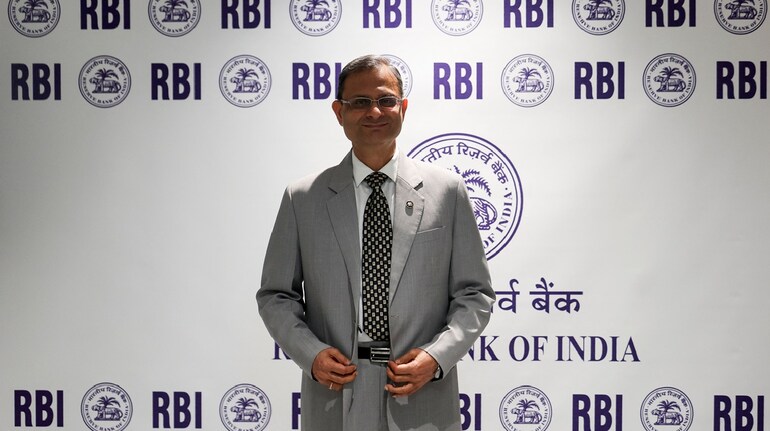
The Reserve Bank of India’s (RBI) monetary policy actions in 2025 reflects a year with cautiously opening policy space and ended it convinced that growth needed active support. The shift was shaped not only by an unexpectedly sharp disinflation, but also by how quickly the RBI used, and then conserved, its rate-cut ammunition, while repeatedly recalibrating its stance.
When the Monetary Policy Committee met in February, for the first time under the governorship of Sanjay Malhotra, the RBI took its first step into an easing cycle with restraint, pretty much on anticipated lines. "At that point it sort of seemed that he more or less came with the agenda of reducing the rates," said a banker who didn't want to be named, Inflation had declined and was expected to further moderate in 2025-26, gradually aligning with the target, allowing a 25 basis point (Bps) cut. Yet the tone remained guarded.
Growth, the MPC noted, was expected to recover from the low of Q2:2024-25 but was much below that of last year. With global financial market volatility and trade policy uncertainty looming large, the RBI chose to continue with a neutral stance, signalling that easing would be calibrated rather than aggressive.
Yet, that caution did not last long. By April, inflation was “below the target,” with a “decisive improvement in the inflation outlook,” giving the RBI greater confidence that price stability risks were receding. Growth, however, was still described as being “on a recovery path after an underwhelming performance.”
This combination pushed the MPC to change the stance from neutral to accommodative, underlining its view that the benign inflation and moderate growth outlook demands that the MPC continues to support growth. The 25 bps rate cut in April was modest, but the shift in stance was the more important signal the RBI was now clearly biased towards easing.
June marked the most forceful expression of that bias. Inflation had softened from above the tolerance band in October 2024 to well below the target, with signs of a broad-based moderation. The CPI headline inflation increased from average 3.6 per cent during July-August to 5.5 per cent in September and further to 6.2 per cent in October 2024, which was the highest in more than a year, since September 2023. Headline inflation softened sequentially in November-December 2024 from its recent peak of 6.2 per cent in October. The moderation in food inflation, as vegetable price inflation came off from its October high, drove the decline in headline inflation. More importantly, the RBI said it believed inflation was likely to undershoot the target at the margin. Growth, by contrast, was “lower than our aspirations amidst challenging global environment and heightened uncertainty.”
These “changed growth-inflation dynamics,” the MPC argued, called for “not only continuing with the policy easing but also frontloading the rate cuts to support growth.” The 50 bps cut in June took the cumulative easing since February to 100 basis points - from 6.50 percent to 5.50 percent in just four months.
Markets were expecting just a 25 bps rate cut, but the central bank surprised the streets with 50 bps rate cut. SBI research report, in June was only had said that the RBI may go for a ”jumbo rate cut” of 50 Bps to reinvigorate the credit cycle and counterbalance uncertainties.
Yet even as it frontloaded easing, the RBI acknowledged limits. After the June move, it returned the stance to neutral, explicitly noting that “monetary policy is left with very limited space to support growth.” The stance shift was not a hawkish pivot but a recognition that the heavy lifting on rates had been done, and that the focus would now turn to transmission and incoming data.
After changing stance, RBI Governor Sanjay Malhotra in June policy minutes had said that given the uncertainties, and after having reduced the policy rates by 100 bps in quick succession since February, in the prevailing growth-inflation scenario and the outlook, monetary policy will be left with very limited space to support growth. Thus, it would be appropriate to change the stance from accommodative to neutral. “A neutral stance would provide monetary policy the necessary flexibility viz., to cut, pause or hike policy rate, in response to the evolving domestic and global economic conditions. This package of measures will provide some certainty in the times of uncertainty and is expected to support growth.”
This signalled a market that the central bank will give a long pause to assess the transmission of rate cut in to the system.
That message became central in the second half of the year.
By August, inflation was decisively benign (2.07 percent). The MPC observed that average CPI inflation this year is expected to remain significantly below the target, driven by food inflation entering deflationary territory. However, it also noted that core inflation has been rising steadily and warned that inflation was likely to edge up above the 4 per cent target from Q4:2025-26 onwards.
“Monetary policy transmission is continuing. The impact of the 100 bps rate cuts since February 2025 on the economy is still unfolding,” RBI said in August monetary policy.
The October policy reinforced this wait-and-watch approach. Growth was described as resilient supported by domestic drivers, but the MPC cautioned that prevailing global uncertainties and tariff related developments are likely to decelerate growth in H2:2025-26 and beyond.
Importantly, the RBI acknowledged that the current macroeconomic conditions and the outlook has opened up policy space for further supporting growth, but held back on action, signalling that clarity not urgency was guiding policy at that stage. Two consecutive status-quo repo rate action made experts assume that they were indeed on course for a long pause on policy rates.
The real challenge was in December. It was a period of mixed signals. Even though the growth has grown sharply and there were problems of depreciating currency, the central bank chose to cut the rates by 25 bps given the low inflation, which has provided room to act on rates.
“Demand pressures, as evident from low core inflation (excluding precious metals), are minimal and projected to remain low in the next three quarters. Considering the benign inflation outlook – headline as well as core - real interest rates need to be lower. Therefore, I vote for a 25-bps rate cut. This will also stimulate demand and be growth-supportive,” Malhotra said in December policy minutes.
CPI inflation for 2025-26 was now projected at just 2.0 per cent, with Q3 inflation at 0.6 per cent. The MPC went further, stating that the underlying inflation pressures are even lower, once the impact of precious metals was excluded.
Growth, meanwhile, had proven more resilient than feared. Real GDP recorded a six-quarter high growth of 8.2 per cent in Q2:2025-26, and full-year growth was projected at 7.3 per cent, even as it was expected to “soften somewhat.
Against this backdrop, the RBI concluded that the growth-inflation balance, especially the benign inflation outlook on both headline and core, continues to provide the policy space to support the growth momentum. The December rate cut, while measured, signalled that the easing cycle was not over and that inflation, rather than growth, had become the weaker link.
In all 4 out of 6 MPC proceedings this year has resulted in rate cuts and irrespective of rate action, each MPC address felt like an out-and-out Bollywood packed with some surprise or another.

Discover the latest Business News, Sensex, and Nifty updates. Obtain Personal Finance insights, tax queries, and expert opinions on Moneycontrol or download the Moneycontrol App to stay updated!





Find the best of Al News in one place, specially curated for you every weekend.
Stay on top of the latest tech trends and biggest startup news.