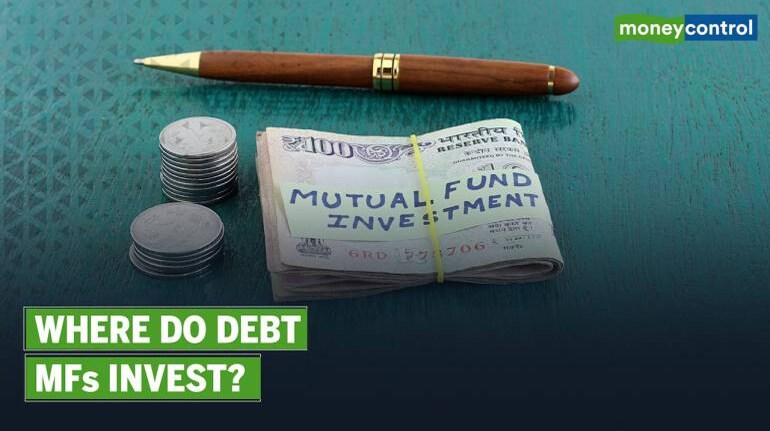
As interest rates have started to rise in India, specially coming on the back of the out-of-turn repo rate hike by the Reserve Bank of India (RBI) a few days ago, debt funds are suddenly in the news. Experts say that with the 10-year government security yield of around 7.24 percent, it might be a good time to start investing in debt funds slowly and gradually.
But do you know how your debt funds earn returns? Equity funds are far simpler to understand, given how easy it is to just track stock price movements on any of the fintech apps or television channels or even Moneycontrol. But not many investors understand debt funds. Remember, debt funds are not fixed deposits.
After all, returns are why you invest in the first place. So today, let’s understand how fixed-income funds generate returns.
How debt funds help
If you are beginning your investment journey, and do not understand the nitty gritty of the market, you would, naturally, be disinclined to invest in risky asset classes. And, with equity being considered a risky asset class, you would inevitably gravitate towards fixed-income securities or funds.
In that case, your best option would be fixed-income / debt mutual funds.
Debt funds invest in fixed-income generating instruments like corporate bonds, government bonds, treasury bills, commercial papers, certificates of deposit, and other market securities. When you invest in fixed-income securities, you become a lender to the company or the government issuing the bonds, making your investment more of a loan. This makes your investment much safer, compared to the equity market, as the bond-issuer is bound to pay your money back. Further, for extending this loan, the bond issuer or lender agrees to pay you a fixed interest rate, also known as coupon. Since the interest rate, or coupon, is pre-decided at the time of the bond’s issue, these securities are termed as fixed-income securities.
Also read | Less risk, consistent returns: SIPs work in debt funds too. Here’s the proof
How are returns calculated?
Now, let’s talk about the returns. There are two sources of returns available, when you invest in debt mutual funds -- the coupon or interest payment, and the capital gain on the investment that stems from a change in the price of the instrument.
The coupon indicates the interest paid on the fixed-income security. For instance, a five-year bond rated AAA, which has a very low chance of defaulting, may offer you a coupon of 7 percent per year, till the time of its maturity, which will be after five years. This is the coupon on the bond and you will receive this amount at pre-defined intervals.
If you stay invested through the bond’s duration, you will receive the principal amount at the end of the five-year period.
One important thing to remember here: do not get carried away just by looking at a bond’s coupon rate. This means that you must not simply opt for a bond which has a higher coupon rate. The coupon rate is directly influenced by the risk that the issuer carries. Issuers that are deemed high-risk need to offer a higher coupon rate to compensate for the higher risk. On the other hand, well-rated issuers, i.e., those with a credit rating of AAA or higher, don’t really need to offer very high coupon rates to raise money. Thus, a higher coupon could mean higher risk – something that you must examine before investing in a bond portfolio.
The other source of income is capital gains, which indicates the change in the price of the fixed-income security, in line with the changes in yields.
First thing, the yield of a bond is different from the coupon rate. A bond’s yield is the overall rate of return on a bond, while the coupon, as discussed, is the interest rate offered on the bond. The price of the bond is inversely related to the yield, which means that when the bond’s price is lower than its face value, indicating a lack of demand, the yield, or the actual returns, will potentially be higher than the pre-decided coupon. Conversely, when the demand is higher, the price will also be higher, pulling the yield below the coupon rate. The yield may be impacted by a variety of factors, including movements in the RBI’s repo rate, inflation numbers, and other statistics like GDP projections and figures. Even a sharp surge in equities could cause low demand for bonds, leading to a rise in yields and a fall in bond prices.
If you have been confused about where to invest and why, debt mutual funds can be an excellent start to your investment journey. Just remember, from a plethora of options on the shelves of your distributor, choose one that is most aligned to your financial goals and investment horizons.
(The views expressed above are the author's own opinion)

Discover the latest Business News, Sensex, and Nifty updates. Obtain Personal Finance insights, tax queries, and expert opinions on Moneycontrol or download the Moneycontrol App to stay updated!

Find the best of Al News in one place, specially curated for you every weekend.
Stay on top of the latest tech trends and biggest startup news.