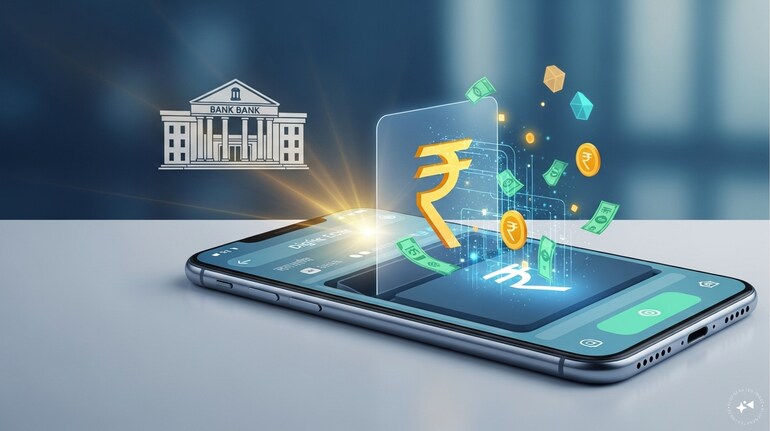

You’ve probably heard about the digital rupee by now and wondered whether it’s something you should try. It isn’t a cryptocurrency, and it isn’t a new type of UPI app either. It’s simply a digital form of India’s sovereign currency, issued directly by the Reserve Bank of India.
Think of it as electronic cash. Not money sitting in your bank account, but a digital token backed by the central bank that you can store in a wallet and use for payments.
If you’re curious about how to apply for a digital rupee wallet, here’s what the process usually looks like.
First, check if your bank supports it
The digital rupee is still being rolled out in phases. Only select banks are participating in the pilot for the retail e₹ (often referred to as e₹-R).
Banks such as State Bank of India, HDFC Bank, ICICI Bank and Axis Bank have been part of the rollout at different stages.
So the first step is simple: check your bank’s website or mobile app to see whether they offer a digital rupee wallet. Some banks allow access directly through a separate CBDC app, while others integrate it into their existing mobile banking platform.
Download the bank’s CBDC app
In most cases, the digital rupee wallet works through a dedicated mobile application provided by your bank. Search for the official app on the Play Store or App Store. Make sure it is the one published by your bank to avoid fake apps.
Once installed, you log in using your registered mobile number linked to your bank account. Since this is a regulated product, your KYC details are already available with the bank, so there’s usually no lengthy onboarding.
You may need to set up a separate PIN for the digital rupee wallet.
Create and activate your wallet
After logging in, you’ll be prompted to create a digital rupee wallet. This wallet is distinct from your savings account, even though it is linked to it.
You can then transfer money from your bank account into the digital rupee wallet. The amount you transfer is converted into e₹ tokens. These are stored in your wallet and can be used for payments.
The experience feels similar to loading money into a prepaid wallet, except here the balance represents central bank-issued currency.
Start using the digital rupee
Once funded, you can use the wallet to make payments to merchants who accept digital rupee payments. Transactions typically happen via QR codes, similar to UPI.
The key difference is that digital rupee transactions represent a direct transfer of central bank digital currency, not a bank-to-bank settlement.
You can also transfer e₹ to another person’s digital rupee wallet, provided both of you are on supported platforms.
A few practical points to keep in mind
There may be limits on how much you can hold in your wallet. Since the product is still in a phased rollout, features and limits can evolve.
The digital rupee does not earn interest, because it is designed to function like cash. So it is not a replacement for savings accounts or fixed deposits.
Also, using it is voluntary. There is no requirement to open a digital rupee wallet if you are comfortable using UPI, cards or net banking.
Is it worth applying?
Right now, for most people, the digital rupee is more about understanding where payments are headed than replacing existing methods. It’s a useful way to experience how central bank digital currencies work in practice.
If your bank offers it and you’re curious, applying is straightforward. Download the official app, activate your wallet, transfer funds, and try a small transaction.
At the very least, you’ll understand the system firsthand instead of just reading about it. And since it’s backed by the central bank, you’re not stepping into an unregulated experiment.
FAQs
1. Is the digital rupee the same as cryptocurrency?
No. The digital rupee is issued and regulated by the Reserve Bank of India and is legal tender, just like physical currency. Cryptocurrencies are privately created digital assets and are not legal tender in India.
2. Will I earn interest on the balance in my digital rupee wallet?
No. The digital rupee is designed to function like cash. Just as physical currency does not earn interest, the digital rupee wallet balance does not generate returns.
3. Is my money safe in a digital rupee wallet?
Since the digital rupee is issued by the central bank, it carries sovereign backing. However, like any digital product, you should protect your login credentials and PIN carefully to avoid misuse.
Discover the latest Business News, Sensex, and Nifty updates. Obtain Personal Finance insights, tax queries, and expert opinions on Moneycontrol or download the Moneycontrol App to stay updated!
Find the best of Al News in one place, specially curated for you every weekend.
Stay on top of the latest tech trends and biggest startup news.