



01 March, 2025 | 11:00 IST
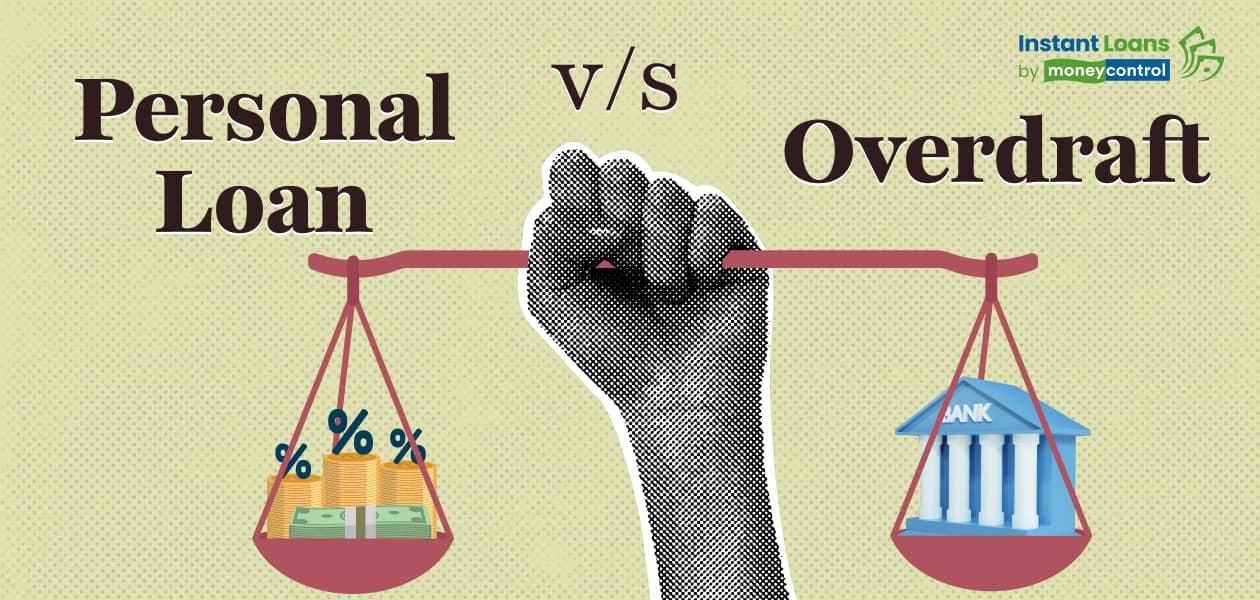
Banks and non-banking financial companies have been offering a wide range of credit instruments with the rapidly evolving digital lending industry in India. You can easily avail a personal loan or credit card with a few clicks.
Among the credit facilities offered by banks and NBFCs to meet the diverse needs of customers, personal loans and overdrafts have emerged as the most common financial instruments apart from credit cards. If you are running short of cash a personal loan or an overdraft facility could be more helpful. However, both work differently though they meet the same purpose of offering additional funding to the borrower.
Table of Contents
It could be confusing to choose between a personal loan and an overdraft facility with the wide range of credit facilities available across banks and NBFCs. Picking the right borrowing instrument depends on your financial needs, repayment ability and the interest rates, or charges levied by the lender.
The approval processes, eligibility criteria and tenure could differ from bank to bank for both the credit options. Let’s take a look at the key details about personal loans and overdraft facilities, which could help pick the right lending option.
If you are looking forward to borrowing an amount, Moneycontrol offers access to personal loans up to Rs 50 Lakhs in partnership with 8 lenders. You can avail the loans in a completely digital process at interest rates starting at a nominal 10.5% per annum.
An overdraft is a credit facility linked to your bank account. It allows you to withdraw more money than you have, up to a set limit.
You only pay interest on the amount used, and repayments are flexible, but exceeding the limit may lead to extra fees. It’s useful for emergencies or temporary cash shortages but can become costly if not repaid quickly due to high interest rates.
Example - If you have ₹1,000 in your account but need ₹2,000, an overdraft allows you to withdraw the extra ₹1,000. You can repay it later with the interest charges.
ALSO READ: Emergency Loan: 8 Ways you can access urgent funds
A personal loan is a fixed amount of money borrowed from a bank or lender that you repay in monthly instalments with interest. The loan is given as a lump sum, and you must pay it back over a set period, usually ranging from a few months to several years. It has a lower interest rate than an overdraft but comes with fixed repayments. Personal loans are ideal for big expenses like home renovations, weddings, or debt consolidation.
| Feature | Overdraft | Personal Loan |
| Loan Type | Credit facility | Fixed loan |
| Usage | Withdraw as needed | Lump sum amount |
| Repayment | Flexible | Fixed monthly instalments |
| Interest Rate | Higher (ranges between 9.5% to 40% p.a) | Lower (ranges between 8.75% and 36% p.a) |
| Borrowing Limit | Lower | Higher |
| Best For | Short-term emergencies | Long-term needs |
An overdraft could be useful in following circumstances:
For example, If you have an unexpected medical bill or a temporary cash crunch before your salary arrives, an overdraft could be helpful.
A personal loan is better if:
Both the credit facilities- personal loans and overdrafts— meet the same purpose of providing access to additional funds. However, choosing the right credit facility should depend on your financial needs. It’s also important to carefully evaluate the interest rates, fees and charges collected by the banks on a personal loan and overdraft, before borrowing.
You can explore multiple personal loan offers through the Moneycontrol app and website for amounts up to Rs 50 Lakhs. The loans can be availed in a 100% paperless process. The interest rates start at as low as 10.5% per annum.

Share it in your circle
Table of Contents
Explore Top Lenders for Instant Loan upto




Get Instant Loan up to ₹50 Lakhs with Zero Paperwork from Top Lenders
 100% Digital
 Quick Disbursal
 Low Interest Rates




