Shishir Asthana
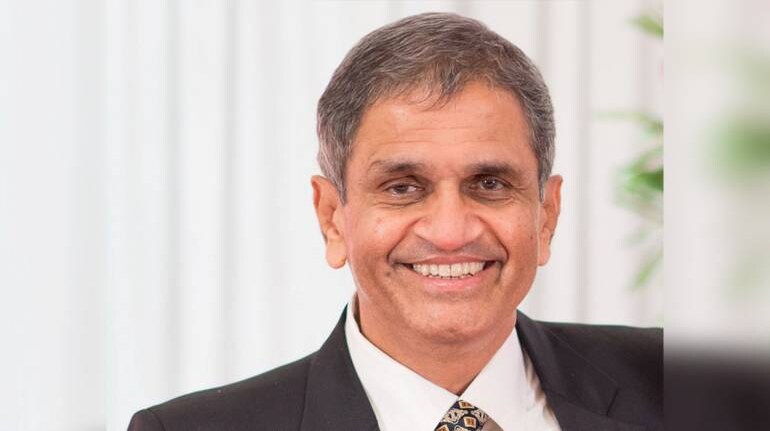
When best seller Rich Dad Poor Dad author Robert Kiyosaki said, “Don’t work for money, make money work for you” he had three things in on his mind. First was to spend less and save more. Second was to reap the benefit of compounding and third was Vinay Vaidya.
Compounding runs through Vaidya’s veins as he believes in putting his money to work all the time. He buys Avenue Supermarts shares from the money he saves by shopping at D-Mart. He patiently waits for Bata India or Titan Company to enter his comfort zone to start building his position to take advantage of the price appreciation and discount coupons that shareholders get.
Vaidya, who is more comfortable talking in numbers than words, is always looking to improve his strategy. A trader as well as an investor, he created a strategy by taking inputs from all investing greats.
Unlike other traders and investors, Vaidya comes from a different genre. He was the CEO of Anagram Car Finance and Apple Securities before finally hanging up his boots as CEO and MD of Interconnect Stock Exchange to spend time with his two daughters who were graduating. He also moved out of Mumbai to Baroda to pursue his dream of building a mathematical wealth creation model.
In the interview below, Vaidya (@arveeinvest) speaks at length on wealth creation, the pursuit of his dreams and his views on the why creating wealth is both easy and difficult.
Edited excerptsQ: From heading businesses to conceptualising software for trading and investing, can you walk us through your journey.
A: Markets have always fascinated me, even when I was doing my first year in engineering in 1974-75. During my engineering days, I used to scan through The Economic Times, but the page where I spent the most time was the stock quotes page. I like numbers, they tell a better story than words. I used to look at prices and watched them change daily. I used to wonder what makes these prices change. For the next 22 years, I could not figure out what was driving this change.
I completed my post-graduation from Ahmedabad in Electrical Engineering – Control Systems and took up a job in the same field. Soon it became clear to me that I was not cut out for an engineering job and wished to be close to the financial markets. Coming from a conservative Maharashtrian family, even the thought of a job in a broking firm was not entertained.
At the first possible opportunity, I joined a business school with the clear intent of moving to financial markets as soon as possible. I continued to follow the market and watched prices move. On a friend’s advice, I bought my first stock - Max India - in 1983-84, without a clue about the company. This friend, who later became a renowned investor, told me to look for reasons why the price moved rather than just tracking prices.
By then, I was slowly wetting my feet in the market. Like everyone else in Gujarat, I was involved in the favourite pastime of applying for initial public offer (IPO) and flipping the same for listing gains.
In 1986, I completed my cost accountancy and started to understand accounting and finance, the underbelly of a business. I soon set up a small scale business. It taught me the biggest lesson in finance and investing: it is not growth or profit that determines a strong company but cash flows. We were always in need of capital for growth. Even though sales and profits grew on paper, cash took its own sweet time to come in. If a business does not have continuous positive cash flow, then its survival will be at stake.
This is what happened to us. The Iran-Iraq war and the resulting slowdown led to our capital getting stuck in the system causing us to shutter our operations. Thankfully, I got a break in finance in 1991-92 as the economy picked up. I joined Anagram Finance to start and grow their car finance division on a condition they would transfer me to the broking division whenever it starts. But fate had something else in store. A pick-up in the economy, led to a surge in demand for car finance. As CEO of the division, our strong performance prevented my move to the securities business.
After a few years, I got a break when Atul Nishar, founder of Hexaware Technologies, offered me the CEO post at Apple Securities, a broking firm. Being on the sell side, I was still chasing prices. As a salesman who sold stock ideas, we were not expected to be fluent in fundamentals. The focus on price continued until the Y2K debacle.
In 2001-02, I started reading up on markets and fundamentals. By 2003-04, I started making bigger markets bets. This period also coincided with some good IPOs. Unlike earlier, when the idea of investing in an IPO was for listing gains, I now picked stocks for the long term. Around this time I bought Tata Consultancy Services, Divi’s Laboratories, IDFC, among others.
Market gurus generally advise against investing in IPOs, but the companies I picked were well managed and been in existence for a long time. They might not have been under the spotlight but they were definitely strong businesses. Even then, I did make my share of mistakes in picking stocks.
Q: When you were doing well professionally and investing successfully what prompted you to quit everything and start on your own? A: I wanted to spend more time with my family. Both my daughters were nearing graduation. I needed to spend as much time with them as possible before they got married.
I also wanted to pursue my dream of building a mathematical wealth creation model. I could not have done justice to the project by staying in the job. In January 2009, with the help of two software developers, I started work on the project, which we called Ekkalavya.
Q: Can you elaborate on this software? A: Since we trade as well as invest, our software has about 300 indicators. Of this, about 140 are fundamental, 130 are technical and 30 are derivative data based indicators.
We sharpened our skills from various market gurus, reading their works and converting them into mathematical formulas which went into the software.
Benjamin Graham introduced us to the mathematical approach of investment analysis, Warren Buffet taught us the benefits of compounding, investing in cash cow businesses like insurance, and having a long term view.
Charlie Munger and Philip Fischer helped us appreciate the value of cigar butt investing. Our local hero Raamdeo Agrawal gave us the formula for expansion of market capitalisation, which is a mix of business growth and price-to-earnings expansion or contraction. From Aswath Damodaran, we got the most critical formula for estimating future PE. There are 3-4 other formulas for estimating future PE.
Q: You seem to have crunched a research outfit into your computer, is it as efficient. A: Without undermining the work of an analyst, we are able to generate and pinpoint all information into a 3 stage formula. Rather than focusing on the collection of data, which is what an analyst spends most of his time on, our focus is on data analysis.
I do not attend any analyst or management meet and annual general meetings (AGM). I do not undertake channel checks. To me, the annual report and regular public reporting are good enough to take a call on the company.
Most information that is collated by meeting people is generally biased. In channel checks, there is no point in meeting say a cement dealer who will probably give me a short term view on prices and demand offtake. I cannot base a 3-5 year investment decision on this information as even manufacturing companies are not sure of their outlook beyond a few years.
An analyst also perhaps arrives at the same numbers that I do, but he has to support the number with 60 pages of data to justify the investment. For me, numbers tell a better and clearer picture. Nothing beyond the annual report is needed to get a fix on the value that a business needs to be assigned.
Living in Baroda I do not have the bandwidth to attend meets. I have used this handicap into an advantage by concentrating on going as deep as possible rather than spreading myself thin.
Q: You mentioned that you trade as well as invest, can you throw more light on both. A: We are registered advisors with SEBI and offer two models for participating in the market. The first uses the fundamental approach only. Here we pick up companies where we expect an expansion in mcap in future, which can come from business as well as PE expansion. We buy and hold companies for a period of 3-5 years or doubling of mcaps from our initial buy price, whichever is earlier. After this target is achieved we relook at the company for future action.
Let’s take the case of Reliance Industries, which we have been accumulating over a long time. It was public information that the management was going to create another RIL in 2-3 years. It was going to double capacity and invest the same amount that it did in the past 30 years. This was public information. We just had to assign numbers to these words and figure out what discount (PE) the market was going to give it.
There can be a delay of a quarter or two which is fine with us. The market correction offers us an opportunity to add to our position.
Ability to calculate future PEs has changed the game for us. We have back-tested these formulas and in 75-80 percent of cases, it was well within our range.
We invest in a company if there is a 22 percent growth visibility. A company growing 25 percent year-on-year would double in 3 years, given the benefit of compounding. We chose 22 percent as we reinvest dividends.
But evaluation and selecting companies is only 25 percent of the work. The remaining factors are position sizing and risk management. For long term buys, we generally build the position over time. If we intend to hold a company for 3-5 years, we build our position over 8-10 months. If there is a sharp drop in price after our first entry, we bring forward our buying to capitalise on this opportunity.
In the second model, we trade for a 6-7 percent gain or exit with a 2-3 percent loss. Here too we scale our position by adding positions if the price goes against us. This strategy is completely software driven, with entries and exits all defined by the software.
We use the profit of this strategy to buy shares from the first model. We use retained earnings or cash flow from this strategy to buy strong stocks from our first model. I am an extremely conservative investor who does not want to part with his capital for long, so this style suits me.
The third most important aspect in my model is money management. If a portfolio has 15 stocks bought over a period of 8-10 months, then deploy 6 percent in each stock and leave the remaining for a rainy day. Each stock is then deployed in 10 equal parts, thus 0.6 percent is deployed each time.
At any given point of time, we ensure that no stock should have more than 20 percent drawdown, which is done by using the momentum strategy to cushion the fall. In the momentum strategy, the software generates 10 outputs. If seven of these are favourable, we take a position in the counter.
Q: How has your performance in both models been? A: The momentum strategy, which we have been following for nearly 8 years, has seen nearly 2,000 trades. Of this, we have been able to exit 1,300 trades after the first entry. In 250 cases, we had to take a second entry. In 100 cases, we had to quadruple or deploy the entire amount assigned to the stock. In around 200 trades, we had to book a loss of 2-3 percent from our average price. We have a rule that we exit from a stock the moment it closes below the 200-day moving average.
Calculating returns for the long-term portfolio is difficult as it has freehold shares that have been generated by buying shares from the profits generated using the momentum strategy. The core portfolio has given over 33 percent compounded return in the last three years.
The momentum strategy has returned over 35 percent over the last 9 years. These numbers do not include the compounding of shares from profits of momentum trading that are marinating from the time they have been bought and not sold. Every year the dividend income is reinvested to buy the same shares.
In our book we now have 300 such stocks, of this 40 companies have increased their mcap by 30 times. Around 80 stocks have increased by 20-30 times and 140 stocks by 10-20 times. The balance is between 2 and 5 times. This is just indicative as they are calculated on the average market price at which they are bought. Since there is no capital involved in buying them (retained earnings were used to purchase them), calculating returns is not really correct, though one may argue that we can use the cost of capital to arrive at that figure.
Q: You have been training youngsters on the benefit of wealth creation, can you enlighten our readers about it. A: Wealth creation is a serious business, you need to treat it like one and not as a part-time activity. There are three things needed for wealth-creation: skill, temperament and capital.
Size of the capital is not an issue. It is relative, someone with a salary of Rs 5,000 might be able to save Rs 500 while for others it could be a much higher figure. Everybody is capable of saving. The problem comes in deploying savings.
Take the case of a regular employee. He fights with his management for an 8-10 percent increment every year. But then deploys the surplus in a product that barely beats inflation or gives it to a broker whose main intention is to generate brokerage. Worse, the person trades by following television experts or reading recommendations on a public platform.
If a person spends 10-12 hours a day in a job that has the potential to grow 8-10 percent every year through increments, then the surplus has to be invested in an instrument which is able to generate a much higher return. Capital has to be deployed in instruments that can generate at least 15-20 percent, only then will wealth be created.
Equity is the only instrument that can provide this kind of return, but it needs time. In the compounding of money formula, you have interest rate and time or ‘n’ as a critical variable. Beyond 25 years, it is the ‘n’ that is critical and gives multibagger returns each year. Interest rate change of a percent here or there does not have that much of an impact.
Rather than offer a percent fee to a good professional who can compound money better, a salaried employee looks for a product which has the lowest fees, preferably free. One cannot spend only a percent to someone who can help generate 15-20 percent return.
Businessmen who do not have knowledge or particular skill, outsources it. The same has to be the case in wealth creation. Either you spend time learning the skill or outsource it.
Every fund manager is wrong at some point in time, but if they have a well-defined process and track record, that is good enough to invest your money with him. If one still does not wants to part with commission, it is best to invest in low cost Nifty BeES which still performs better than most fund managers.

Discover the latest Business News, Sensex, and Nifty updates. Obtain Personal Finance insights, tax queries, and expert opinions on Moneycontrol or download the Moneycontrol App to stay updated!
Find the best of Al News in one place, specially curated for you every weekend.
Stay on top of the latest tech trends and biggest startup news.