



Dear Reader,
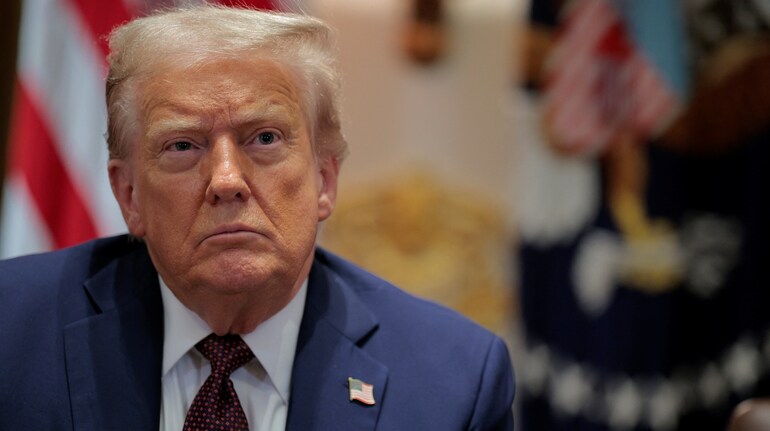
The Panorama newsletter is sent to Moneycontrol Pro subscribers on market days. It offers easy access to stories published on Moneycontrol Pro and gives a little extra by setting out a context or an event or trend that investors should keep track of.Did you listen to Donald Trump’s speech at the United Nations General Assembly yesterday? It marked a watershed moment—not for what it promised, but for what it destroyed. In dismissing climate change as one of the "biggest con jobs in the world" and openly rejecting multilateral co-operation on immigration, the President of the world's most powerful nation didn't just criticise global institutions; he declared war on the very idea of collective action.
Trump’s latest broadside at the United Nations should leave no room for confusion. In his UN speech yesterday, the US president essentially declared that America would do what it wants, while the rest of the world should fend for itself.
There seems to be a method to the madness
This is not just a policy quirk or a negotiating tactic. It is an outright rejection of multilateralism—the very principle that has held the world together since the Second World War. Institutions like the UN, the World Bank, or the Paris Agreement on climate were not created for symbolism.
These institutions exist because global problems cannot be solved by countries acting alone. Trump’s disdain for them is more than rhetorical bluster; it is a dangerous retreat into unilateralism that threatens to paralyse collective action.
For example, take climate change. The science is not ambiguous. Rising temperatures, extreme weather events, and melting glaciers are not “con jobs”.
These are realities hitting every corner of the planet. The developing world—countries like India, Bangladesh, and African nations—is on the frontline of this crisis, with rising sea levels, collapsing agriculture, and climate-induced migration.
Where is the money?
Yet, fighting climate change requires money, technology, and shared responsibility. Under the Paris Agreement, rich countries promised to mobilise $100 billion annually for mitigation and adaptation in poorer nations. That money was always slow to arrive. But with Trump dismissing the very premise, the prospect of meaningful climate financing is collapsing. That’s a worrying situation.
The result will be stalemate. If the US rejects binding targets, others will feel no pressure to comply. The collective effort unravels, and the planet pays the price. Trump may score political points at home, but the cost will be borne in flooded coastlines, failed crops, and climate refugees.
Trump's immigration rhetoric reveals a similar disconnect from reality. His America-first rhetoric pretends that borders can be sealed and human movement halted by executive order. But migration is not a tap that can be turned on and off. Wars, poverty, and climate pressures push people to move, whether governments like it or not.
Multilateral frameworks—like the Global Compact for Migration—exist to manage this reality in a humane and coordinated way. By ridiculing such agreements, Trump is not solving the problem; he is merely pushing it onto others, creating chaos instead of cooperation.
And, the messaging..
What is even more damaging is the message. The United States, for decades, styled itself as the anchor of the global order. It built, funded, and led multilateral institutions, projecting an image of leadership even if a flawed one.
If the rules do not matter to America, what incentive do other nations have to follow them? Why should Brazil or China honour climate commitments, or European nations stick to refugee quotas, if America is tearing up the rulebook? The danger is not just America’s isolation, but a breakdown of the system itself.
Some argue that Trump’s outbursts should be taken with a pinch of salt—that America’s bureaucracy and courts will prevent wholesale destruction of multilateral ties. But the damage is already visible. US withdrawal from the Paris Agreement, attacks on the World Health Organization, and threats to cut UN funding have eroded trust. Countries that once looked to Washington for direction now hedge bets with Beijing, Brussels, or Moscow.
Trump may be day-dreaming that he is unshackling America from burdens. In truth, he is dismantling the very scaffolding that allows nations to tackle shared challenges. For the rest of the world, the task now is clear: if Washington walks away, others must hold the line. The alternative is a slide into chaos.
That isn’t all..
That aside, there are other consequences of Trump’s policies—for instance rejecting Palestinian statehood and unlimited support for Israel is a key reason that has led to the recent Pakistan-Saudi defence pact. India has reasons to worry about this. Read our columnist Saibal Dasgupta’s piece on this.
Similarly, Vivek Y. Kelkar writes how Trump’s sanctions on Iran's Chabahar port may have just handed China a strategic gift—control over crucial maritime corridors-- while pushing away India.
And this is not taking into account Trump’s H1B Visa tantrums that will kill the American dreams of millions of migrants, or his trade protectionism.
The stakes couldn't be higher. In an interconnected world facing existential challenges, isolation isn't strength—it's abdication. In his UN address, Trump may have scored political points with his base, but he's left the world more dangerous, divided, and dysfunctional.
Investing Research
Epack Prefab IPO: A story of efficiency, speed and technical prowess
HEG: Will it benefit from the shift in China’s policy stance?
Jain Resource Recycling: Will the IPO funds accelerate exports?
What else are we reading?
Will RBI focus on liquidity over rate cuts next week?
Reopening of PLI for ACs and LEDs to drive self-reliance
Chart of the Day | Decoding the August core sector data
Bond Strategy Reset: Ditch ultra-long issuance
RIP to safe havens (republished from the FT)
Rethinking the POSH Act: Ensuring protection for women in all professional spaces
KRBL episode is a milestone in ensuring board accountability
Technical Picks: MindaCorp, NTPC, Hindustan Lever.
Dinesh Unnikrishnan
Moneycontrol Pro

Discover the latest Business News, Sensex, and Nifty updates. Obtain Personal Finance insights, tax queries, and expert opinions on Moneycontrol or download the Moneycontrol App to stay updated!
Find the best of Al News in one place, specially curated for you every weekend.
Stay on top of the latest tech trends and biggest startup news.