Dear Reader,
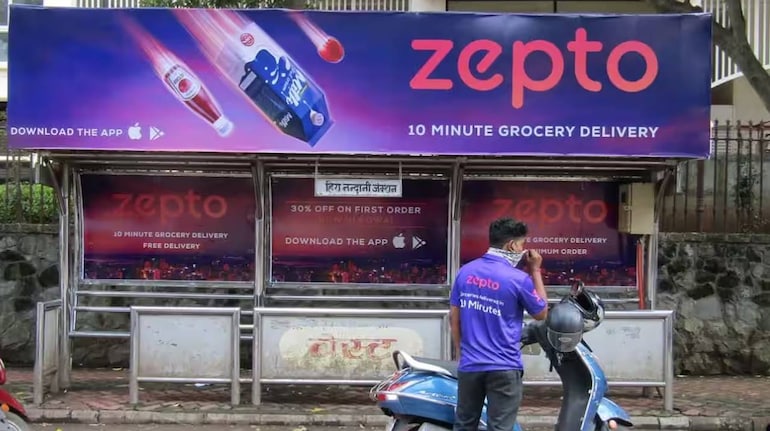
Is Quick Commerce the 800-pound gorilla that’s going to take India’s retail market by storm? That’s the question that comes to mind when trying to understand the impact of Zepto’s $665 million (Rs 5,500 crore) fund-raising exercise that was announced last week. While that gives Zepto a valuation of $3.6 billion (Rs 30,000 crore), the amount raised comes on the back of another $231 million in August 2023.
Excitement about the Quick Commerce segment of e-commerce is not new. The main reason for that is not the capital flowing into the business, but the uptake among consumers. Initial scepticism of most people that a 10-minute delivery promise is not enough to make consumers pivot to these brands for their limited grocery offering has been proved wrong. It has forced organised e-commerce players to shake up their act and provide quicker delivery even while they may say it does not make economic sense.
But the amount raised raises the stakes by compelling backers of other players to pull up their socks as competition in their markets will intensify, and may also have to invest more to maintain their share of the market. Zepto intends to use this amount to double the number of outlets from where they service orders to 700 and also expand into newer markets, according to the Moneycontrol report.
While the initial race in Quick Commerce was to get customers to adopt to buying grocery through them instead of the existing e-commerce offerings, it moved to adding adjacent categories that have an impulse factor and has now even moved into non-impulse categories such as consumer durables. This is where it gets tricky.
FMCG products are fast-moving, but the retail margins they offer are not great but organised retail has an edge. However, over time, these Quick Commerce companies will become big enough -- some may have already reached that stage -- that they will be able to get better terms from FMCG companies to improve their margins. Consumers pay for their purchases immediately, but they need to pay their suppliers much later. Since Quick Commerce apps stock a limited inventory, they face a limited risk of dead stocks.
One part of the game is to add new consumers to grow sales. Another is to offer a wider range of products to the existing ones. The easier part is to do this within the existing categories — for example, more biscuit/bakery brands and varieties compared to earlier. Another is to offer more premium products and this theme is anyway one that appears to be in vogue, of people willing to pay more for such products.
But after having done all this, the next opportunity they appear to have latched on is to expand into non-FMCG categories, too. That will be like a supermarket, but with a 10-minute delivery window or maybe slightly longer. But anything under an hour will be better than what any e-commerce company is able to offer. But the questions and challenges are several.
These are slower-moving products, so will that not upset the business model? But these are also bigger ticket items, so the per order cash margin earned is also higher, improving the profitability of an order. Second, they could use the cash being thrown up by one category (FMCG) to fund the requirements of another. Will people really want to buy big-ticket items from these quick commerce apps? Will it make for a good experience, shopping for durables alongside vegetables? What about service?
These are all valid questions, but after the runaway success of Quick Commerce apps and the Indian consumer’s apparent liking for a combination of convenience and quick delivery, nobody is going to bet against them. They are likely to get solutions for these problems and as long as they keep the core offering’s promise intact, consumers are not likely to walk away from these apps. It’s a headache for other e-commerce players as whittling down their delivery times beyond a point means a cost they will have to bear, which their existing business model is not equipped for. But the force of Quick Commerce is such that even the established e-commerce players are being forced to consider it.
Investing insights from our research team
Mas Financial – the steady long-term compounder now fortified with capitalThangamayil Jewellery: Why this stock will continue to shineWill a possible move to reduce F&O trading by retailers derail the BSE stock rally?Tracker
Monsoon Watch: This season’s rainfall going through a sensitive phase nowWhat else are we reading?
Moneycontrol Pro Market Outlook | A likely shallow correction in the offingIndian bond markets are ready for take-offChart of the Day: India’s steel output slows down even as consumption stays strongMedPlus’ own branded product business needs close monitoring by investorsKey GST reforms remain in a wait modeThe Eastern Window: India weighing options as US pushes it to play Tibet cardPersonal Finance: Domestic investors could ride on global winds in favour of Indian equitiesThe ‘one’ way for Wall Street banks (republished from the FT)Amid unprecedented heatwave, RSS bats for nature-friendly development modelUnion Budget 2024: Election results shouldn’t nudge NDA to stray from its fiscal goals
Five key ways the Bank of England outperformed its peers
Personal Finance
Smallcase sets sights on profits, doubling growth in FY25 Technical Picks: SBI, Sterlite Technologies, Elecon, Granules and Lead
(These are published every trading day before markets open and can be read on the app).
Ravi Ananthanarayanan Moneycontrol Pro

Discover the latest Business News, Sensex, and Nifty updates. Obtain Personal Finance insights, tax queries, and expert opinions on Moneycontrol or download the Moneycontrol App to stay updated!
Find the best of Al News in one place, specially curated for you every weekend.
Stay on top of the latest tech trends and biggest startup news.