




Dear Reader,
The Panorama newsletter is sent to Moneycontrol Pro subscribers on market days. It offers easy access to stories published on Moneycontrol Pro and gives a little extra by setting out a context or an event or trend that investors should keep track of.Central bankers across the world have a way of dealing with politicians through smart wording of statements. For the majority of us, it’s tough to decode. But those who should get the message certainly will. Governments tend to focus on short-term growth priorities to win the next election while central banks take a long-term view, keeping price stability at the top of the agenda.
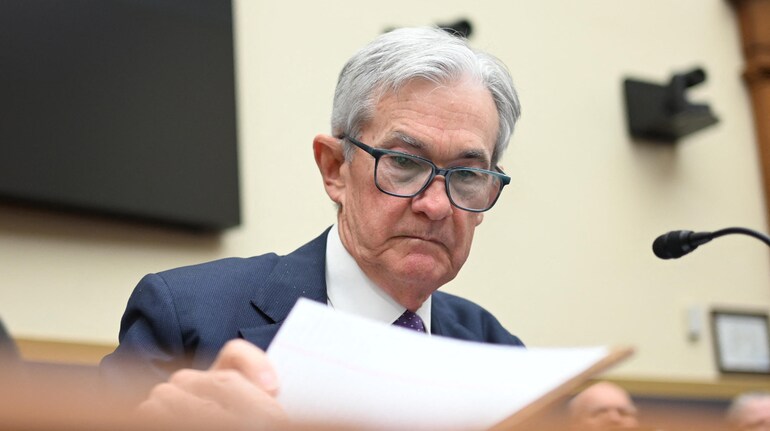
Federal Reserve Chair Jerome Powell’s testimony to the US Congress on June 24, 2025, is a good example of bold central bank talk even during uncertain times and political pressure to cut interest rates.
Powell’s singular focus, amidst pressure from Trump to cut interest rates, remains on price stability. This is a cue for other central bankers elsewhere, including in India.
Powell’s cautious tone
“We’re just trying to be careful and cautious,” Powell said. “We really think that’s the best thing we can do for the people that we serve.”
The words spoken were a measured yet firm articulation of the central bank’s cautious stance on monetary policy, reflecting the delicate tightrope it walks amid economic uncertainties.
Speaking before the House Financial Services Committee, Powell reiterated the Fed’s unwavering commitment to its dual mandate—maximum employment and price stability—while underscoring the challenges posed by rising inflation expectations driven by President Donald Trump’s tariff policies.
Message to markets
His remarks, rooted in a sober assessment of the US economy, carry profound implications not just for American financial markets but for global markets, including India, and signal a broader message of caution to central bankers worldwide, including India’s Reserve Bank of India (RBI).
Powell painted a picture of an American economy that remains robust, with a labour market he described as “solid” and near maximum employment, clocking an unemployment rate of 4.2 percent in May.
Economic growth, while tempered in the first quarter due to trade-related distortions, continues to hold steady, with private domestic final purchases—a key indicator of underlying demand—growing at a healthy 2.5 percent.
Yet, the shadow of inflation looms large. Powell noted that inflation, as measured by personal consumption expenditures (PCE), rose 2.3 percent over the 12 months ending May, with core PCE at 2.6 per cent, both above the Fed’s 2 percent target.
The culprit, in large part, is the uncertainty surrounding Trump’s tariffs, which have sparked a rise in near-term inflation expectations, as reflected in market and survey-based measures. While longer-term inflation expectations remain anchored, Powell was clear: the Fed’s priority is to prevent a one-time price shock from morphing into persistent inflation.
This cautious tone has immediate implications for financial markets. In the US, Powell’s signal that the Fed is in no rush to cut interest rates—maintaining the Federal funds rate at 4.25-4.5 percent—has already tempered expectations of an imminent policy easing. Futures markets, as per the CME Group’s FedWatch gauge, now see only a 23 percent chance of a rate cut in July, with September emerging as a more likely timeline.
This could put a lid on equity market exuberance, as higher interest rates for longer could weigh on corporate earnings and valuations. Bond yields, already sensitive to inflation fears, are likely to remain elevated, with the US 10-year Treasury yield reflecting investor caution. The US dollar, bolstered by the Fed’s hawkish stance, could see increased strength, particularly if tariff-driven inflation pressures intensify, although at the moment the Dollar Index is still well below 100.
What does it mean for financial markets such as India?
For India, the ripple effects are significant. A stronger US dollar and high US yields typically exert pressure on emerging market currencies, including the Indian rupee, which has already faced headwinds from global risk-off sentiments.
The RBI, which has been steadfast in prioritising inflation control under former governor Shaktikanta Das, has shifted gears to a growth-support stance this year under new governor Sanjay Malhotra, who frontloaded a 100 bps rate cut from February in search of growth.
The Fed’s decision to hold rates steady reflects a wariness of acting prematurely in an environment where trade policies could upend inflation dynamics. Unlike the US, where recession fears have receded, India’s economy is clocking robust growth, with GDP growth rates outpacing most peers.
This gives the RBI some breathing room, but the central bank is unlikely to ignore the Fed’s signal. Powell’s emphasis on anchoring inflation expectations could embolden the hawks within the MPC to argue for sustained vigilance.
That apart, don’t miss the interesting pieces in today’s Moneycontrol Pro such as Manas Chakravarty’s piece on markets in times of war and geopolitics.
Until next time.
Investing insights from our research team
HDB Financial Services IPO: The pricing of the issue is a surprise
Is Sambhv Steel Tubes making a bold gamble with its IPO?
Aditya Birla Lifestyle Brands: What should investors do after the demerger?
Tracker
Pro Economic Tracker | Auto recovery patchy, consumer sentiment continues to slide
What else are we reading?
Chart of the Day | How crude oil prices influenced India inflation numbers in last decade
What is behind Indian rupee's recent rough ride?
From coders to bystanders: Is Indian IT missing the GenAI train?
How oil traders called the Middle East conflict (republished from the FT)
India's CCPA targets dark patterns in e-commerce for fair design
Climate-proof and Profitable: the hidden upside of adaptation investments in India
Is India overestimating Israel’s role as a trusted defence partner?
FTAs are welcome but don’t let them undermine pharma industry and drug access
India’s digital power must be matched by mercantile mindset
Markets
Trading volumes surge without matching turnover as action shifts to low-priced stocks
Technical Picks: FSL, AARTPHARM, NAVINFLUOR, KOTAKBANK.
Dinesh Unnikrishnan Moneycontrol Pro

Discover the latest Business News, Sensex, and Nifty updates. Obtain Personal Finance insights, tax queries, and expert opinions on Moneycontrol or download the Moneycontrol App to stay updated!
Find the best of Al News in one place, specially curated for you every weekend.
Stay on top of the latest tech trends and biggest startup news.