




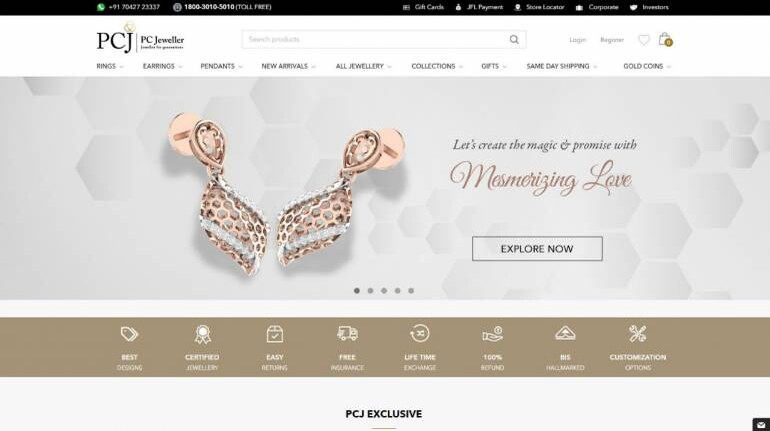
Delhi-based PC Jeweller, in a regulatory filing on February 7, said it was in the midst of legal proceedings with State Bank of lndia, the lead bank in a consortium of lenders that have advanced loans to the company. In the same filing, it stated that four other banks of the consortium, “namely IDBI Bank, Indian Bank, Bank of India as well as Karur Vysya Bank have also issued their loan recall notices to the Company”.
PC Jeweller has been in the news for a while. If you aren’t familiar with the details of the case, here is a Moneycontrol explainer:
In January 2018, market regulator Securities and Exchange Board of India (SEBI) pulled up PC Jeweller for insider trading. PC Gupta, the founder of PCJ, and his brother Balram Garg, as well as their children, were allegedly involved in the insider trading, SEBI said. Gupta and Garg denied the charges. Soon after, SEBI started an investigation against them.
Meanwhile, market sentiments were turning negative towards PCJ and the price of its shares started to tank.
The investigation by SEBI concluded that Gupta and Garg were involved in insider trading. Subsequently, SEBI imposed an aggregate fine of Rs 1 crore on the promoters and barred them from trading in the shares of the jewellery company for one year.
Between 2018 and 2021, the price of one share of PCJ fell from Rs 320 (January 2018) to Rs 23.

What happened next?
Garg’s and Gupta’s children moved the Securities Appellate Tribunal (SAT), which, too, found the promoters guilty. After being pronounced guilty by SEBI and SAT, they approached the Supreme Court, which in its decision in April 2022, overturned the SEBI and SAT orders.
In September 2022, SEBI petitioned the Supreme Court seeking a review of the apex court’s April 2022 decision overturning the markets regulator’s order in the PCJ insider-trading case. The case is ongoing.
Why did SEBI seek clarifications from PCJ last week on its share price movement?
On February 2 this year, SEBI had sought a clarification from PCJ on its price movement in the market, after the company’s shares fell from Rs 48 at the start of the trading session to Rs 43.50 at the end of the session.
“The Exchange has sought clarification from PC Jeweller Ltd on February 2, 2023 with reference to significant movement in price, in order to ensure that investors have latest relevant information about the company and to inform the market so that the interest of the investors is safeguarded,” SEBI said in its notice.
What was the company’s response?
In its reply on February 3, PCJ said that the lead lender, i.e., SBI, had moved the Debt Recovery Tribunal (DRT) – Delhi on January 18 against the company, seeking full recovery of its outstanding exposure.
“The company has gone into appeal against the same and the matter is currently sub-judice and there is no clarity on the outcome of the same. The company, however, apprehends that the movement in its share price may be on account of this impending announcement only,” PCJ said in its reply to SEBI.
Who are the lenders to PC Jeweller?
The company, in its annual report for fiscal year 2021-22, stated that it had borrowed money from 14 banks, including SBI, Indian Bank, Union Bank and Punjab National Bank.
In the annual report, the company said it owed the banks Rs 3,278 crore, which included the interest and the base amount.
The largest lenders are SBI, with Rs 1,060 crore outstanding; Union Bank of India, with Rs 530 crore; Punjab National Bank, with Rs 478 crore; and Indian Bank, with Rs 226 crore.
Why did the lenders recall the loans?
PCJ, in its results for the July-September quarter, said that it had defaulted on loans worth Rs 3,466 crore from banks and financial institutions.
In the wake of the default, the banks decided to recall the loans given to PCJ.
What does recalling a loan mean?
A loan recall is a process where the source lender requests the return of the amount advanced to the recipient or borrower.
Generally, when lenders see problems in a borrower’s financial situation, they decide to recall loans.

Discover the latest Business News, Sensex, and Nifty updates. Obtain Personal Finance insights, tax queries, and expert opinions on Moneycontrol or download the Moneycontrol App to stay updated!
Find the best of Al News in one place, specially curated for you every weekend.
Stay on top of the latest tech trends and biggest startup news.




