Dear Reader,
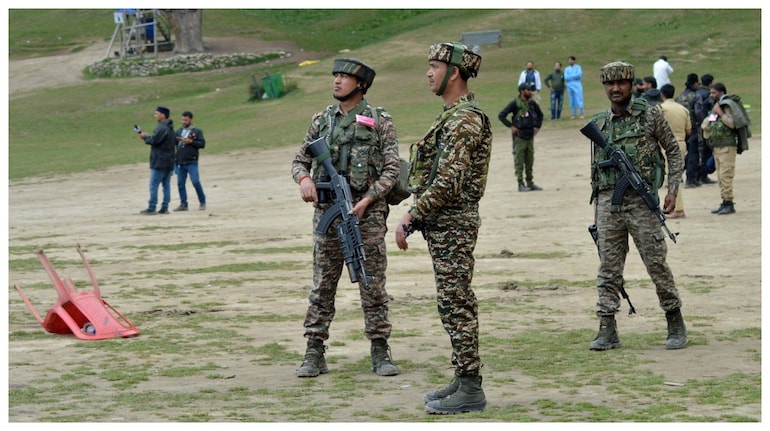
The brutal attack on tourists at Pahalgam this week has shone the spotlight once again on the age-old problem of Pak-sponsored terrorism. The killing of Hindu men on the basis of their religion is a blatant attempt to fan sectarian passions. It is vital that we do not fall into their trap.
Thankfully, the disgust with which all of Kashmir reacted to the killings, the help given to the injured tourists by the local people, and the swift condemnation by Kashmir’s political and religious figures, all indicate that the terrorists have no support among the people of Kashmir, who merely want to get on with their lives. As this article said, “The attack, seen as a direct assault on the local economy, particularly its thriving tourism industry, sparked a unified response across the Valley. Tourism stakeholders, trade bodies, bar associations, schools, and business groups all called for a spontaneous shutdown to condemn the violence and express solidarity with the victims”.
India’s immediate response to the atrocity has so far been measured, and we wrote here why India’s suspension of the Indus Waters Treaty could hurt Pakistan more than military action. That said, there is also a need to make Pakistan realise that supporting terrorism will not pay. The international environment is conducive to applying such pressure. While the US will likely firmly support India, Pakistan’s main backer China too may be persuaded to rein in its protege, at a time when China’s economy is wilting from the US trade war, and it could do with help from India. As for the way ahead, C Uday Bhaskar expressed it well when he wrote, “Pahalgam will have to be responded to in a measured and calibrated manner and as the adage goes, revenge is a dish best served cold”.
The markets have taken the likely response to the terror attack in their stride, and the Nifty is up modestly this week.
In fact, the Indian markets have rebounded smartly over the past few weeks, as foreign portfolio net inflows have resumed. The IMF’s World Economic Outlook, which came out this week, forecast that India’s share of world output will continue to increase steadily. The report also forecast that the hit to India’s growth from the Trump tariffs will not be much. The IMF’s projection of low crude oil prices and falling metal prices this year and the next will help keep inflation in check while the IMD’s prediction of a good monsoon should support rural demand. We accordingly recommended this FMCG major as a play on the rural demand recovery. We also said that HUL is gearing up for volume growth while Nestle should gain from the tax cuts in the Union Budget, given its urban consumption bias.
Despite the gloomy macro outlook, we continued our search for promising investments, wondered whether this renewable energy stock deserves a serious look, considered a compelling auto ancillary play amid trade tensions, found HCL Tech’s commentary positive and its guidance impressive, and wondered whether this company was the crown jewel in the Indian IT pack.
The two biggest private banks, HDFC Bank and ICICI Bank, came out with better than expected results, as did Axis Bank. Our columnist Ananya Roy wrote that the BFSI sector has caught the investor’s eye, but risks linger beneath. Of course, uncertainty still dominates the show, as the minutes of the Monetary Policy Committee underline, and this story says IT majors’ slowing growth raises tough questions.
Nevertheless, the RBI has plenty of ammunition left and it used some of that with the easier-than-expected Liquidity Coverage Ratio norms announced this week. As we pointed out, the flood of money is already nudging bond yields lower. Indeed, yields have fallen across the board, from commercial paper to 10-year government bonds.
The external environment, though, is fraught with danger. The IMF projections, analysed here, highlight the hits to the world’s two biggest economies—the US and China—amid their trade war. We wrote here how Trump’s tariffs are sinking global logistics and trucking firms, and the impact will be felt by the US economy as soon as inventories run out. This FT story, free to read for Moneycontrol Pro subscribers, says Corporate America is alerting Wall Street to the damage to earnings from the trade war.
Despite that, the US markets, while yo-yoing to every contradictory utterance by Trump and his team, have been bouncing a bit, perhaps believing that the worst of the bluster is behind us and Trump will slowly come to his senses, although he’s unlikely to tone down the rhetoric. We wrote here that the dollar is no longer a safe haven, which should facilitate fund flows to other markets.
As Ruchir Sharma wrote, “Many countries can use the opportunity created by superpower conflict to push domestic economic reform and increase trade with each other. There are signs this is happening, setting the stage for new winners and losers to emerge in this new, high tariff world”. The latest such opportunity comes from this FT report that says, “Apple aims to source all US iPhones from India in pivot away from China”.
This could be a time to revisit the poems written about the Jewish Chabad House victims after the terrorist attacks in Mumbai. One of them, written by Naomi Weisberg to a child who lost his parents, says:
‘I wish I could explain to you,
Why things happen as they do,
Why the world is run the way it is,
Why evil prevailed while goodness withdrew.’
Regards,
Manas Chakravarty
In case you missed them, here are some of the other stories and insights we published this week, apart from our technical picks in the equity, commodity, and forex markets:
Stocks
Baazar Style, Samhi Hotels, Syngene, Tata Consumer, Waaree Energies, What will the collaboration with UBS mean for 360 ONE, AU Small Finance Bank, Havells India, Cyient DLM, LTI Mindtree, Mahindra Finance, International Gemmological Institute (India), ICICI Bank, HDFC Bank, Can this IT company rebound in FY26?, Tech Mahindra
Markets
Is the Gold Rush here to stay?
How much capital does a full time trader need?
Chinese stocks top Indian MFs' overseas buying list in March
Japan, Korea lead the way in Nifty-tracking passive funds
Profitable IPOs take centre stage globally
Financial Times
How to think about returns in a bear market
Seven Truths about Trade
Companies & sectors
Are the steel dumping duties too little, too late?
How Wipro fell behind Infosys and TCS in Europe
How a falling market and tighter regulations impacted brokers
Palm oil brings good tidings for FMCG companies
On a slippery road
Why diversified infra firms are on better ground than their highway counterparts
RBI’s LCR overhaul aims to fortify banks in a digital era
Economy & Policy
The incredible rise of Indian fintechs
The trilemma of achieving carbon market harmony in India
Personal Finance
The big market risk investors ignore near their retirement
Geopolitics & Geoeconomics
Is China’s control over rare earths weakening Trump’s bargaining power?
Long-term dilemmas await Asia caught in US-China tariff rivalry
The TRUST factor can be vital in India-US ties
Tech & Startups
Startup scandals like Gensol need real consequences
Startup Street: Seed stage funding bounces back
The AI Gold Rush: Where should Indian startups stake their claim?

Discover the latest Business News, Sensex, and Nifty updates. Obtain Personal Finance insights, tax queries, and expert opinions on Moneycontrol or download the Moneycontrol App to stay updated!
Find the best of Al News in one place, specially curated for you every weekend.
Stay on top of the latest tech trends and biggest startup news.