






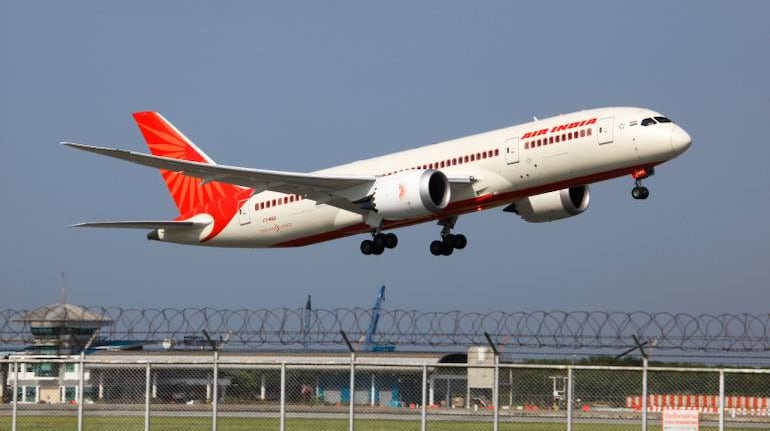
The alleged pee-gate episode is getting curiouser and curiouser, with not only claims and counterclaims made by the two sides but new facts also emerging. With virtually no eyewitnesses to authenticate the incident, the version of the cabin crew may play a pivotal role as the case progresses in court. Some of the cabin crew of flight AI 102 of November 26, 2022, have already deposed.
A question posed on TV debates is whether the crew can be pressured and/or manipulated to side with either of the parties concerned. My take: No, not possible, as the crew cannot be expected to backtrack on their observations already recorded in the crew report.
Also Read: Air India crew’s pee-gate report suggests complainant wasn't entirely truthfulFor those not conversant with the aviation industry and its operational practices, Air India, like most airlines, has a robust system of cabin crew submitting a report after every flight. The report, which is invariably countersigned by the pilot-in-command (commander), details everything that may have transpired on a flight.
In the crew report of AI 102, on which the incident allegedly took place, it was recorded: Flight departed New York five minutes early, lunch service was delayed by 30 minutes due to turbulence. Beverage service was done.
No scope for dilutionAs the crew report is created on the flight before touchdown, there is no scope for any pressure being mounted on crew members to either dilute or drop references to certain aspects of an episode. In the case of AI 102 of November 26, an exception was made to add observations in the customs hall (after arrival in New Delhi), where some noteworthy incidents related to the case took place.
Also Read: Air India seating plan uncovers a potential twist in pee-gateIn the past, Air India crews have complained even against members of parliament, including an instance of unruly behaviour by Ravinder Gaikwad, an MP from the Shiv Sena. The fact that the Shiv Sena was part of the Central government in 2017, when the incident took place, did not deter the crew. Mention of this is imperative for the general public and for those with vested interests in the alleged pee-gate incident to not doubt the credibility of the crew report.
It is my surmise that if the crew report, which is full of observations related to the incident, had been shared by Air India when news of the incident first exploded and led to a virtual non-stop reportage on electronic media and creation of cartoons that were harmful to Air India’s image, it would have blunted quite a bit of the criticism that it eventually faced.
One can, of course, understand the compulsion of the AI management, as the media in the initial days wasn’t just willing to take cognisance of facts, which were contrary to the screaming of TV news channels and the boisterous narratives.
The Supreme Court’s admonition of coverage of this incident by news channels is a case in point. A bench of Justices KM Joseph and BV Nagarathna of the Supreme Court said last week: "Regarding the Air India incident... look at the names which the man was called on TV... he is an undertrial. You have to treat a person with human dignity."
Let’s look at the crew report now as the vitiated environment has significantly cooled down. As per the crew report, the alleged incident took place a little more than five hours after the flight’s departure from New York, after the crew had finished drinks and meal service, distributed duvets and pillows, and dimmed the lights in the cabins to allow passengers to sleep. This is the standard practice on all flights.
Compensation soughtAs per the crew report, the lady guest seated at 9A complained as follows:
1. “Whilst I was fast asleep on my seat, I witnessed some movement around my seat. I saw a man opening his zipper of his trouser and started to urinate on me.
2. “I was in such a state of shock that I could not react, shout or call the crew. The man went back on his seat 8C.
3. “After recovering from the shock I informed the crew that I was feeling miserable. My clothes & shoes were wet with urine.”
The report added: The crew spoke to the lady and tried to pacify her.
“We assured her that she would be offered all possible assistance by the crew & Air India. After listening to her she was shifted to seat 12C (a regular business class seat and not a narrow one, as referred to by the complainant in her letter to the Chairman of Tata Sons and Air India), and offered her fresh carpet slippers, duvet, blanket and pillow. Crew helped her clean her bag & shoes and change into fresh night wear. She wanted compensation for her soiled belongings from AI.”
“She also contemplated filing a police complaint. She was assured of prompt wheelchair assistance upon landing.”
In this 21-seater business-class cabin, with seven seats in each of the three rows, Sugata Bhattacharjee was seated on 8A, the seat next to 8C, which was occupied by the alleged perpetrator. The lady passenger who filed the complaint was seated on 9A. Giving her company on the adjacent 9C seat was another elderly woman.
With this configuration and the seats in reclined state for passengers to sleep, the account of passengers seated on 9C, 9D – right across the two-foot-wide aisle – and 10A, 10C, and 10D in the row behind – becomes crucial. It wouldn’t be unfair to assume that the commotion due to the alleged action by the accused in a highly inebriated state ought to have disturbed the passengers close by.
Has any of the guests seated on these seats validated the accusations? No.
Doubts have also been raised by the lawyers of the accused that if he had urinated from the aisle, the 9C passenger would have certainly got affected, and because all the seats were in reclined state at that time, there was no scope for the accused to get close to 9A.
Both the complainant and the accused are said to have had a prolonged sleep after the alleged incident. When they woke up, the report states in unequivocal terms: “Later on, both 9A and 8C met and worked out a compromise wherein 8C guest apologised unconditionally. 8C guest also agreed to pay $200 as compensation in addition to getting her shoes and clothes dry cleaned.”
The issue seems to have been settled between the two.
The 8A passengerWhy did the complainant renege on the understanding? Did Bhattacharjee, seated at 8A, play the role of Narad muni? Perhaps, yes.
The crew report states: During boarding on ground, guest 8A Mr Bhattacharjee inquired about vacant seats in first class and a chance of a possible upgrade. He was politely informed about Air India’s policy of “no upgrade” inflight – the likely cause of a grouse against the crew and Air India.
“As soon as he became aware of the incident he got upset and agitated and demanded an upgrade. He wanted the 9A guest and himself to be upgraded to first class even though the complainant guest had not sought an upgrade. Whilst 8C was fast asleep in his seat, 9A lady guest was already settled on 12C and was fast asleep. It is also pertinent to mention that it took the crew some time to clean 9A guest’s belongings and seat and know from her in detail what happened.”
In the complainant’s interaction with the crew, “she also claimed that guest 8A will arrange for a call from a reporter (journalist) for her on landing into Delhi.” An instance of unwarranted interest?
The crew report also states that while “all through she (complainant) praised the crew for all their help but two hours before landing (and almost six hours after the incident) she informed me (crew) that her bag and shoes were not cleaned properly by the crew and that there was a delay. This happened immediately after she interacted with guest 8A.”
The flight’s arrival did not end the saga. Even though Air India provided the lady guest with a wheelchair on arrival, she accused the crew in the customs hall of not giving her a wheelchair. When the crew insisted that they were witness to her sitting on the wheelchair, she changed her tone.
Doubt castLikewise, she told the crew that the accused had backtracked on the compensation and was not paying her. In the conversation between the two in the presence of the crew, the accused showed her proof of payment. As per the report, “The conversation between the two reflected that she was not being honest. The above facts cast a doubt about the intent and integrity.”
The report concluded with this unsavoury comment.
Even in the absence of eyewitnesses and only circumstantial evidence available to some extent, one fails to understand what motivated the complaint to be made, particularly because the lady is in her 70s, if her charge is proved incorrect eventually. The fact that representatives of the complainant negotiated with Air India but couldn’t get the airline to meet the demands gives some clue, but that will amount to conjecture.
As the case is likely to drag on with accusations flying thick and thin, Air India will unfortunately be in the news for the wrong reasons. The accused has, of course, already lost his job with a multinational organisation, been declared a perpetrator of this “horrific act” and seen his image tarnished.
Jitender Bhargava is former executive director of Air India and author of ‘The Descent of Air IndiaDiscover the latest Business News, Sensex, and Nifty updates. Obtain Personal Finance insights, tax queries, and expert opinions on Moneycontrol or download the Moneycontrol App to stay updated!
Find the best of Al News in one place, specially curated for you every weekend.
Stay on top of the latest tech trends and biggest startup news.




