





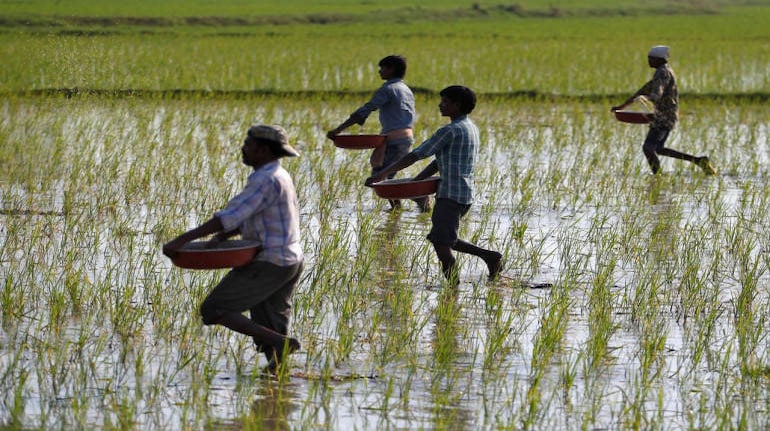
In February, India had opened bilateral talks with Russia for long-term supply of fertilisers. Had that deal gone through, it would have helped India secure imports at stable rates despite hardening global prices. It would have also offered some insulation from geopolitical instability affecting supplies. But the situation has altered dramatically within days as Russia advances to annex Ukraine and India’s worries about securing even normal supplies of critical fertilisers from Russia and other European countries resurface.
India depends heavily on imports for meeting its fertiliser needs; industry experts say more than half the urea the country consumes comes from other nations. With low self-sufficiency, volatility in global fertiliser supplies is bound to have a significant impact on India. In any case, due to pandemic-related disruptions, fertiliser imports had been rising even before the Russia-Ukraine conflict emerged. Between 2018-19 and 2020-21, there was an almost 8 percent increase in total fertiliser imports to nearly 203.3 lakh tonnes from 188.4 lakh tonnes.
And as per data presented in the Lok Sabha, imports of four types of fertiliser from just Russia have nearly doubled in these three years. India imported 10.61 lakh tonnes of fertilisers in FY19, rising to 19.15 lakh tonnes by FY21. The imports comprised four categories of fertiliser—urea, DAP (diammonium phosphate), MOP (muriate of potash) and NPK (nitrogen, phosphorous and potassium).
Since India relies on imports for much of its fertiliser needs, the closure of the Russian and Ukrainian markets is bound to have a significant impact. In FY21, Russia alone accounted for over 17 percent of total MOP imports and nearly 60 percent of NPK imports.
A senior fertiliser industry official told Moneycontrol that with Russia and Ukraine ruled out at least in the short term, MOP supplies may be sought from other countries including Canada, Jordan, Lithuania, Israel and Germany. “But imports may anyway be impacted because of capacity issues in these countries. Nothing can be said at this stage, we will have to see how things will play out,” said the official, who asked not to be identified. On DAP, this official said that Saudi Arabia, Morocco and China have been major suppliers in the past. But China has already restricted exports of DAP for the last one year, so India is already constrained to tap Morocco and Saudi Arabia and also Jordan. “Whether we secure enough for our needs depends on their respective market conditions,” the official said.
Not only has the situation in Russia and Ukraine affected direct fertiliser supplies, the escalation in global energy prices due to this conflict is also pushing up prices. G Chandrashekhar, an agribusiness specialist, pointed out that the production cost of fertilisers is already up by about a fifth (20 percent) in less than a year and the Russian invasion is going to drive up prices of natural gas (Russia is a major producer of natural gas) further.
There is also the major disruption to the logistics chain—fertiliser imports usually arrive through the sea route—not just for supplies from Russia and Ukraine but from many other European countries as well. Chandrashekhar said that logistics costs have already risen by at least 10 percent due to earlier pandemic-related disruptions and the Russia-Ukraine conflict could drive these up further.
China’s restrictions on fertiliser exports are another factor that would impact India. Chandrashekhar said that time was running out as far as ensuring supplies of key fertilisers was concerned.
“Beginning April and through the month of May, farmers begin planting and fertiliser stocks availability would be crucial. We are racing against time. Fertiliser companies are looking at options, including safer sea routes, to keep supplies at normal levels. But given the volatility, India’s fertiliser import bill will be increased by at least 10 percent in FY23. It was around Rs 75,000-80,000 crore in FY22,” he said.
The only silver lining at this point seems to be the hope that the Russian aggression may not last long. If this holds true and the current episode is over quickly (some experts are pinning their hopes on the conflict ending within a fortnight), global energy prices are expected to begin receding. In this scenario, some relief in energy prices and, consequently, in global fertiliser prices as well as supplies can be expected in the second half of 2022.
Discover the latest Business News, Sensex, and Nifty updates. Obtain Personal Finance insights, tax queries, and expert opinions on Moneycontrol or download the Moneycontrol App to stay updated!

Find the best of Al News in one place, specially curated for you every weekend.
Stay on top of the latest tech trends and biggest startup news.




