




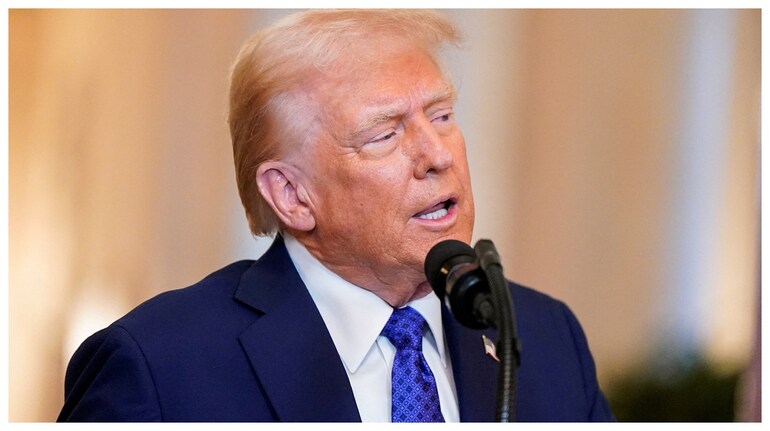
US President Donald Trump has announced a new 25 percent tariff on all steel and aluminium imports. According to the Financial Times, similar tariffs by Trump in 2018 reshaped international trade, sparking retaliatory tariffs, industry upheavals, and shifting supply chains.
According to The Financial Times, the tariffs aimed to protect US domestic industries but triggered widespread economic repercussions, particularly in the automotive and manufacturing sectors. President Trump’s recent plans could further escalate trade tensions, the paper reports.
Origins of the tariffs and initial impact
In March 2018, the US imposed a 25% tariff on steel and a 10% tariff on aluminium, citing national security concerns and the need to reduce reliance on foreign metal producers. These tariffs affected multiple countries, including Canada, Mexico, and the European Union (EU), and were intended to boost domestic metal production.
However, The Financial Times reports that the tariffs also led to unintended consequences, particularly for US businesses that rely on imported metals. American car manufacturers such as General Motors and Ford faced increased production costs due to rising steel prices, forcing them to revise their earnings forecasts downward. Despite sourcing most of their steel domestically, US automakers still suffered from higher costs as domestic steel producers raised prices in response to the tariffs.
Retaliation from the European Union and other countries
In response to the tariffs, the EU introduced levies on approximately €2.8 billion worth of US goods, targeting iconic American exports such as bourbon whiskey, Harley-Davidson motorcycles, and denim jeans. This strategic move put economic pressure on industries located in politically sensitive US states, forcing many American businesses to seek new markets or absorb financial losses.
According to The Financial Times, American whiskey exports to the EU dropped by a third, resulting in an estimated revenue loss of $256 million. Similarly, European steel producers faced new challenges as supply chains shifted in response to US trade policies.
Temporary agreements and policy shifts
Over time, the US softened its stance by granting duty-free exemptions to certain allies, including Canada and Mexico. Following President Joe Biden’s election, diplomatic negotiations led to temporary truces with the EU, UK, and Japan, which removed some tariffs while setting quotas to control metal imports. However, these agreements are now approaching their expiration, raising concerns over potential disruptions in global trade once again.
Uncertainty in the steel and automotive industries
The uncertainty surrounding tariff policies has left industries, particularly automotive manufacturers and steel producers, on edge. The European steel sector fears an influx of cheaper Chinese imports if trade policies shift further, while automakers like Volvo have raised concerns about the long-term impact on production costs and profitability.
With the transition to electric vehicles and stricter environmental regulations, the auto industry faces compounding challenges. If trade restrictions return, companies may need to rethink supply chains and sourcing strategies, further complicating the global trade landscape.
As The Financial Times notes, with temporary agreements set to expire, businesses and policymakers must prepare for the potential renewal of trade disputes. The long-term impact of these tariffs will depend on whether the US and its trading partners can reach a stable and lasting agreement, or if global markets will once again face disruption.
Discover the latest Business News, Sensex, and Nifty updates. Obtain Personal Finance insights, tax queries, and expert opinions on Moneycontrol or download the Moneycontrol App to stay updated!
Find the best of Al News in one place, specially curated for you every weekend.
Stay on top of the latest tech trends and biggest startup news.