






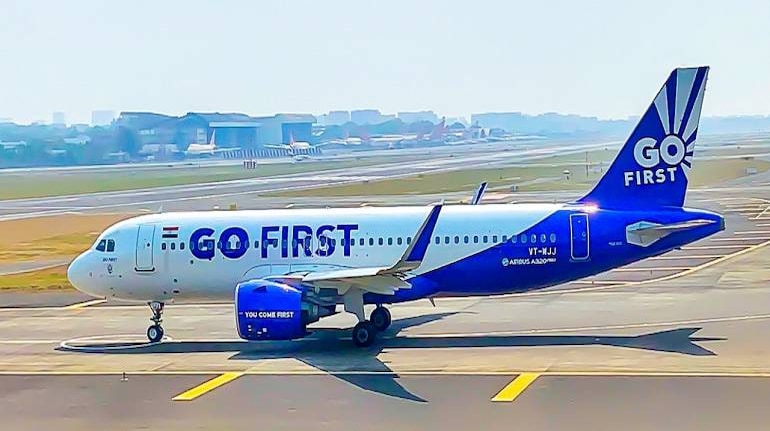
There have been instances of passengers forgetting their better halves at the airport terminal and realising this after boarding, but there have rarely been instances of an airline forgetting a bunch of fare-paying passengers — not at the terminal but on the tarmac! This happened in Bengaluru, the IT capital of the country, with Go FIRST forgetting over 50 passengers and the flight to Delhi taking off without them.
The passengers were aghast to see the aircraft take off even as they remained in the coach waiting to board. The airline, on its part, arranged for alternatives to ensure that the passengers reached their destination and were reunited with their baggage.
The damage control also involved a complimentary air ticket to all the passengers who were at the receiving end of this fiasco. Apart from damage control, the airline has acknowledged its fault, informed the necessary authorities, de-rostered everyone involved and is expediting an inquiry to ensure it does not find itself in a similar situation again.
While the incident is highly embarrassing for the airline, it also poses a huge question mark over safety, security and processes.
What exactly went wrong?The Delhi-bound passengers complained that the aircraft left without them while they were still in the coach. This, despite the fact that some passengers raised an alarm as they got to know through calls from fellow passengers on board that the aircraft was moving. But this did not stop the plane from taking off.
A pilot has to give a count of the Total on board to Air Traffic Control before asking for start-up and initiating final clearances and the investigation will also look at the total count given. While the pilot may be in command of the aircraft, he or she rarely knows what is happening inside the cabin and relies on the crew for information about boarding completion and readiness for departure.
The focus then shifts to the cabin crew, who are expected to count the passengers on board and ensure the total tallies with the count provided by ground services. Safety parameters also mandate a check of washrooms to ensure that everyone is accounted for and there is no one who has inadvertently boarded or boarded with an ill intention, since either could be a security risk.
But the cabin crew is not the only team responsible for this safety precaution. It starts with the ground personnel, who are expected to do a last check at the step ladder before allowing a passenger to board. All of these are manual processes in most airlines, after the passenger’s boarding pass has been scanned at the boarding gate, before entering the coach. In this case, the system would have punched out each passenger to show that they had boarded, but that over 50 passengers had not boarded the plane. A classic case of common sense going missing in the days of Artificial Intelligence.
The fuel calculations along with load and trim calculations are done with passengers and baggage in mind. In this case, the calculations continued without the passengers and just the baggage, which puts the focus on security. The rules mandate that if a passenger is not on board, then the passenger’s baggage should also not be on board. However, there are exceptions: misconnected baggage, delayed baggage or in some cases even early baggage is sent out post security. The house is thus divided on whether the aircraft should have turned back and landed again in Bengaluru or continued as it did.
This multi-step failure is also a function of airport infrastructure and this would not have happened had the boarding been done via an aerobridge. India’s airports, however, have limited aerobridge gates and most large airports have to depend on remote bays and bus boarding.
Tail noteIn the age of technology, one would argue that it is time to go back to the age-old practice of collecting the boarding pass stub and counting it before releasing the aircraft, to prevent a repeat. This is not the first time that technology has been at the centre of a debate. When Delhi’s T3 was overflowing, one of the reasons for slower entry was the need to scan the boarding pass, which seemingly was taking more time than seeing and waving off the passenger.
This is easier said than done. Efforts should be made to rejig processes if needed to better embrace technology. In some cases, further investments should be made in technology to make it foolproof.
The boutique airline that Go FIRST is has suddenly won international fame, but for the wrong reasons. Hopefully, the investigation will identify where things went wrong and will be as quick as the airline’s remedy on the day of the fiasco. And as genuine as its apology and acceptance of the issue, which lately has not been the norm for many other airlines.
Discover the latest Business News, Sensex, and Nifty updates. Obtain Personal Finance insights, tax queries, and expert opinions on Moneycontrol or download the Moneycontrol App to stay updated!
Find the best of Al News in one place, specially curated for you every weekend.
Stay on top of the latest tech trends and biggest startup news.




