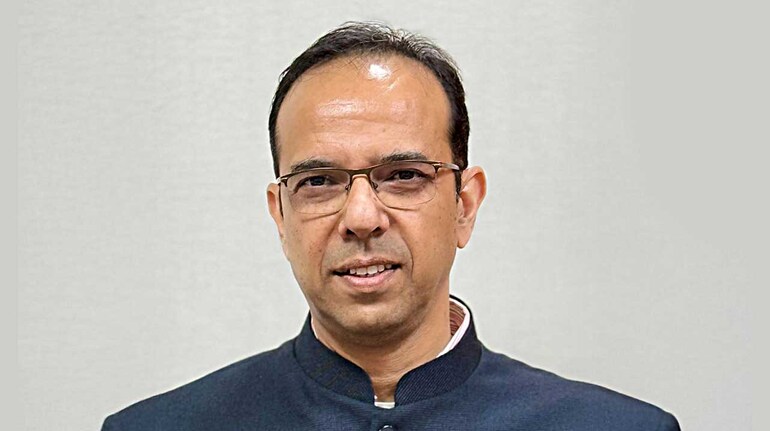
Fusion Finance CEO Sanjay Garyali is hopeful that the microlender will close FY26 in the green and to make it happen, he is trying a keep a tight lid on operating and credit costs.
The non-banking finance company has seen its asset quality deteriorate, forcing it to make higher provisions for bad loans. Losses have been mounting —Q1FY26 was the straight fifth quarter in the red. Since Q2FY25, the company’s auditors have raised concerns about its ability to remain a going concern amid operational challenges.
In an interview to Moneycontrol, Garyali says the worst is over but the company is unlikely to lower its guard when it comes to customer acquisition. Edited excerpts of the interview:
What’s the feedback you are getting from lenders? Is the comfort to lend increasing?
The communication that we've been doing with lenders is on a monthly basis and we are showing them the progress on two counts: how the new book is shaping up and what the operating expense’s structure looks like.
The collection efficiency of the new book is stable at 99.5 percent. We have been able to do close to Rs 400 crore of disbursements a month, which is encouraging for lenders.
Our new book accounts for 45 percent of total loan book, and the vintage is now about nine–10 months. The guardrails set by the industry is kicking in, which means that if there's a customer with certain number of loans from the other lenders, we will not aggressively lend to this customer. That's a positive, which helps us plan better.
With the assets under management (AUM) of micro-finance institution (MFI) loans shrinking, has it affected your ability to find new credit worthy customers?
While there is demand in the market, we internally want to be extra careful when we are acquiring customers who are either new to credit or new to Fusion (Finance) because most of the guardrails have just come in April.
The (customer) acquisition is done as per the new guardrails and 78–80 percent (of such acquisitions) are existing customers. Now this is not a sustainable thing, we are doing it more as a short-term thing. That's why you see the overall new-to-credit and new-to-Fusion share is roughly about 22 percent, of which new to credit is about 12 percent and new to Fusion is 10 percent. But that is more by design, we don't want to take risks right now. That said, there is enough demand from our existing customers, who have only been with Fusion, and maybe just one more lender. The plan is to focus on these customers for the next six months
Will you increase the share of non-MFI loans to 40 percent as per the regulatory relaxation?
Our SME book is only 7 percent of total AUM at Rs 700 crore. We had enough headroom previously as well to go up to 25 percent. Therefore, psychologically, it is a big comfort that you can go up to 40 percent of non-MFI loans.
MSME has been a business for us in the last four–five years. Now there will be acceleration. The consequent operating expenses of this business won't be very high because of the scale up and most of the expenses are already done.
Our branches are in place; 98 percent of the people required for the business have been hired. The tech infrastructure and other investments is also done. The way we are looking at it is that MFI and MSME will be built as two separate business units, with two separate chief operating officers to drive these businesses.
We understand the MFI business very well. It’s a good, profitable business with clear metrics, and we will continue to be there. But as a percentage of the book, MSME will grow quicker hereon.
For almost five consecutive quarters, your auditors have flagged concerns about the Fusion sustaining as a going concern. You’ve had a change in auditors. By when should we see this clause go away?
I will not comment on that but the concerns raised by the auditor, which was around gross NPA and profitability, which led to a breach of covenants with the lenders, are being addressed. We have been in conversation with all our lenders on a monthly basis.
Our gross NPA is coming down. In Q1 FY26 we closed at 5.4 percent GNPA and profitability is at a striking distance. Net loss was sub-Rs 100 crore in Q1. Loss is essentially because of the operating expenses, which is the investment that we have done in people, and lenders have enough confidence in us. The progress we are making will take care of the concerns that auditors have raised. Now I can't speculate whether in Q2 we will be profitable but if you just simply do the maths, there will be a significant reduction in credit costs in Q2 as well and that is the big contributor, which will take us closer to profitability.
Do you expect to end FY26 in net profit?
We are absolutely hopeful of that.
While the number of lenders per borrower has reduced practices like top-up loans continue. How are you addressing this issue?
I think everybody in the industry is identifying one thing easily — a customer who is credit hungry and there are multiple other metrics to reveal this.
Most lenders have started to understand that if the customer is given an EMI which is within her means, default will not happen. The challenge is when the EMI is outside her means. Income estimation is critical. I think the industry is now mature or should be mature by now.
A 100 basis point reduction in repo rate has barely brought any relief to MFI lenders. In fact, MFI loan rates are starting to increase. Your thoughts?
The increase of interest is not significant. It's not even a 15 basis points increase. From an asset liability management standpoint, everybody has got a very diversified mix of lenders. Any changes in the repo rate will depend on the mix. Cost of borrowing is not directly in our control, but other costs such as operating expenses is in our control. Credit costs are also coming down significantly and they will further reduce. We are more focused on these two aspects rather than the cost of borrowing.

Discover the latest Business News, Sensex, and Nifty updates. Obtain Personal Finance insights, tax queries, and expert opinions on Moneycontrol or download the Moneycontrol App to stay updated!
Find the best of Al News in one place, specially curated for you every weekend.
Stay on top of the latest tech trends and biggest startup news.