

Global uncertainty has emerged as the single biggest concern for economists heading into the FY27 Budget, overtaking domestic inflation and fiscal risks, according to a pre-Budget poll of 20 economists.
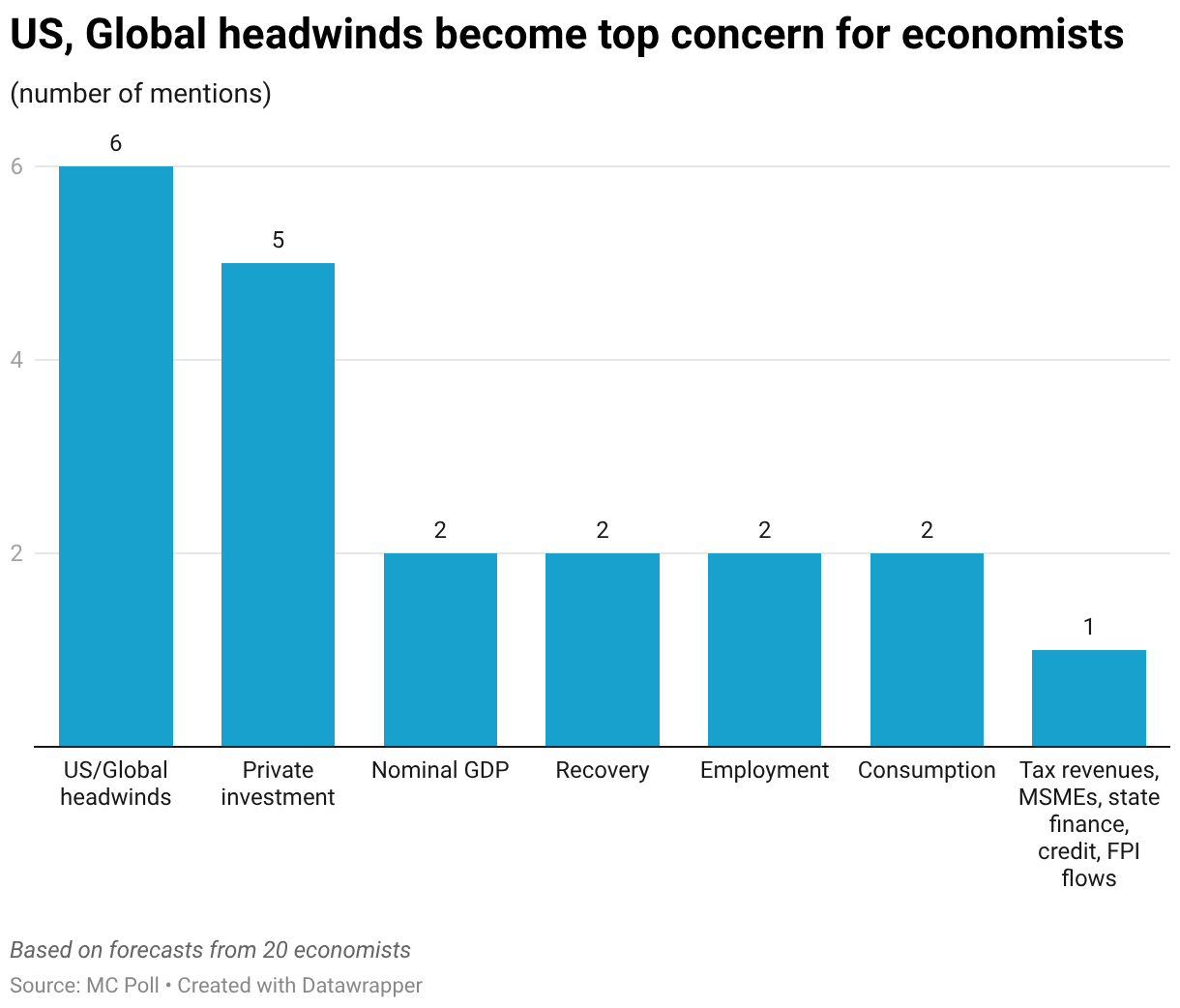
When asked about their primary concern for the economy, six respondents cited US and global headwinds, making it the most frequently flagged risk. These include trade protectionism, slowing global growth, and heightened geopolitical tensions.
“No trade deal with the US could impact labour-intensive sectors leading to unemployed workers,” said Yuvika Singhal, economist at QuantEco Research.
“Even as growth is fine, it’s not clear this will be a self-sustaining recovery given global risks and role of one off domestic tailwinds in FY26,” said Abhishek Upadhyay of ICICI Securities, highlighting that he remained cautiously optimistic.
The second-largest concern was private investment, highlighted by five economists, reflecting unease over whether corporate capex will pick up sufficiently as public investment begins to plateau.
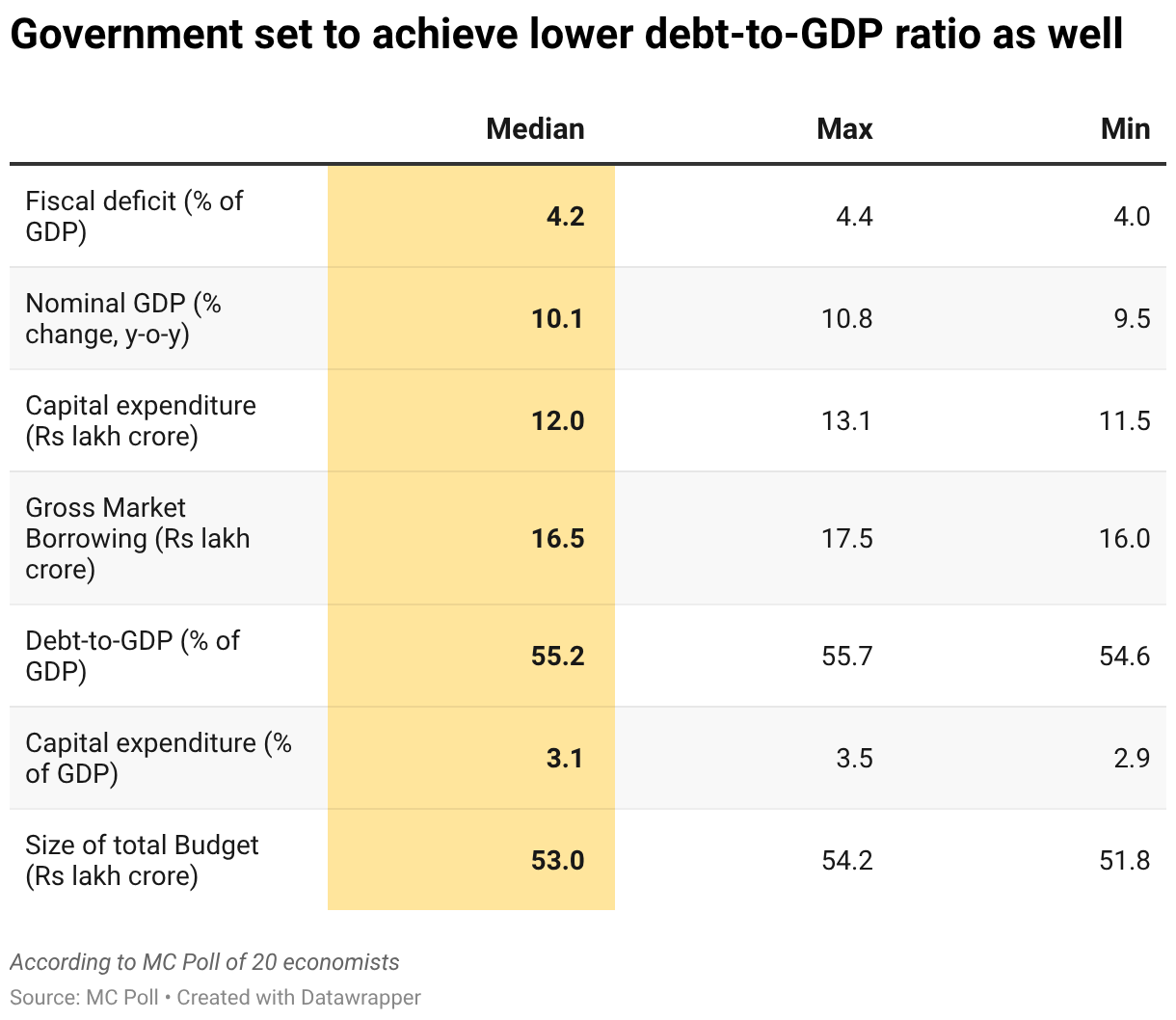
Capex, though expected to rise to Rs 12 lakh crore, would be lower at 3.05 percent of the GDP compared with 3.14 percent in the previous fiscal, according to Moneycontrol poll.
Concerns around employment, consumption, recovery momentum, and nominal GDP growth featured next, though each drew fewer responses, indicating that domestic macro conditions are viewed as relatively stable for now.
Economist forecast nominal growth to hit 10.1 percent of the GDP in the coming fiscal.
“A quicker pick-up in private corporate investment given that govt capex will need to start moderating to meet fiscal consolidation objectives,” said Dipti Deshpande, economist at Crisil.
Notably, inflation, exchange rates, and credit conditions also attracted concern from some economists.
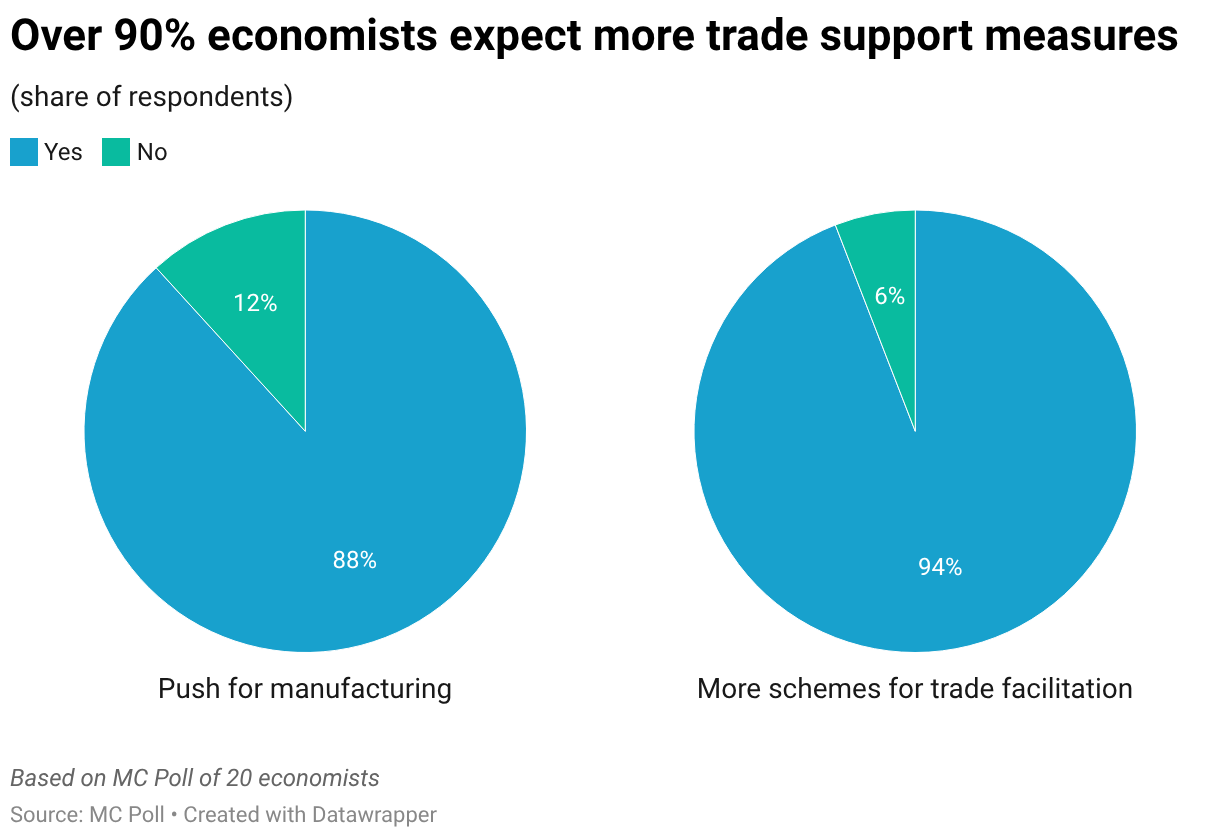
The story was also visible in economist’s concern around manufacturing and trade facilitation.
Nearly 90 percent of the economists noted that the government may continue its policy of manufacturing push in the upcoming budget, while 94 percent projected the government to expand the ambit of its schemes on trade facilitation.
“Measures that help improve export competitiveness -especially through lower power and logistics costs and further easing of regulatory constraints. Given that significant role of MSMEs in export-intensive sectors such as textiles, leather, and plastics which have been disproportionately affected, the budget could be expected to announce more targeted support to the MSME segment,” said Deshpande.
Discover the latest Business News, Sensex, and Nifty updates. Obtain Personal Finance insights, tax queries, and expert opinions on Moneycontrol or download the Moneycontrol App to stay updated!
Find the best of Al News in one place, specially curated for you every weekend.
Stay on top of the latest tech trends and biggest startup news.