




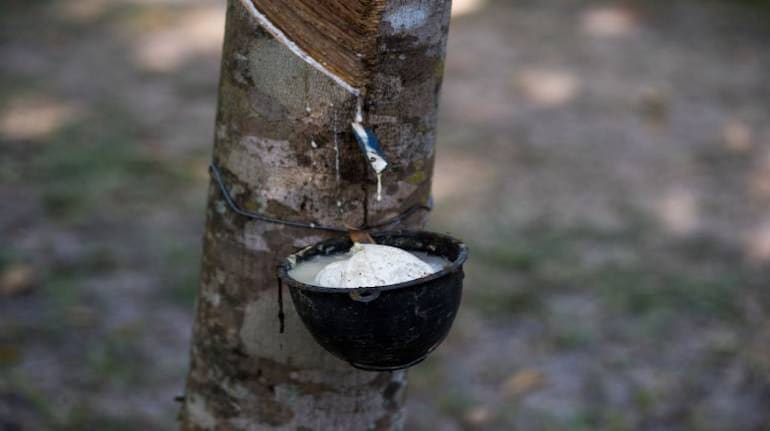
The All India Rubber Industries Association (AIRIA) primarily serves the non-tyre sector, comprising mostly micro, small and medium enterprises (MSMEs). Hit hard by the COVID pandemic, around 10-12 percent of these units are facing closure owing to problems like shortage of working capital and labour and lack of demand. In an interview, AIRIA president Vikram Makar talks about the ills that plague the rubber industry. Edited excerpts
What was the impact of the lockdown on the non-tyre sector? Which are the major segments that have been hit?
The nationwide lockdown in 2020 had far-reaching repercussions, namely closure of industries, businesses and mass migration. The post-lockdown recovery was slow due to inadequate manpower and material. In the second wave, the government and the industry were better prepared; the lockdown was localised to specific clusters and organisations and industries were selectively able to function. Globally, the COVID-19 epidemic led to widespread disruption in manufacturing and global value chains, badly affecting the rubber industry, too.
The Indian non-tyre sector was already experiencing a pre-lockdown decline in business due to disruption of supply chains, a stagnant economy and low market demand. The pandemic’s impact came on top of that and the abrupt cessation of incoming cash flows and the migration of workers at all skill levels caused much distress. When the restrictions were partially eased, the market was cash-strapped owing to the demand uncertainty of industrial rubber products, resulting in a sharp fall in income while the overhead and fixed costs had to be met.
The construction and auto industry came to a halt due to which industries supplying rubber auto components—rubber hoses, tubes and pipes, conveyor/transmission belts, tyre retreading, hard rubber products, rubber-canvas/textile footwear, etc. —were hit the hardest. The supply of natural rubber, reclaimed rubber, and waste and scrap rubber was disrupted and a downturn in the mining and steel industries hit conveyor belt production while the work-from-home culture adversely impacted the non-tyre industry.
Will FY22 be better than FY21 in terms of demand and supply of rubber? While the automobile sector has recovered to a large extent, has the non-tyre sector shown improvement?
Indeed, FY22 is expected to be better than FY 21. There has been a strong rebound in demand. Many of the non-tyre rubber sectors are having strong demand and their operations are at normal levels currently.
The efforts of the government and the industry to accelerate the pace of vaccination will provide an opportunity to move forward with a more positive and certain outlook.
The export of rubber articles has shown 85.73percent growth in FY22 against India’s overall export growth of 70.55 percent.
How is the domestic supply situation of natural rubber, a key raw material for the sector?
The domestic supply of Indian natural rubber (NR) meets 60 percent of overall demand and COVID has definitely affected it. Kerala, where major part of our natural rubber is produced, has been reeling under the pandemic impact with lockdowns and unpredictable climatic conditions, putting the supply chains under pressure in the wake of resumption of economic activity and increased demand from the non-tyre and tyre sectors, causing prices to spiral.
This, along with the high cost of transportation, has created stress for the small and medium enterprises, a serious cause for concern in the months ahead. AIRIA is seeking government intervention to ensure the availability of stable and globally affordable natural rubber locally.
International natural rubber prices are over Rs 30 and Rs 40 per kg below the Indian rates of sheet rubber and block rubber, respectively. Will this lead to more imports in the coming months?
Our consumption outstrips the indigenous production of natural rubber and hence import is necessary to bridge the widening gap between the two. The domestic prices are also higher than the international prices.
Importantly, another characteristic of import is superior quality and consistency. So far NR production in India is focused on basic commodity grades whereas the units of the value-added rubber goods manufacturing sector largely prefer block rubber due to its lower price, more consistency in properties, easy handling and longer shelf life.
Indian growers concentrate on production of sheet rubber as it ensures a higher farm gate price and at present, block rubber output in India is only in meagre quantities (varying from 15-20 percent), and that too is processed from aged scrap. In Southeast Asian and other natural rubber producing countries, the production of block rubber is approximately 80 percent and it is processed from fresh cup lumps to ensure better grades. Aside from block rubber, there is even a lack of availability of RMA1X, RMA3, CV60 ISNR, SVR3I and other grades of rubber in the local markets.
Besides the long-term solution of government intervention to upgrade quality and increase production of domestic rubber, there is a need to encourage cost-effective import for the benefit of the MSME rubber sector.
Will imports be delayed due to the acute shipping container shortage worldwide?
AIRIA strongly believes the current global shipping container shortage and high volatility in shipping has a far-reaching impact on the survival of the rubber MSME sector. We are dependent on imports of many raw materials which are vital inputs for the rubber goods manufacturer, be it NR (40 percent needs to be imported), SBR and NBR (styrene-butadiene rubber and nitrile butadiene rubber) (40 percent needs to be imported), carbon black and general rubber chemicals (30 percent import) silicone rubber, EPDM polychloroprene (100 percent import).
This clearly shows that the Indian rubber industry, especially the MSME sector, is dependent on adequate availability and stable pricing of the commodity. Shipping disruption and high freight cost, with rates going up exponentially by 200-400 percent, have resulted in many bankruptcy cases, transportation accounting for 30 percent of the price of goods. The MSME sector is forced to buy more than they need due to unpredictable availability in longer lead times, putting severe constraints on its working capital.
AIRIA is planning to approach the MSME ministry to take up with the commerce ministry the matter of extending financial assistance to the small and medium rubber sector.
Has the shortage of carbon black and rubber chemicals eased now? Are we totally import-dependent on these materials? How is the current situation?
The supply of carbon black and rubber chemicals is still a cause for concern. Though there has been additional capacity added in carbon black recently, it is yet to stabilise and the availability may improve in the short term. In the meantime, we are still deficit by 30 percent.
Most of the carbon black manufacturing units are dependent on free stock import and the disruption in shipping and high cost have further aggravated the problem of availability and price of the rubber chemicals.
Though we have two producers for general rubber chemicals, the current unpredictable supply scenario of their raw material has led to insufficient availability and increased pricing and volatility. If the situation persists in the global scenario, it will lead to high risk and concern to the MSME sector.
Most specialty chemicals are imported and the increased demand triggered by the initiatives of the government in defence and infrastructure is at risk due to inadequate supply and high prices globally. Many of the plants which had shut down due to lockdowns have not resumed normal operations. For our internal self-sufficiency it is crucial that the government encourage investment immediately in the supply chain and manufacturing these rubber chemicals indigenously.
Has the rise in crude oil prices impacted synthetic rubber (SR) production? What is the annual import like? Certain varieties of SR are produced here; what is the current production and import ratio?
Synthetic rubber which is made from petrochemicals is directly connected with crude oil and the change in crude oil price directly affects the same. The current increase in crude oil prices has caused a spurt in synthetic rubber pricing globally.
Further, the pricing has impacted many petrochemicals and SR. The ongoing pandemic along with high cost of shipping has forced the closure of many production units. SR prices have in many cases more than doubled, far beyond the increase in oil prices.
We produce 50 percent of the synthetic rubber needed to meet our demand and the rest is imported. In FY21, India imported 480,271.09 tonnes of SBR, polybutadiene rubber (BR) and other forms of SR. The Indian production stood at 428,320 tonnes.
In the first four months of FY22, India imported 180,786.24 tonnes of SR valued at Rs 2,936.38 crore, up by 82.38 percent in volume and 107.28 percent in value over the same period in the previous year.
An inverse duty structure (low duty for finished product and high for the raw material) has been one of your talking points in the last few years. Imports of finished tyres have come down after duties were raised. What about non-tyre goods?
AIRIA members who are from the MSME sector are constantly facing an undue disadvantage of high input cost of materials versus marginal import duties on the finished products. Not only are they facing the threat of imports from China but also from neighbouring ASEAN countries. This inverted duty structure is constraining the MSME sector from upscaling and limiting their ability to be globally sized and competitive. This needs to be tackled to ensure that we have a vibrant and healthy MSME rubber products industry, which is essential to be indigenously dependent in the defence and infrastructure sector. The association had presented submissions on inverted duty a couple of times in 2019 and is regularly raising its voice against the same but no relief has come so far from the government.
Discover the latest Business News, Sensex, and Nifty updates. Obtain Personal Finance insights, tax queries, and expert opinions on Moneycontrol or download the Moneycontrol App to stay updated!
Find the best of Al News in one place, specially curated for you every weekend.
Stay on top of the latest tech trends and biggest startup news.