




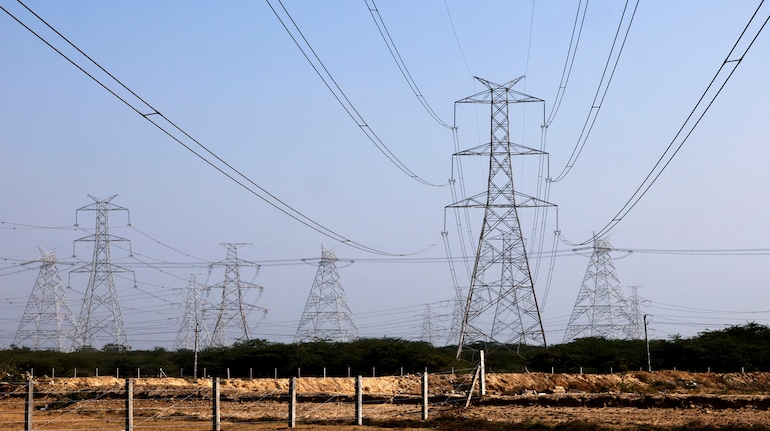
The Union government is nudging states to plan and initiate the monetisation of their power transmission assets as part of a broader push to unlock capital for new electricity infrastructure and reduce the fiscal strain on state utilities.
“By monetising — essentially leasing their existing transmission lines to private players for a set period in exchange for an upfront payment — states can unlock funds to build new grid projects needed to support India’s electricity expansion plans,” said a government official privy to the development.
As India moves to rapidly expand its electricity grid to meet the rising demand, the Centre has assessed that the country will require roughly 191,000 circuit-km of additional transmission lines by 2031–32, at an estimated cost of about Rs 9.1 lakh crore. States and union territories are expected to construct nearly half of this new network, according to the Central government.
The Ministry of Power, in a note issued this month, has proposed the Acquire, Operate, Maintain and Transfer (AOMT) model as the preferred mechanism for states to monetise their intra-state transmission networks. Under this model, states transfer a special purpose vehicle (SPV) holding the transmission assets to a private player for a fixed period in return for an upfront payment, the private player operates and maintains the assets during that time, and the assets are returned to the state at the end of the contract.
The Centre, however, has not yet set annual, state-wise or year-wise monetisation targets.
Allaying tax fears
But states are worried that monetising their transmission assets could leave them with big tax bills, involve complicated valuation and legal work, and raise doubts about whether they are giving up control of important electricity infrastructure, even if only for a few years. They also fear that if the deal is not structured perfectly, it could lead to future disputes or scrutiny from tax authorities.
“States have cited concerns over capital gains taxes, stamp duty, GST liabilities, and the risk of falling foul of anti-abuse provisions such as General Anti-Avoidance Rules (GAAR). We have clarified that the (Union) government’s proposed structure will keep taxes low, protect state ownership of the assets, and lay out clear rules to avoid any issues with GAAR or other tax provisions,” said a second official.
The model proposed by the Centre involves moving the operational assets into a separate company (an SPV), giving 100 percent of that company’s shares to a private player for 10–15 years, and then taking the company back at the end of the contract for a nominal or fair value. This, the Centre says, helps states raise upfront money while still keeping long-term ownership and control of the assets.
Comparison with NHAI’s model
The government has drawn a distinction between the power sector’s AOMT model and NHAI’s Toll-Operate-Transfer (TOT) model, saying TOT can lead to much higher tax leakage, including GST that cannot be claimed back, and treats toll rights as business income.
In contrast, the AOMT structure keeps ownership with the state, can be made tax-efficient—especially through a demerger—and avoids the GST and capital-gains issues seen in TOT transactions.
The second official clarified that the reference to NHAI’s TOT model is not meant as a criticism, but to highlight sectoral differences. “The TOT framework works well for highways, where toll revenues provide a straightforward income stream. Transmission assets operate differently, and applying TOT to them could lead to avoidable tax and GST complications. The AOMT structure is simply a better fit for the power sector while still allowing states to retain long-term ownership.”
PowerGrid doing InvIT at Central level
While the Centre is urging states to monetise their transmission assets, it has also undertaken similar steps for its own network under the National Monetisation Pipeline.
Power Grid Corporation of India Ltd (PGCIL) has already monetised a set of interstate transmission lines through its Infrastructure Investment Trust (InvIT), raising funds by transferring operational assets into the trust and allowing private investors to participate.
The National Monetisation Pipeline (NMP) covers roughly 28,608 circuit-km of primarily 400 kV and above transmission lines owned by Power Grid Corporation of India (PGCIL), valued using an assumed rate of Rs 1.58 crore per circuit-km.
Discover the latest Business News, Sensex, and Nifty updates. Obtain Personal Finance insights, tax queries, and expert opinions on Moneycontrol or download the Moneycontrol App to stay updated!
Find the best of Al News in one place, specially curated for you every weekend.
Stay on top of the latest tech trends and biggest startup news.