Rajesh Kumar
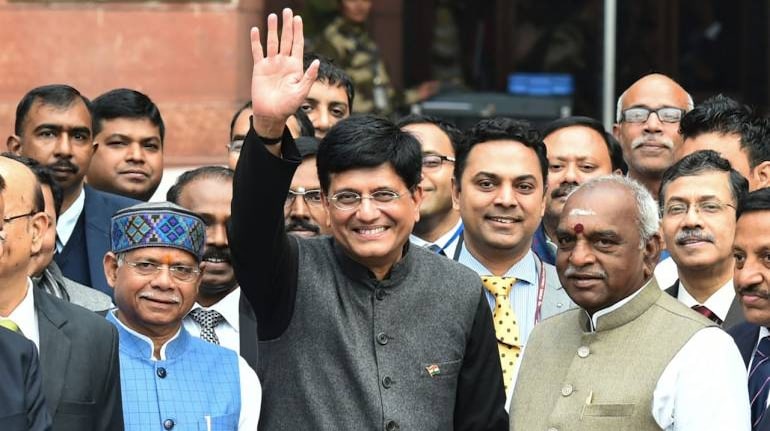
An interim budget, just months before the general election, is normally seen as an opportunity for the government to show its achievements and put forward a statement of intent. However, the budget presented by finance minister Piyush Goyal on Friday turned out to be a lot more than that.
The budget had something or the other for most citizens—ranging from income support for farmers, to people working in the unorganised sector, to the normal income tax payer. It can, perhaps, easily be termed as an election budget at its best.
However, as the dust settles, some important questions will be raised. For instance, it was widely expected that after the defeat in the assembly elections in December that the Bharatiya Janata Party-led Union government will do something for the farm sector. In fact, as reported, Congress President Rahul Gandhi's announcement to give minimum basic income—provided his party is voted back to power—was to pre-empt the government.
Consequently, the government has announced that farmer families with cultivable land up to two hectares will get direct income support of Rs 6,000 per year. This will come in three instalments with an annual expenditure of Rs 75,000 crore. Interestingly, the scheme would be made effective from December 2018.
However, it is highly unlikely that this will solve the problem, either for the beneficiaries or the farm sector at large. The problems in the farm sector, as noted earlier by this writer, are more structural in nature and unlikely to get resolved through small cash transfers to small farmers.
Aside from implementation issues in terms of availability of land records, it will neither help smoothen consumption in a significant way nor assist in buying of inputs or making investments. Further, the scheme leaves out tenant farmers and farm labourers. Also, at a broader level, it leaves much less money in the hands of the government to make capital expenditure, which can help improve productivity in the long run.
In terms of broader economic management, the government missed the fiscal deficit target for the second consecutive year. This will be a disappointment for financial markets. The fiscal deficit in the current year is now expected to be at 3.4 percent of the gross domestic product (GDP), compared to the target of 3.3 percent of GDP.
Furthermore, the fiscal deficit is now projected to be at 3.4 percent of GDP, even in the next financial year, against the earlier target of 3.1 percent of the GDP. The new target shows that the fiscal deficit would cut by a sharp 40 basis points in 2020-21. It would be hard to blame financial markets if they don’t believe it. To be sure, the government has done reasonably well in terms of fiscal management during its tenure but it fell short of expectations towards the end. After all, it was not easy, even for the strongest government in three decades to ignore politics in an election year.

Discover the latest Business News, Sensex, and Nifty updates. Obtain Personal Finance insights, tax queries, and expert opinions on Moneycontrol or download the Moneycontrol App to stay updated!

Find the best of Al News in one place, specially curated for you every weekend.
Stay on top of the latest tech trends and biggest startup news.