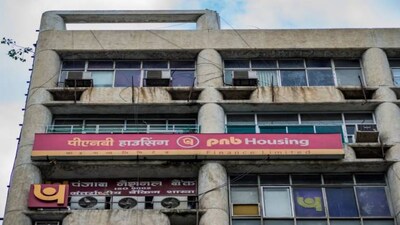
PNB Housing Finance Q4 profit surges 19% on improving operating leverage
The New Delhi-based NBFC posted a profit of Rs 656 crore and declared a dividend of Rs 8 per share

India broadens Russian shipping insurance access to secure oil shipments
The Directorate General of Shipping said it has increased the number of approved Russian insurers to 11 from 8, allowing more entities to offer P&I cover
RBI eases some restrictions on rupee trades, withdraws offshore derivative curbs
The move comes after the RBI imposed a string of restrictions measures to curb halt rupee free-fall
Bharat maritime pool: How it shields ships amid Hormuz blockade
By stepping in where global insurers pull back, the government is attempting to insulate the country’s trade ecosystem from external shocks and build long-term resilience in global shipping
HDFC Bank, Yes Bank, ICICI Bank Q4 results reveal pricing power stagnation
Yield of advances - an important metric for loan pricing - has reduced in the top 3 private lenders
Aavas Financiers CEO Bhinder resigns; ex-Kotak executive Manu Yeshpal Singh named successor
Aavas Financiers said Bhinder will continue as a senior advisor to the company to provide continuity and support as required.
HDFC Q4 FY26: No big fireworks, but risk-reward extremely favourable
Strong fundamentals, improving growth momentum, and valuation comfort make the bank’s muted Q4 FY26 a compelling long-term accumulation opportunity
Credit growth to lift India bank profits despite likely FX losses
Escalations in the Middle East conflict may dampen this momentum as small business loans might come under stress.
Will ICICI Bank’s performance hold up amid macro uncertainties?
Strong growth engine and resilient asset quality keep the bank’s Q4 FY26 performance steady, though macro risks may cap near-term re-rating
Are banks open or closed today in Bengaluru? Check RBI holiday calendar for SBI, HDFC Bank April 20 closure
Bank branches in other states will remain open unless a separate regional holiday has been notified.
What the Q4 earnings of top two private banks show
West Asia impact would likely be seen in the first quarter of FY27 and bankers are unwilling to guess an outlook
India banks see 11-13% credit growth despite geopolitical risks: Survey
India’s banks remain resilient despite geopolitical risks, with most lenders expecting 11-13 percent non-food credit growth in H1 2026: FICCI-IBA survey.
HDFC Bank makes changes to employee stock option plan in board meeting
The new ESOP rules expands the ambit of the GNRC to determine the conditions to grant RSUs to employees
Rooting for Keki Mistry to continue as chair of the board: HDFC Bank CEO Sashidhar Jagdishan
"We are all rooting for Mr Mistry to continue... but we do believe that there are certain processes to be followed and need to conclude," CEO Sashidhar Jagdishan said.
HDFC Bank sees reduction in headcount in fiscal year 2026
The bank’s total employee count fell to 2,11,178 as of March 2026, down from 2,14,521 a year ago and 2,15,739 in December 2025, according to its latest disclosures
Too early to gauge impact of West Asia conflict, says ICICI Bank ED Sandeep Batra
“We have not used any provisioning yet and banks have enough buffer,” he said, indicating that the sector remains resilient even as it keeps a close watch on evolving global risks
Global insurer Chubb explores India re-entry after two decades
Sources indicate the company is likely exploring the general insurance business, though finer details are likely to evolve in the next 6-9 months
RBI to conduct Rs 2 lakh crore 7-day VRRR auction on April 17
"In view of the surplus transient liquidity conditions prevailing, it has been decided to conduct a Variable Rate Reverse Repo (VRRR) auction on Friday, April 17, 2026," the RBI said.
GST cut to zero lifts standalone health insurers’ market share to 13.6% in FY26 from 12.5%
The gains for standalone health insurers may have come at the expense of general insurers, whose market share slipped to 82.9% in FY26 from 83.9% in FY25
ICICI Lombard addresses high solvency, says 2.7x buffer will fund growth
Yet, ICICI Lombard's management indicated that this buffer will not remain untouched for long.
Wall Street banks cut 5,000 jobs even as they notched record profits
During the quarter, the six top US banks racked up $47.3 billion of net income as markets gyrated on a series of geopolitical jolts, boosting revenue from fixed-income and stock trading
Q4 FY26 Results: ICICI Lombard PAT rises 7.3% yoy, combined ratio at 101.2%
A key metric for general insurers, the combined ratio improved to 101.2 percent in Q4 FY26, compared to 102.5 percent in Q4 FY25
Bank funding gains ground as NBFC bond issuances taper: Crisil Ratings
Maintaining a diversified funding mix will be critical for NBFCs to navigate shifting interest rate cycles and macroeconomic volatility, Crisil says
RBI holds talks with banks on ways to boost deposits
RBI has asked banks for ideas to attract bigger, stable deposits as savings shift to equities, raising funding costs and liquidity pressure.
IRDAI weighs commission revamp, seeks granular insurer data
Executives say the details sought by the regulator point to a diagnostic exercise rather than a routine data call, with IRDAI attempting to map how incentives flow through the system and where distortions may be emerging