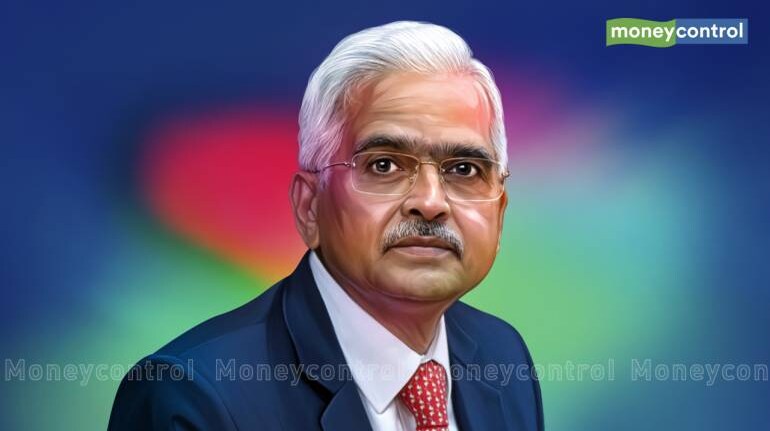
This Friday (September 30), at the end of a three-day monetary policy committee (MPC) meeting, the Reserve Bank of India (RBI) governor Shaktikanta Das will announce the decision of the rate-setting panel. It is fairly certain that the repo rate, or the rate at which the RBI lends short-term funds to banks, will be hiked by another 25-50 basis points as the MPC continues its inflation fight. A 50 bps hike will take the repo rate to 5.9 percent.
The consumer price index-based inflation (CPI) , the key price indicator the RBI uses for policy formulation, stood at 7 percent in August after easing a bit to 6.71 percent in the preceding month. Such high level of inflation is not only posing a challenge to the economy, but will also put MPC in the spotlight as it is set to formally fail in its primary mandate. MPC has a mandate to keep inflation in the 2-6 percent band. A breach of this mandate for three consecutive quarters will force MPC to explain its failure to government. That scenario looks imminent.

But more than MPC failure, there are larger implications of high inflation in the economy on the ground. It takes away the affordability of poor segments in the society to purchase goods and services. Everything turns costlier. In a situation when growth is stagnant, unemployment is high and inflation remains persistently high, this leads to a tricky economic situation that the economists call stagflation. If inflation-growth situation doesn't improve going ahead, India too might face the prospects of stagflation going ahead, probably by the end of next fiscal year.
While consecutive rate hikes in a short span of time are necessary to tackle inflation, they will also have an unintended impact on economic growth. It will affect demand in the economy, prompting people to purchase lesser and lesser goods and services. This pulls back the growth recovery. That's a tricky situation for the policymakers. Till the time inflation is brought back to the desired levels, right policy will remain.
What will another rate hike do in the banking system? Logically, banks will have to pass on higher costs in loans and deposit rates. A significant level of monetary transmission has already happened in the banking system over the past few months. Markets have already factored in another rate hike in this round of meeting. In that sense, there won't be any surprises this Friday.
(Banking Central is a weekly column that keeps a close watch and connects the dots about the sector's most important events for readers.)
Discover the latest Business News, Sensex, and Nifty updates. Obtain Personal Finance insights, tax queries, and expert opinions on Moneycontrol or download the Moneycontrol App to stay updated!
Find the best of Al News in one place, specially curated for you every weekend.
Stay on top of the latest tech trends and biggest startup news.