






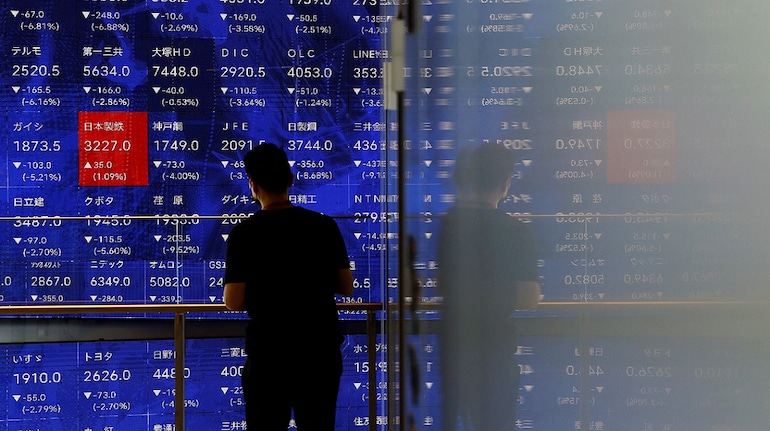
Asian stocks edged lower and US equity-index futures dropped as trade conflicts showed no signs of abating after Nvidia Corp. said the US put new restrictions on some chip exports to China.
Contracts for the Nasdaq 100 fell more than 1.5% and S&P 500 futures retreated 1% after Nvidia slumped in after-hours trading. Gold hit a record in demand for safe haven assets. The dollar pared some of its overnight gains against major peers with the Swiss franc leading the rebound.
Traders were whiplashed again by a slew of tariff headlines, as US President Donald Trump also launched a probe into the need for levies on critical minerals. Flip flops on tariff policies have roiled global markets this month as investors struggle to take long-term positions due to the unpredictability of policy announcements from Washington.
“This move is unnerving for two reasons,” said Vishnu Varathan, Singapore-based head of economics and strategy at Mizuho Bank, referring to Nvidia curbs. “First, it conveys the mercurial nature of Trump tariffs in so far that it has revoked earlier concessions extended to Nvidia. Second, this also suggests that the US-China undercurrents are rather abusive, even as there appears to be some calm on the surface,” he said.
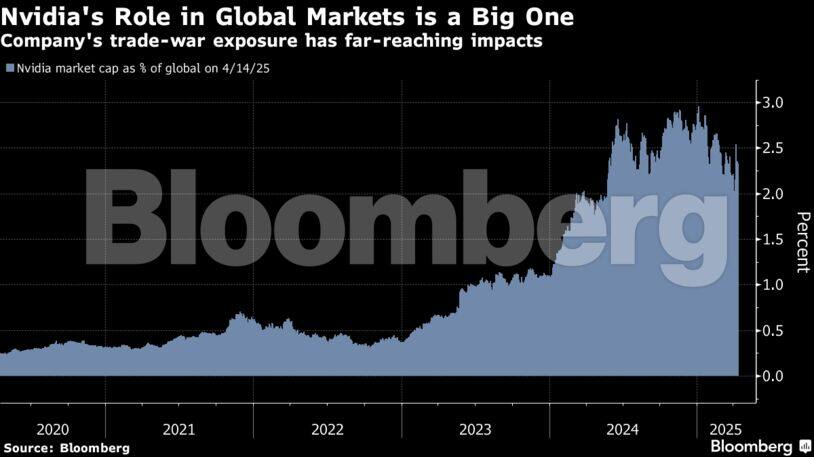
In after-market trading, Nvidia extended its decline to more than 6% after saying the US government will begin requiring a license to export the company’s H20 chips to China, an escalation of restrictions that the company has publicly opposed. The company warned that it will report about $5.5 billion in charges during the fiscal first quarter from “inventory, purchase commitments and related reserves” tied to the H20 line.
The European Union and US struggled to bridge trade differences this week as White House officials said the bulk of the US tariffs imposed on the bloc won’t be removed.
Meanwhile, Trump urged China to reach out to him in order to kick off negotiations after the nation ordered its airlines not to take any further deliveries of Boeing Co. jets. The Trump administration may use tariff negotiations to try to pressure U.S. trading partners to limit dealings with China, the Wall Street Journal reported, citing people with knowledge of the conversations.
“We would advise investors to avoid making hard and fast assumptions about how tariff developments will ultimately play out in the economy and on corporate profits,” said Anthony Saglimbene at Ameriprise. “Instead, we suggest investors prepare for a range of possible intermediate-term outcomes that include slow-to-positive economic and profit growth, and scenarios of slow-to-negative growth.”
Chinese equities are also vulnerable ahead of a fresh wave of economic data that’s expected to reinforce concerns over an uneven recovery. First-quarter GDP due Wednesday is forecast to show slowing momentum, even before the full impact of tariffs is felt, while retail sales will likely show consumption is anemic.
High uncertainty surrounding US trade policy and a spike in financial-market volatility has unsettled global investors over the past few weeks. Sentiment regarding economic prospects is the most negative in three decades, yet fund managers’ pessimism isn’t fully reflected in their asset allocation which could mean more losses for US stocks, a Bank of America Corp. survey showed.
Fund managers are “max bearish on macro, not quite max bearish on the market,” strategists led by Michael Hartnett wrote in a note. “Peak fear” is not yet reflected in cash allocations, they added.
Investors are also gearing up for Federal Reserve Chair Jerome Powell’s comments on the economy later Wednesday.
In commodities, oil steadied after a modest decline on Tuesday.
Discover the latest Business News, Sensex, and Nifty updates. Obtain Personal Finance insights, tax queries, and expert opinions on Moneycontrol or download the Moneycontrol App to stay updated!
Find the best of Al News in one place, specially curated for you every weekend.
Stay on top of the latest tech trends and biggest startup news.









